
Contact Sales Now
Thank you! Your submission has been received!
Oops! Something went wrong while submitting the form.

Contact Sales Now
Thank you! Your submission has been received!
Oops! Something went wrong while submitting the form.

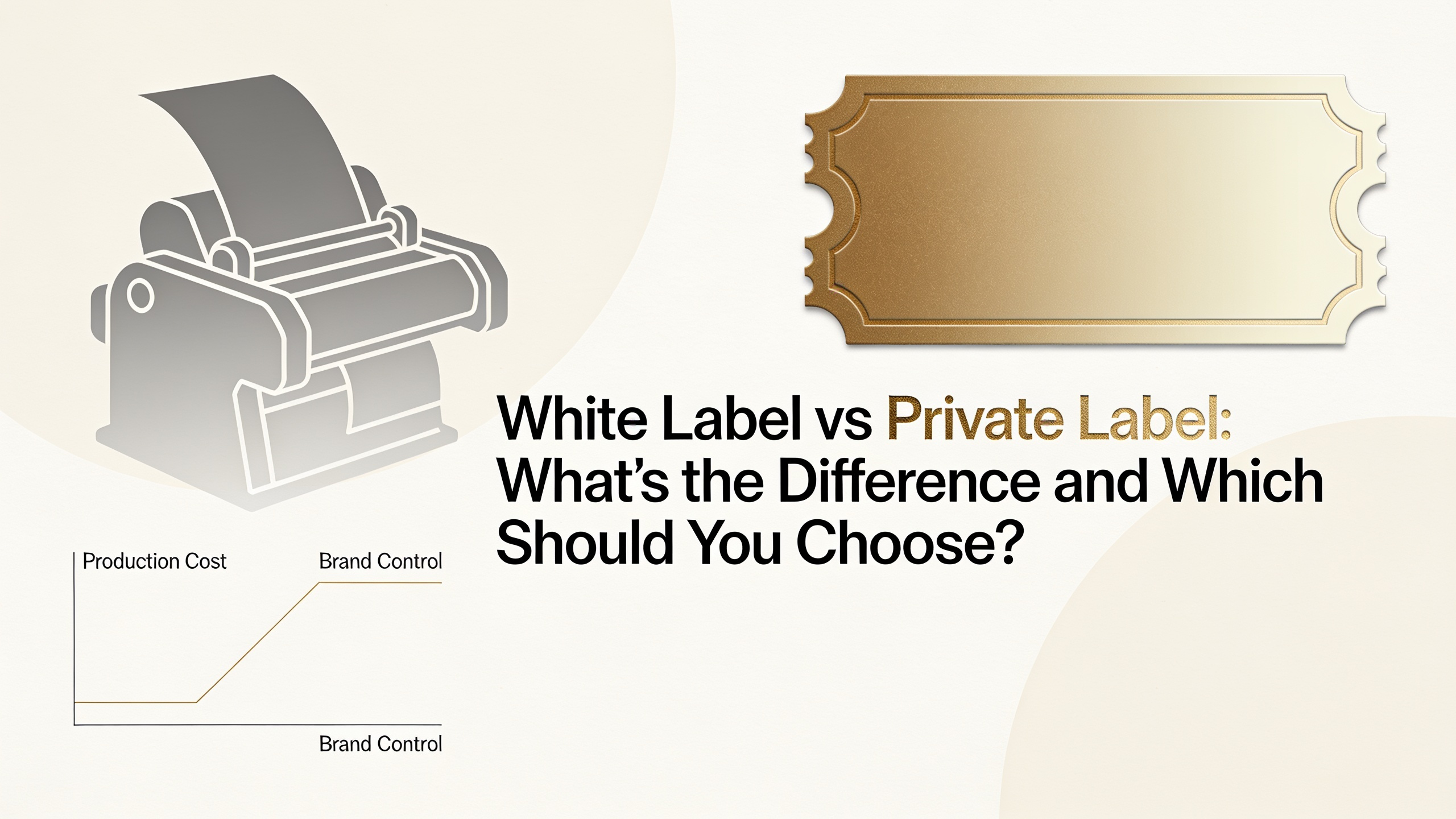
Before choosing between sourcing models, review the core differences at a glance. This table distills operational, financial, and branding factors that shape your decision when building a beauty, supplement, or consumer goods line.
| Factor | White Label | Private Label |
|---|---|---|
| Product Formula | Pre-made, shared across brands | Custom or semi-custom, exclusive |
| Exclusivity | No, sold to multiple buyers | Yes, tied to one brand |
| MOQ | Low (often 100–500 units) | Higher (typically 1,000+ units) |
| Lead Time | 2–4 weeks | 8–16 weeks |
| Cost Per Unit | Lower | Higher |
| R&D Involvement | None | Significant |
| Packaging Flexibility | Limited to stock options | Fully customizable |
| Ideal For | Speed-to-market, testing | Brand differentiation, IP protection |
A white label product is a manufacturer-developed formulation or item sold in unbranded form to multiple resellers. Each buyer applies their own logo, label, and packaging, but the underlying product remains identical across every brand purchasing that SKU.
Think of it as a shared catalog. The manufacturer holds the intellectual property, the formula, and the production infrastructure. You license the right to rebrand and resell what already exists on their shelf.
This model dominates categories like generic skincare serums, electronics accessories, cleaning products, and supplements. Speed and low entry cost make it attractive for entrepreneurs testing markets or agencies bundling products into service packages.
The trade-off is competitive risk. Your competitor down the street may sell the exact same formula under a different label. Differentiation must come from branding, marketing, pricing, or distribution rather than the product itself.
So what is private label? A private label product is manufactured to your specifications and sold exclusively under your brand. You direct the formulation, ingredient ratios, fragrance, texture, or technical specs, and the manufacturer produces it only for you.
What is private labeling in practice? It combines contract manufacturing with brand ownership. You retain rights to the recipe or spec sheet, while the factory handles production, quality control, and often regulatory documentation.
What is a private label product suited for? Brands that want moats. Skincare houses seeking a signature actives blend, supplement companies protecting a proprietary stack, or food brands guarding a flavor profile all rely on this model.
The exclusivity comes with responsibility. You fund development, absorb reformulation costs, and commit to higher volumes. In return, no competitor can legally replicate your exact SKU from the same supplier.
Now that we've covered what is the difference between white label and private label at a conceptual level, the operational gaps become clear when you look at budgets and timelines.
White label economics:
Private label economics:
Cash flow planning shifts dramatically between the two. White label lets you reorder frequently in small batches. Private label demands larger upfront capital but rewards scale with better margins once volume grows.
The what's the difference between white label and private label question also plays out in packaging. White label products typically ship in stock containers. Your customization is confined to the label artwork, secondary packaging, and inserts.
You choose from a preset catalog of bottles, jars, tubes, or pouches. Fill volumes, closure types, and container shapes are fixed. This limits visual differentiation but accelerates launch timelines significantly.
Private label opens the full packaging spectrum. Custom bottle molds, unique dispensing mechanisms, branded secondary cartons, and specialty finishes like soft-touch coatings or foil stamping all become available.
Regulatory labeling responsibilities also differ. With white label, the manufacturer often provides compliant label templates. With private label, you or your regulatory partner draft claims, ingredient disclosures, and warnings from scratch, matching the custom formula.
Barcodes, batch codes, and expiration formatting follow similar patterns. Stock white label runs may share coding systems, while private label runs get dedicated lot tracking tied to your brand alone.
Choose white label when speed, capital efficiency, or market validation matter more than product uniqueness. It fits these scenarios well:
Choose private label when differentiation, margin protection, or long-term brand equity are priorities. It fits these situations:
Many established brands run hybrid strategies. Core hero products go private label for defensibility, while accessory or seasonal SKUs stay white label to keep the catalog fresh without heavy investment.
The decision often shifts as brands mature. Year-one founders lean white label for cash reasons. By year three, top-selling SKUs migrate to private label to lock in exclusivity and improve margins.
Beyond the two models, adjacent sourcing terms clarify the landscape. Contract manufacturing refers to any third-party production arrangement, encompassing both white and private label. OEM (Original Equipment Manufacturer) production is closer to private label but typically applies to hardware.
Bespoke manufacturing sits above private label, involving fully original engineering from raw specification. Drop-shipping is a fulfillment method, not a sourcing model, though it often pairs with white label goods.
Understanding these distinctions helps when negotiating with suppliers. Ask directly whether a factory offers exclusivity clauses, formula ownership transfer, or first-refusal rights on new development. These terms shape the true value of your sourcing agreement.
Is white label cheaper than private label?
Yes. White label products carry lower per-unit costs, minimal MOQs, and no R&D fees. Private label requires higher volumes and development investment, though margins improve at scale.
Can I trademark a white label product?
Yes, you can trademark your brand name, logo, and label design applied to a white label product. However, you cannot trademark the underlying formula or spec, since it is shared with other buyers.
What is the difference between white label and private label in terms of exclusivity?
White label products are sold to multiple resellers with identical formulas. Private label products are exclusive to your brand, developed to your spec, and cannot be sold by the manufacturer to competitors.
Do I own the formula in a private label arrangement?
It depends on the contract. Some manufacturers grant full formula ownership, others retain rights and simply guarantee exclusivity for a defined period. Always clarify IP ownership in writing before production.
Can I switch from white label to private label later?
Yes. Many brands start white label to validate demand, then move top sellers to private label once volumes justify the investment. Transition timelines run 3–6 months including reformulation and repackaging.
Which model is better for Amazon sellers?
Private label typically performs better long-term on Amazon because it supports Brand Registry, protects against copycats, and enables A+ Content. White label works for early testing but faces heavier competition.
What's the difference between white label and private label for packaging?
White label uses stock packaging with custom labels applied. Private label supports fully custom packaging including unique bottle molds, closures, and secondary cartons designed exclusively for your brand.
Are lead times negotiable?
Partially. White label lead times can shrink if the manufacturer holds inventory. Private label lead times are constrained by formulation, stability testing, and regulatory review, which cannot be safely rushed.
Do private label products require regulatory registration?
Yes, in most regulated categories. Cosmetics, supplements, and food products require ingredient disclosures, safety assessments, and sometimes facility registration. Your manufacturer typically supports documentation, but responsibility rests with the brand owner.
What is a private label product example in beauty?
A custom vitamin C serum with your chosen concentration, added peptides, signature fragrance, and proprietary packaging sold only under your brand qualifies as a private label product in the beauty category.