
On this page
- Label Cost Breakdown
- Custom Labels Pricing and Label Manufacturing: A Breakdown of Manufacturing Costs, Label Printing, and Material Waste to Print Labels
- Understanding Label Pricing and Printing Method: How Order Quantity and Manufacturing Costs Impact Total Cost
- Label Cost Breakdown: Material Cost, Adhesive, and BOPP Impact on Total Cost of Ownership
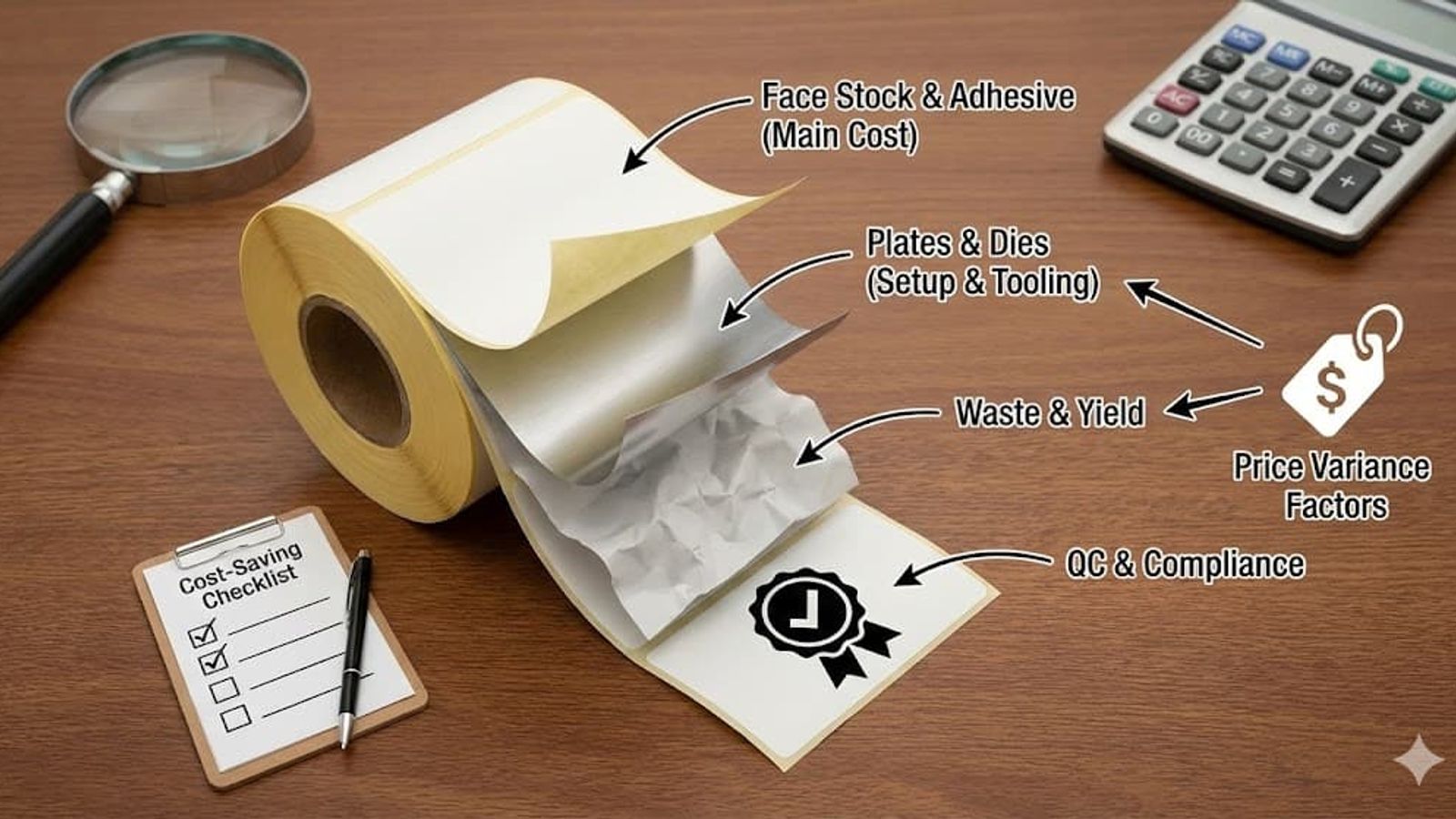
- Face Stock and Adhesive Selection for Custom Labels
- Ink and Varnish Consumption in Label Printing
- Hidden Costs of Custom Labels: Setup Fees, Die-Cutting, and Flexo Plate Manufacturing Costs
- Plate Making and Configuration for Flexographic Printing
- Die Cutting Hardware and Custom Die-Cut Costs
- Reducing Material Waste: Managing Complexity and Cost with a Label Flexo Printing Machine
- Matrix and Trim Disposal in Label Pricing
- The True Cost of Label Printing: Quality Control and Manufacturing Costs
- Inspection and Validation Procedures to Ensure Quality Without Sacrificing Quality
- Label Pricing Strategy: Cost-Effective Ways to Print Labels and Reduce Manufacturing Costs
- Standardization and Aggregation for Cost-Effective Pricing
- Design for Manufacturing to Lower Total Cost
Label Cost Breakdown
Custom Labels Pricing and Label Manufacturing: A Breakdown of Manufacturing Costs, Label Printing, and Material Waste to Print Labels
Procurement professionals understand that the final unit price and label cost of a label is rarely arbitrary. It represents a strict summation of raw material availability, label printing machine time, and the inevitable rigidities of label manufacturing physics. Understanding these pricing inputs allows for better negotiation, more accurate forecasting, and a clearer view of the true cost of label production.
Price fluctuations often stem from commodity shifts in pulp and petrochemical markets, affecting raw material costs. However, the conversion process itself holds the most leverage for optimization in label manufacturing. Analyzing the cost breakdown reveals where efficiency is lost and where manufacturing costs are engineered into the product lines.
The goal is not simply finding the cheapest converter to print your label. The goal is identifying the most efficient manufacturing pathway for a specific SKU profile and label size. We will dissect the cost centers that define your label pricing matrix and the overall cost of label procurement.
Understanding Label Pricing and Printing Method: How Order Quantity and Manufacturing Costs Impact Total Cost
Volume remains the primary dictator of label pricing logic and the final cost per label. The fundamental tension exists between fixed costs and setup fees versus variable running rates. Short runs and small batches suffer from the disproportionate weight of make-ready setup time compared to actual label printing time.
As the quantity of labels increases, the amortized setup cost and fixed costs dilute significantly. This creates a steep price curve that eventually flattens due to economies of scale. Identifying the exact break-even point between different printing technologies like flexo and offset printing is crucial for total cost control.
Print technology selection and the printing technique drive the base cost structure. Digital printing press rates operate somewhat linearly compared to analog methods. There is minimal setup cost and it eliminates plate costs, but the unit price generally remains static regardless of the number of labels due to click charges and ink costs.
Flexographic printing and the use of a label flexo printing machine offer an inverse economic model. The setup is expensive and labor-intensive, creating a high barrier to entry for small batches. However, as the press speeds increase and runtime lengthens, the cost per label drops aggressively, making it more cost-effective for larger labels and high-volume runs.
SKU proliferation fragments total volume, which can increase costs even if the aggregate quantity remains high. Ten orders of 5,000 labels cost significantly more than one order of 50,000 labels due to the necessity of halting production for plate changes and color matching, adding significant cost to the manufacturing process.
Lead time requirements also influence pricing variance and labor costs. Rush orders disrupt scheduling efficiency, forcing converters to break long runs or incur overtime labor, which are often hidden fees. Standardized lead times allow for optimized gang-run scheduling, which reduces setup waste and passes savings back to the brand.
Label Cost Breakdown: Material Cost, Adhesive, and BOPP Impact on Total Cost of Ownership
The physical composition and material selection of the label account for a massive percentage of the total spend. This includes the face sheet, the liner, and the chemistry holding them together. Unlike fixed tooling costs, raw material costs scale linearly with the quantity of labels produced.
Material selection must balance durability and appearance with economics. Over-engineering a specification for a short-lifecycle product bleeds margin. Conversely, under-specifying materials like standard paper for high-moisture environments leads to application failure, which incurs replacement costs far exceeding the initial savings.
Face Stock and Adhesive Selection for Custom Labels
Standard paper labels generally offer the most economical entry point. However, direct thermal or thermal transfer coatings add cost layers. The source of the pulp and the complexity of the coating process dictate the fluctuating base price of these raw material commodities.
Synthetic film labels like BOPP (Polypropylene) and Polyethylene (PE) command higher pricing due to their durability and petrochemical origins. The production process for films is energy-intensive, and label pricing tracks closely with oil market indices, making them more expensive than standard paper substrates.
Specialty face stocks, such as metallic foils or textured wine stocks, introduce premium pricing and can increase costs. These materials often have higher minimum order quantities (MOQs) from the raw material supplier, forcing the converter to carry inventory or charge for full master rolls as part of the landed cost.
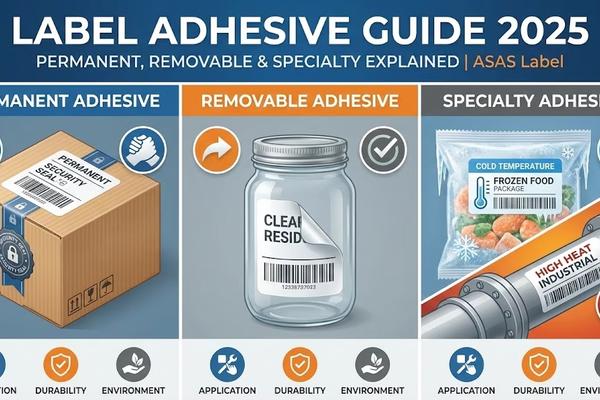
Adhesive chemistry is the invisible cost driver and a vital part of the cost breakdown. Standard permanent acrylics are the baseline. Modifications for high-tack applications, freezer grade requirements, or removability require specialized formulations that increase the raw material cost per square inch.
Release liner selection is often overlooked but impacts the total cost of ownership. Glassine liners are standard for automatic application speeds. PET liners allow for faster dispensing and reduce web breaks, potentially saving money on the application line despite a higher upfront material cost.
Ink and Varnish Consumption in Label Printing
Ink coverage affects pricing, particularly when you use digital printing where cost is calculated by click charges or ink volume. Heavy coverage or total flood coats consume more consumables, directly impacting the printing costs. Flexo ink is generally cheaper but still accumulates significant cost on long runs depending on size.
Specialty inks add significant expense to label manufacturing. Metallic, fluorescent, or color-shifting inks require more expensive pigments. Adding a tactile emboss, foil stamping, or a spot UV coating requires an additional print station, increasing both material usage and machine complexity and cost.
Hidden Costs of Custom Labels: Setup Fees, Die-Cutting, and Flexo Plate Manufacturing Costs
Non-recurring engineering (NRE) costs, setup fees, and per-run setup charges are distinct fiscal elements in your label pricing. Tooling represents physical assets that must be manufactured, stored, and maintained. Setup represents the time and labor costs required to configure the machinery.
Amortization strategies differ by supplier. Some converters absorb tooling and die-cutting costs into the unit price to lower the barrier to entry. Others line-item these expenses to keep the label pricing transparent and scalable. Understanding this cost structure is vital for long-term contract comparison.
The complexity of the label design dictates the tooling requirement. Irregular custom shapes, intricate pervious cuts, or multi-layer constructions require precision-engineered tools. These are capital expenditures and manufacturing costs that must be accounted for in the initial onboarding.
Plate Making and Configuration for Flexographic Printing
Flexographic printing requires a physical photopolymer plate for every color station. A four-color process job requires four plates. A job with two additional spot colors requires six plates. The manufacturing costs multiply with design complexity and the cost per color.
Plate technology has evolved, with HD flexo plates offering higher resolution but demanding more expensive processing equipment. The lifespan of a plate is finite. High-abrasion inks or millions of impressions will eventually degrade the image, necessitating replacement costs that contribute to the total cost.
Mounting tapes and cylinders are part of the hidden setup fees structure. Plates must be mounted on cylinders using specific density tapes to control dot gain. This manual labor is a billable pre-press activity that occurs before the press even starts, affecting the overall cost.
Use digital printing to eliminate the plate cost entirely. The trade-off is the higher variable running cost per label. For SKUs that change artwork frequently, the savings on plate manufacturing often justify the higher unit price of digital production compared to standard flexo.
Die Cutting Hardware and Custom Die-Cut Costs
The die distinguishes the label size and shape from the waste matrix. Flexible dies are thin sheets of magnetic steel that wrap around a magnetic cylinder. They are cost-effective and standard for most pressure-sensitive label manufacturing runs.
Solid rotary dies are machined from a single steel cylinder. These are significantly more expensive but necessary for long-run durability or cutting through difficult thick substrates. The investment in a solid die makes sense only for high-volume, repeat manufacturing costs.
Standard shapes usually incur no tooling charges because converters maintain a library of common sizes like squares and circles. Custom shapes require custom die-cuts. Creating a new die involves CNC machining and hardening, a cost passed directly to the buyer as a setup cost.
Die maintenance is an ongoing consideration in label printing. Dies dull over time, especially when cutting abrasive thermal coatings or paper dust. The cost of re-sharpening or replacing dies is typically factored into the manufacturing overhead or charged as hidden costs when print quality degrades.
Reducing Material Waste: Managing Complexity and Cost with a Label Flexo Printing Machine
Material yield is the ratio of sellable labels to total raw material consumed. No printing process is 100% efficient. The difference between the purchased roll length and the shipped label count is material waste, and is intrinsic to the label pricing model.
Setup waste is unavoidable in label manufacturing. In flexography, operators must run material through the label flexo printing machine to register colors and set pressure settings. Depending on the press complexity, this can consume hundreds of feet of stock before a single sellable label is produced.
Web path waste refers to the material required to thread the machinery from unwind to rewind. Larger presses with more print stations have longer web paths. This creates a fixed setup waste amount every time a roll is changed or a job is set up, increasing the manufacturing costs.
Running waste occurs during production. Press stops, speed changes, or splice detections can cause registration generated errors. Converters factor a specific scrap percentage into their pricing to cover these inevitable production anomalies and material waste.
Matrix and Trim Disposal in Label Pricing
The matrix is the ladder of waste material left after the custom labels are die-cut. If the gap between labels is excessive, you are paying for material that ends up in the landfill. Minimizing the matrix gap improves material utilization and lowers the total cost per label.
Edge trim is required to ensure clean rolls for the brand. Master rolls are often slightly wider than the final print width to allow for web wandering. This slit waste ensures the final rolls have perfect edges but contributes to the total material usage variance and material waste.
Disposal costs are rising throughout label manufacturing. Converters must pay to dispose of matrix waste, which often contains mixed materials (silicone liner, adhesive, face stock) that are difficult to recycle. These environmental compliance costs are embedded in the overhead rates of the cost of label production.
The True Cost of Label Printing: Quality Control and Manufacturing Costs
Quality control is a labor and technology cost center. Ensuring that custom labels meet strict brand standards and regulatory requirements requires investment in verification systems. This is not optional for regulated industries where labels are heavy with mandatory data.
Automated vision systems are installed on modern machinery to detect defects in real-time. These systems compare every printed label against a digital master file. The capital cost of this equipment is amortized into the hourly press rate, impacting the printing costs.
Color management requires spectrophotometers and standardized lighting environments to measure Delta E values. Maintaining consistent brand colors across different production runs involves ink formulation labor and precise documentation, which can increase costs.
Inspection and Validation Procedures to Ensure Quality Without Sacrificing Quality
Post-print inspection involves slitter-rewinders where operators or cameras check for missing labels, splices, or poor die cuts. This secondary step adds a labor component to the manufacturing workflow but ensures 100% accurate roll counts and maintains the brand’s integrity.
Regulatory compliance demands documentation in label manufacturing. For medical or UL-certified labels, the converter must maintain traceability records for raw materials and inks. The administrative burden of maintaining these certifications is reflected in the supplier's manufacturing costs.
Sample retention and archival processes utilize storage and administrative resources. Keeping retain samples for a specified period protects both the buyer and supplier in case of disputes, but it adds to the facility's overhead and the true cost of each order quantity.
Label Pricing Strategy: Cost-Effective Ways to Print Labels and Reduce Manufacturing Costs
Reducing label spend requires a collaborative approach with manufacturing partners. Small adjustments in specifications can yield significant improved production efficiency without sacrificing quality. The focus should be on eliminating material waste and maximizing machine throughput.
Analyze the total cost of ownership rather than just the label unit price. A cheaper label that causes application line failures or brand inconsistencies costs more in the long run. Strategic procurement focuses on value engineering and understanding the complexity and cost of the printing and die-cutting process.
Standardization and Aggregation for Cost-Effective Pricing
Consolidating size and shape allows for the use of common dies. If five products utilize the same dimension, setup times drop, and tooling costs vanish. Standardization enables the combination of multiple SKUs into single production runs, leveraging economies of scale.
Review material specifications across the entire product portfolio. Reducing the number of unique face stocks or adhesives allows the converter to buy raw materials in larger bulk volumes, securing price breaks that can be shared to lower the cost of label production.
Design for Manufacturing to Lower Total Cost
Consult with the converter during the design phase. Slight modifications to artwork can reduce the number of color stations required. Replacing a spot color with a CMYK build reduces plate costs and setup time for your custom labels.
Optimize the label shape for the web. Irregular shapes that do not nest well create excessive material waste. Designing simple shapes like squares that allow for tighter imposition on the web maximizes material yield and lowers the cost per thousand labels.
Evaluate tolerance requirements. Demanding tighter registration or die-cut tolerances than necessary slows down press speeds and increases waste rates. Accurate, functional tolerances ensure quality without imposing artificial production constraints on the label manufacturing process.