
Contact Sales Now
Thank you! Your submission has been received!
Oops! Something went wrong while submitting the form.

Contact Sales Now
Thank you! Your submission has been received!
Oops! Something went wrong while submitting the form.

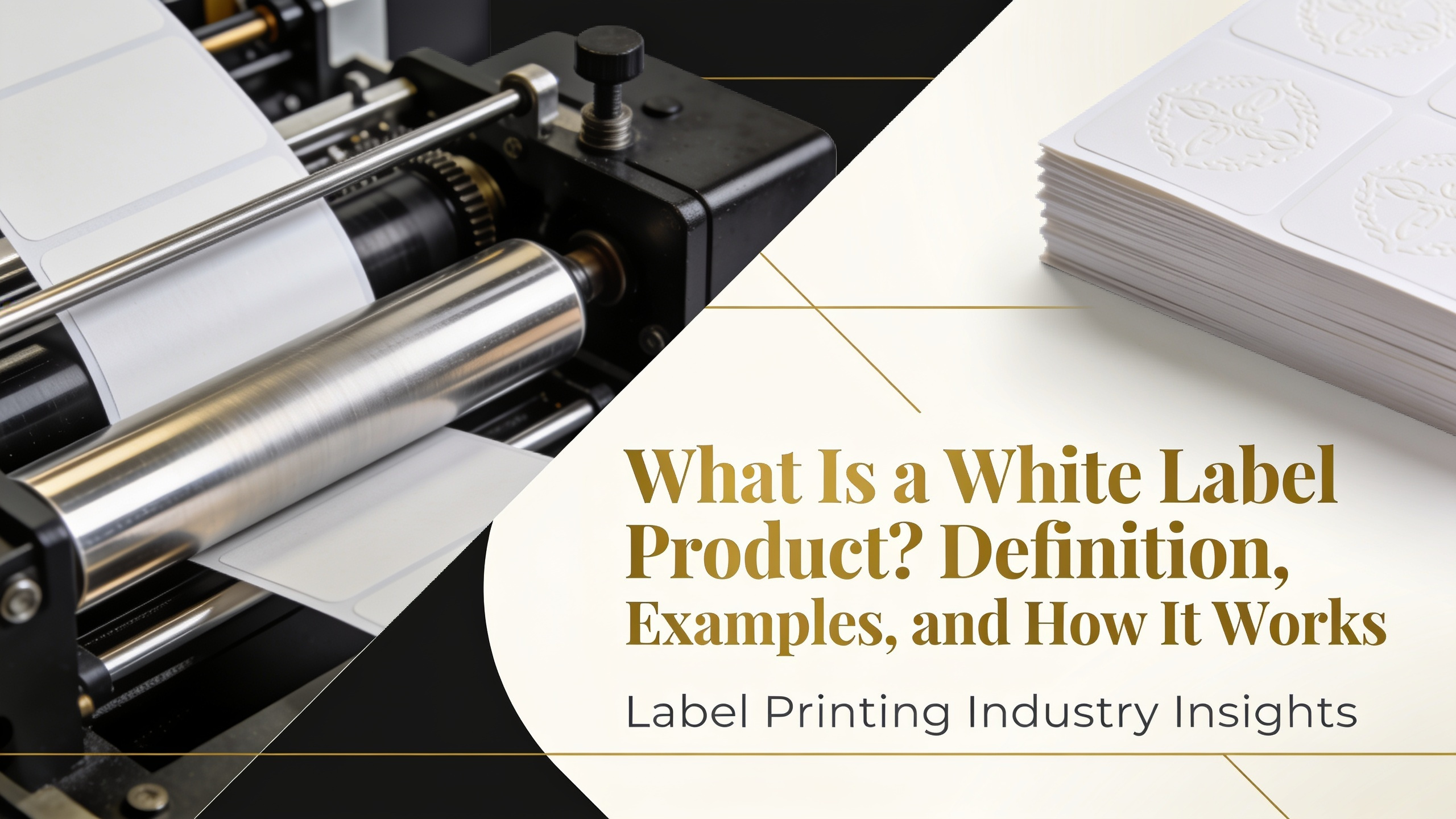
A white label product is a generic item manufactured by one company and rebranded by another for resale under its own name. The producer stays anonymous, while the reseller owns the branding, packaging, and customer relationship.
So what does it mean to white label something? It means buying a finished, unbranded product from a manufacturer and selling it as your own. The formulation, design, or software already exists—you supply the identity.
This model powers thousands of brands across retail, e-commerce, and digital services. From lipsticks to project management software, whats white labeling really about is speed to market without the burden of R&D or production infrastructure.
In-house manufacturing requires capital investment in equipment, facilities, raw materials, quality control teams, and regulatory compliance. White labeling shifts all of that to a third-party producer, letting the brand owner focus on marketing and distribution.
The trade-off is control. In-house production allows unlimited customization of every ingredient, feature, and process. White label production offers pre-developed formulas or codebases with limited customization—usually restricted to labeling, packaging, and minor tweaks.
Time-to-market is where white label wins decisively. Launching a private cosmetic line in-house can take 18–24 months. With a white label supplier, the same product can be on shelves within 8–12 weeks.
White label manufacturing dominates several verticals where formulation or development costs are prohibitive for smaller brands. So what are white label products in practice? Here are the sectors where the model thrives:
Cosmetics is particularly saturated with white labeling because formulation chemistry, stability testing, and regulatory documentation demand expertise most indie brands lack. A specialized manufacturer solves all three at once.
Understanding what is white label production requires walking through the actual workflow. The steps are consistent across industries, though technical details vary between physical goods and digital products.
For SaaS white labeling, the process replaces physical manufacturing with domain configuration, UI customization, and API integration. The reseller receives a fully functional platform under their brand name and logo.
Custom labels are the visible boundary between a generic product and a branded one. They carry the logo, color palette, ingredient disclosures, batch codes, and regulatory information required by law—everything the consumer associates with the brand's identity.
Label material and finish directly influence perceived quality. A matte textured label with foil stamping signals premium positioning, while a glossy sticker suggests mass-market pricing. The same underlying formula can occupy different market tiers based on label execution alone.
Compliance elements are non-negotiable. Cosmetic labels must list INCI ingredient names, net weight, batch codes, PAO symbols, and manufacturer or distributor address. Supplement labels require Supplement Facts panels and FDA disclaimers. A skilled label partner ensures every regulatory box is checked.
Brands that invest in label design differentiate faster in crowded categories. Two moisturizers from the same white label factory can compete at $12 and $85 price points based entirely on packaging, label finish, and brand narrative.
White labeling isn't universally the right choice. The advantages are significant, but so are the constraints. Weigh both before committing to the model.
Advantages of white labeling
Disadvantages of white labeling
The model works best for brands with strong marketing capabilities and access to distribution channels. It works poorly for founders whose competitive edge depends on proprietary formulation or unique product engineering.
What is a white label product in simple terms?
A white label product is a ready-made item produced by one company and sold by another under its own brand name. The manufacturer handles production; the reseller handles marketing, pricing, and customer relationships.
Is white labeling legal?
Yes. White labeling is a fully legal commercial arrangement documented through supply agreements. Both parties operate transparently within their contract, and consumers are not misled because the brand owner takes full legal responsibility for the product sold.
What is white label versus private label?
White label products are sold to multiple resellers with minor customization. Private label products are exclusive to a single retailer and typically feature more customization. All private label is a form of white labeling, but not all white label is private label.
Do I need a minimum order to buy white label cosmetics?
Yes. Most cosmetic white label manufacturers require MOQs between 500 and 3,000 units per SKU. Some suppliers offer sample kits or lower MOQs for startups, but unit costs are significantly higher at smaller volumes.
Can I modify a white label formula?
Yes, within limits. Most manufacturers allow adjustments to fragrance, color, active ingredient percentages, and texture. Full reformulation moves the project into custom manufacturing territory, which costs more and takes longer.
Who is responsible if a white label product has a defect?
The brand owner carries primary legal responsibility toward the consumer. However, supply contracts typically hold the manufacturer accountable for defects caused by production errors, and product liability insurance is standard on both sides of the arrangement.
How do I choose a white label manufacturer?
Evaluate certifications (GMP, ISO, FDA registration), product catalog depth, MOQ flexibility, lead times, sample quality, and communication responsiveness. Request references from existing clients and audit facilities in person when order volumes justify the trip.