On this page
- Bottle Labels: Materials & Adhesives
- Beverage Bottle Label Material and Adhesive: Choosing the Right Water Bottle Label Materials
- Water Bottle Label Adhesive: Choosing the Right Label to Avoid Failure
- Bottle Label Materials for Curves: Durable Water Bottle Labels and Beverage Durability
- Choosing the Right Label Material: Bottle Label Materials and Film Labels
- Paper Labels vs BOPP Labels: Choosing the Right Label Material for Water Bottle Labeling
- Label Adhesive and Bottle Label Bond: Durable Material Options for Beverage
- Adhesive for Glass and Plastic: Choosing the Right Label Adhesive for Every Bottle Label
- Make Your Label Durable: Label Topcoat and BOPP Label Durability
- Cost-Effective Laminate and Label Topcoat: Enhancing Every Bottle Label
- Choosing the Right Label Design: Make Your Label for the Beverage Industry
- Bottle Label Materials Checklist: Choosing the Right Label for Your Labeling Needs
Bottle Labels: Materials & Adhesives
Beverage Bottle Label Material and Adhesive: Choosing the Right Water Bottle Label Materials
Packaging integrity relies heavily on the symbiotic relationship between the container and its label. A stunning design becomes irrelevant if the label material fails in the ice bucket or the adhesive releases during transit. High-performance bottle labels made for water bottle use require a calculated balance of chemical compatibility and physical durability. Labels are used to define the brand, but bottle labels need to be functional across various environments.
Engineers and brand managers must look beyond graphic appeal to understand the technical specifications that drive successful adherence. The environment in which the bottle lives dictates the material science required for the label material. From high-humidity manufacturing lines for custom labels to retail shelf friction, every bottle label variable impacts the final specification. Labels are printed using various methods, and a wine bottle often requires different materials than bottled water.
Improper material selection leads to flagging, wrinkling, and total adhesion failure. Understanding specific material properties allows for cost-effective decisions that do not compromise quality. Labels are built to last, and choosing the right label material is essential for roll labels and pressure-sensitive labels. This guide dissects the technical components necessary for specifying robust labeling solutions that meet all labeling needs.
Water Bottle Label Adhesive: Choosing the Right Label to Avoid Failure
Application failure often stems from a misunderstanding of the bottle’s physical geometry and surface characteristics. A bottle label that performs perfectly on a flat surface may catastrophically fail on a cylindrical or tapered container. The tension held within the film labels or paper labels facestock fights against the label adhesive bond, creating potential lift points. Labels are typically tested for these stresses to ensure a label that stays.
Labels possess "memory," a tendency to return to their original flat state. When wrapped around a tight diameter, the film material or facestock exerts outward pressure. If the adhesive’s initial tack represents the weaker force, the label edges will lift. This is particularly prevalent in small pharmaceuticals or cosmetic vials where labels are designed for tight radii, and types of label materials vary.
Environmental stress cracking is another failure mode often ignored during standard quality assurance checks. When essential oils or chemical contents spill onto the glass or plastic container surface, they can migrate under the label material. This interaction can degrade the pressure-sensitive adhesives bonds or cause the container surface itself to embrittle, making durability a key factor.
Bottle Label Materials for Curves: Durable Water Bottle Labels and Beverage Durability
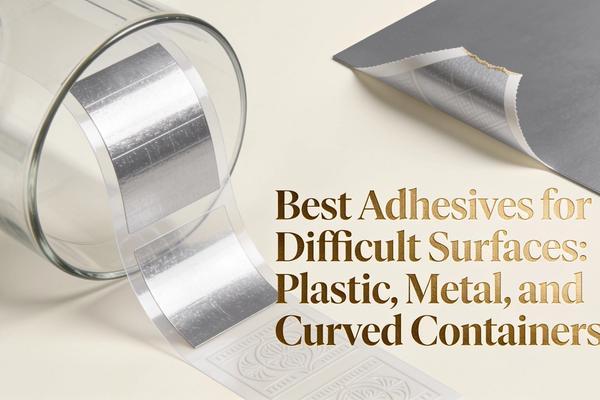
Compound curves present the most significant geometric challenge for standard pressure-sensitive labels. A water bottle that curves vertically and horizontally simultaneously requires a label with high conformability. Rigid materials like thick paper labels or standard polyesters will wrinkle because they cannot compress or stretch to accommodate the dual radius of a glass bottle or plastic labels.
Polyethylene labels generally offer better conformability than polypropylene for squeezable or semi-rigid containers. The film material flows with the container shape rather than resisting it. For compound curves, sleeve labels are often the only viable alternative to pressure-sensitive labeling, though they come with higher application costs compared to roll labels.
Condensation creates a hydro-layer that acts as a barrier between the label adhesive and the substrate during application. If a beverage container is filled cold and labeled immediately, ambient moisture forms instantly on the glass and plastic. Standard permanent adhesive options are hydrophobic and will not bond through this layer when in contact with water.
Wet-stick adhesives are formulated to penetrate the condensation layer. These are critical for breweries and beverage lines where filling temperatures are significantly lower than ambient manufacturing temperatures. Without this specialized chemical formulation and material choice, beverage labels will slide or fall off before the adhesive sets.
Choosing the Right Label Material: Bottle Label Materials and Film Labels
The facestock serves as the canvas for the brand but also the primary structural component of the label. Choosing the correct face material requires analyzing the lifecycle of the product. Aesthetics usually drive the initial choice, but material options and performance metrics must validate that selection for food and beverage items.
Tensile strength matters for high-speed automated label printing application lines. Upon dispensing, the liner is stripped away, and the machine pulls the label material onto the bottle. Low-tensile materials may snap under the tension of high-speed rotary labelers, causing costly downtime and material waste in the beverage industry.
Opacity is another technical consideration often overlooked until the proofing stage. If a water bottle label is applied to a clear bottle containing dark liquid, a thin paper labels facestock may appear grey. Brands must specify opaque material options or metallic barrier coats to preserve color integrity for high-resolution printing.
Paper Labels vs BOPP Labels: Choosing the Right Label Material for Water Bottle Labeling
Paper labels substrates communicate tradition, craft, and organic quality. They are frequently specified for a wine bottle, spirits, and beer labels. Textured papers provide tactile feedback that consumers associate with premium pricing, but labels are used differently here since paper labels are structurally weak when wet and lack resistance to moisture.
To combat moisture holding, paper labels for bottles require wet-strength additives. These chemical treatments prevent the paper fibers from disintegrating when submerged in an ice bucket or exposed to high humidity. However, even with additives, paper acts as a sponge, eventually graying as it absorbs water, making it less durable than film labels.
Film material substrates, specifically Biaxially Oriented Polypropylene (BOPP), dominate the bopp labels and water bottle labels market. BOPP labels offer exceptional clarity, creating the "clear label" look. It is impervious to water, oil, and most chemicals, making it the ideal material choice for health products and durable materials.
Vinyl is another film option, prized for its extreme durability and outdoor weather resistance. However, vinyl contains plasticizers that can migrate into certain adhesives, causing them to turn gooey. For standard chemical resistance on beverage labels, polypropylene remains the industry gold standard for cost-effective performance.
Label Adhesive and Bottle Label Bond: Durable Material Options for Beverage
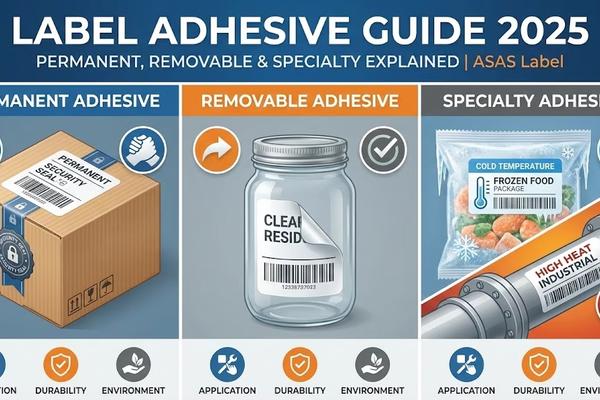
The adhesive layer functions as the mechanical anchor. It is technically incorrect to assume a "permanent adhesive" is permanent on all glass or plastic surfaces. Adhesives are formulated based on specific surface energy requirements and temperature changes during the service life.
Service temperature range differs from application temperature. An adhesive might hold fast at low temperatures, but it cannot be applied there. The label adhesive flows efficiently only above a minimum application temperature, usually around 40 to 50 degrees Fahrenheit, to wet out the bottle label properly and ensure durability.
Shear resistance measures the adhesive's ability to withstand forces that try to slide the bottle label off the surface. High shear resistance is vital for small-diameter water bottle labels where the label memory exerts force. Low shear pressure-sensitive adhesives will allow the label to "creep" or slide over time.
Adhesive for Glass and Plastic: Choosing the Right Label Adhesive for Every Bottle Label
Glass and plastic substrates require different considerations. Glass is a high-energy substrate, meaning it is easy for adhesives to wet out and bond. Almost any standard permanent adhesive will adhere well to a clean glass bottle. The challenge with glass usually involves wash-off requirements for beer labels or returnable bottles.
Plastic labels substrates vary wildly in surface energy. HDPE and Polypropylene are low-energy surfaces. They act like non-stick pans; standard adhesives struggle to grip them. Labels are cost-effective when you use rubber adhesives or hot melt adhesives designed specifically for low-surface-energy (LSE) plastic labels.
PET (Polyethylene Terephthalate) falls somewhere in the middle but presents its own challenges. PET is often recycled, so modern sustainability standards demand adhesives that separate cleanly. Brands using PET bottled water must consider APR-compliant adhesives to ensure the label material and container are recyclable.
Texture on every bottle label surface reduces the contact area. A frosted plastic bottle has microscopic peaks and valleys. If the adhesive is too thin, it only touches the peaks, resulting in a weak bond. These material options require high coat-weight adhesives that flow into the valleys for a durable finish.
Make Your Label Durable: Label Topcoat and BOPP Label Durability
The print surface remains vulnerable to scuffing and product spillage regardless of the substrate durability. Ink adhesion to film labels requires surface treatment, such as corona treating, but mechanical protection is still necessary for shipping. Choosing the right label topcoat ensures the brand stays looking premium.
Finishes also alter the perceived coefficient of friction. A high-friction matte labels surface might cause bottles to catch on rails during the beverage industry packaging process. Conversely, glossy labels with a high-slip finish ensure smooth movement through accumulation tables, conveyors, and label printing lines.
Resistance to UV degradation extends the shelf attractiveness of the product. Red and yellow inks are particularly susceptible to fading under retail lighting. The label topcoat or laminate material must act as a filter, blocking harmful UV rays from degrading the pigments beneath to maintain the label design.
Cost-Effective Laminate and Label Topcoat: Enhancing Every Bottle Label
Lamination involves applying a thin laminate material (polypropylene or polyester) over the printed label. This provides the ultimate physical barrier for every bottle label. It renders the label virtually scratch-proof and adds thickness, which can help film labels during easier machine dispensing for bottled water.
Laminate material traps ink and prevents chemical interaction. For products like automotive fluids, foil labels add a layer of sophistication, but lamination is non-negotiable. It allows the bottle to be wiped clean without dissolving the high-resolution printing, brand messaging, or ul labels regulatory information.
Varnishes are liquid coatings cured via UV light. They are generally less expensive than lamination and offer design flexibility. Spot varnishes allow designers to highlight specific label types, creating contrast between matte and glossy labels areas for shelf impact across the food and beverage sector.
However, varnishes offer lower abrasion resistance than laminate material. A heavy scuff during transit can break the varnish layer and damage the ink. Varnish is sufficient for cost-effective single-use food products or wine labels but falls short for heavy-duty industrial or high-friction beverage labels.
Choosing the Right Label Design: Make Your Label for the Beverage Industry
Technical design constraints must be addressed before plates are made. The most common error in label printing is failing to account for the "gap" in full-wrap labels. Attempting to make a label meet perfectly at the back often results in misalignment due to glass and plastic variances.
Designers should leave a specifically calculated gap between the label ends. Alternatively, if an overlap is required, the label design must account for a "print-free" zone or ensure the varnish is compatible with the label adhesive to allow the water bottle label to stick to itself securely.
Tapered bottles require labels that are die-cut with a curve. If a rectangular bottle label is applied to a tapered water bottle, the material will crease and bubble. The geometric arc compensates for the changing circumference, ensuring you make your label look professional on every bottle label type.
Bleed areas are critical for die-cutting tolerances. Mechanical cutters can shift slightly. Without adequate bleed, finished custom labels may show white lines at the edges. This ruins the premium aesthetic of dark-colored beer labels or luxury foil labels designs that need a clean finish.
Clear labels on clear bottles necessitate high-opacity white ink underprinting. Standard CMYK inks are translucent. Without a layer of white ink behind the graphics, the colors will appear muddy against the product. This is a vital material choice for water bottle labels and other transparent material options.
Bottle Label Materials Checklist: Choosing the Right Label for Your Labeling Needs
Before finalizing any order for bottle labels, verify the following specifications with the converter. This step prevents costly reprints and application failures. Precision at this stage ensures seamless integration with the beverage industry bottling line and all materials to choose from.
Substrate Compatibility: Confirm the facestock matches the container material (glass or plastic, PET, HDPE) and surface texture. Ensure the material flexibility matches the bottle rigidity (squeeze vs. rigid) for polyethylene labels or bopp labels.
Adhesive Formulation: Verify the adhesive type (acrylic, hot melt, rubber-based) against the application temperature and service conditions (freezer, shower, outdoors). Check surface energy and pressure-sensitive labels compatibility specifications.
Liner Material: Specify the correct liner (PET liner for high-speed dispensing, paper liner for standard speeds). Clear PET liners are required for sensors to detect clear label designs on many high-speed applicators.
Unwind Direction: Determine the Copy Position required by the applicator machine. Incorrect unwind direction stops production immediately. Labels are typically wound in specific orientations to fit the machinery.
Roll Size Constraints: Confirm the maximum Outer Diameter (OD) and the Core Inner Diameter capacity of the labeling equipment. Oversized roll labels will not fit the machine spindle, causing delays in label types application.
Varnish and Imprintability: If date codes or lot numbers must be thermal-transfer printed on the line after labeling, ensure the label topcoat or varnish layer has a "knockout" or is formulated to accept overprinting for every bottle label.