On this page
- Understanding Label Adhesives
- What is Pressure Sensitive Adhesive
- How PSA Works
- The Adhesive Layer Structure
- Types of Adhesive Chemistry
- Acrylic Based Adhesives
- Hot Melt Rubber Adhesives
- Rubber Based Adhesives Solvent
- Silicone Adhesives
- UV Curable Adhesives
- Adhesive Performance Categories
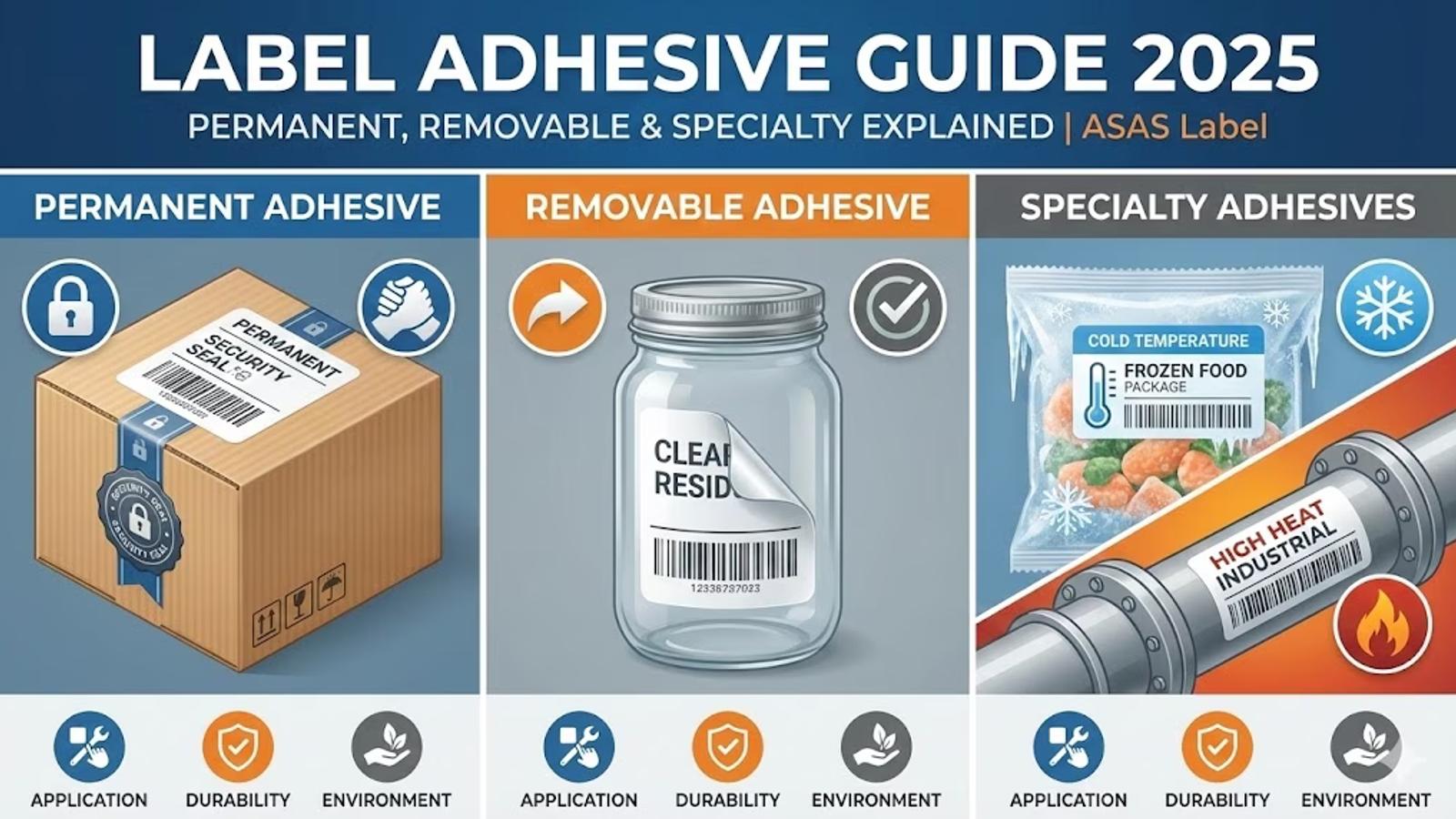
- Permanent Adhesives
- Removable Adhesives
- Repositionable Adhesives
- Tamper Evident Destructible
- Peelable Adhesives
- Specialty Adhesive Types
- Freezer Grade Adhesives
- High Temperature Adhesives
- All Temperature Adhesives
- Cold Temperature Application
- High Tack Aggressive Adhesives
- Low Tack Adhesives
- Wash Off Adhesives
- Microsphere Adhesives
- Surface Compatibility
- Understanding Surface Energy
- Common Surfaces and Recommendations
The adhesive layer is frequently the most underestimated component of label construction. While the facestock provides the visual canvas and the liner serves as the carrier, the adhesive dictates performance. A failure here results in flagged edges, dropped labels, or residue issues that damage brand perception.
Selecting the correct adhesive requires navigating a complex matrix of variables. You must balance substrate energy, environmental conditions, application methods, and regulatory compliance. An error in judgment leads to supply chain disruptions and costly recalls.
Adhesive chemistry involves specific formulations designed for precise applications. A "general purpose" adhesive rarely suffices for specialized industrial or cold-chain environments. Understanding the distinct properties of acrylics, hot melts, and solvent-based rubber is essential for quality control.
ASAS Label specializes in matching adhesive performance to rigorous application requirements. We eliminate the guesswork from material selection. This guide provides the technical foundation needed to specify the correct label adhesive types for any operational scenario.
Understanding Label Adhesives
What is Pressure Sensitive Adhesive
Pressure-sensitive adhesive (PSA) is a type of non-reactive adhesive which forms a bond when pressure is applied to bond the adhesive with the adherent. Unlike structural adhesives that require heat, water, or solvents to activate, PSAs work immediately upon contact.
The mechanism relies on the viscoelastic properties of the polymer. The material must be fluid enough to flow over the surface but solid enough to resist shear forces. This balance determines the ultimate success of the label application.
Key performance indicators for PSAs include peel adhesion, tack, and shear strength. These metrics define how quickly the bond forms, how strong it is, and how well it resists sliding forces under stress.
How PSA Works
At a molecular level, the adhesive must wet out the surface of the substrate. "Wetting" refers to the adhesive flowing into the microscopic peaks and valleys of the material it is applied to. Without proper wetting, the contact area is insufficient for a strong bond.
Surface energy plays the primary role in this process. High surface energy materials pull the adhesive into a flat layer, maximizing contact. Low surface energy materials cause the adhesive to bead up, minimizing contact and weakening the bond.
Time is a critical factor in PSA performance. While tack is immediate, the full bond strength typically develops over 24 to 72 hours as the adhesive continues to flow and wet the surface.
The Adhesive Layer Structure
The thickness of the adhesive layer, known as coat weight, dramatically impacts performance. A heavier coat weight is often required for textured surfaces to fill the gaps and create adequate contact.
However, excessive coat weight leads to adhesive ooze. This bleeding of adhesive from the edges of the label causes machinery jams and aesthetic defects. Precision in coating application is non-negotiable for high-speed labeling lines.
The release liner acts as the delivery system for the adhesive. It must hold the adhesive securely during converting and storage but release it consistently during the dispensing process. The siliconization level of the liner dictates this release force.
Types of Adhesive Chemistry
Acrylic Based Adhesives
Acrylic adhesives utilize water-based emulsions to create stable, long-lasting bonds. They are characterized by their oxidative stability. This means they do not yellow or break down easily when exposed to UV light or heat.
These adhesives offer excellent clarity and are ideal for the "no-label look" on clear packaging. Their chemical structure makes them resistant to plasticizer migration, which is common in flexible PVC containers.
Temperature performance for acrylics is broad. They function well in both elevated temperatures and standard refrigeration. This versatility makes them the standard choice for pharmaceutical and health and beauty applications.
Hot Melt Rubber Adhesives
Hot-melt adhesives are 100% solid formulations applied in a molten state. As they cool, they solidify to form a bond. They are renowned for high initial tack and excellent adhesion to a wide variety of substrates.
These formulations are typically rubber-based and offer a cost-effective solution for high-volume applications. They perform exceptionally well on corrugated cardboard and rough surfaces where immediate grab is required.
The limitation of hot melts lies in their UV and heat resistance. They can soften at high temperatures and degrade under prolonged sunlight exposure. Therefore, they are best suited for indoor logistics and general-purpose labeling.
Rubber Based Adhesives Solvent
Solvent-based rubber adhesives are dissolved in organic solvents rather than water. This chemistry provides a very aggressive initial bond and excellent moisture resistance. They bite through slight surface contamination better than acrylics.
They maintain flexibility and tack at lower temperatures compared to standard acrylics. This makes them a viable option for certain industrial applications where robust adhesion is paramount.
However, environmental regulations regarding Volatile Organic Compounds (VOCs) have reduced their prevalence. Manufacturing requires expensive solvent recovery systems, making them a legacy choice for specific heavy-duty applications.
Silicone Adhesives
Silicone adhesives occupy the high-performance end of the spectrum. They are capable of withstanding extreme temperature fluctuations, ranging from -40°C up to +200°C or more.
Beyond temperature, they offer exceptional chemical resistance. They can bond to difficult low-surface-energy silicone-coated substrates where other adhesives fail completely.
Due to the high cost of raw materials, silicone adhesives are reserved for specialized industrial, automotive, and electronics labeling. They are critical where failure is not an option under severe stress.
UV Curable Adhesives
UV-curable adhesives are applied as a liquid and cured instantly using ultraviolet light. This technology is gaining traction for linerless label applications, which reduce waste.
They offer strong environmental benefits by eliminating solvents and reducing energy consumption during drying. The bond strength and chemical resistance can be tuned by adjusting the cross-linking density during the cure.
Implementing this technology requires specialized application equipment. It is currently a niche solution but represents a growing segment of sustainable packaging innovation.
Adhesive Performance Categories
Permanent Adhesives
Permanent adhesive is designed to bond irreversibly to the substrate. The intent is that the label remains attached for the entire lifecycle of the product. Removal typically results in the destruction of the label face or residue left on the surface.
This category is the standard for primary product identification, branding, and safety warnings. The bond strength usually increases over time as the adhesive fully wets the surface.
Variations exist within this category, including standard permanent, high-tack permanent, and ultra-permanent for difficult surfaces. Selection depends on the roughness and surface energy of the container.
Removable Adhesives
Removable labels are engineered to form a temporary bond. They must hold securely during the product's shelf life but peel away cleanly without leaving residue or damaging the substrate upon removal.
Balancing holding power with clean removal is chemically complex. If the internal strength of the adhesive (cohesion) is lower than the bond to the surface (adhesion), residue will occur.
These are essential for promotional stickers, price tags, and inventory labels on reusable crates. It is vital to test removable adhesives on the specific substrate, as "removable" on glass may be permanent on paper.
Repositionable Adhesives
Repositionable adhesives allow the label to be applied, removed, and reapplied multiple times. Unlike standard removables, they maintain their tack properties over several cycles.
This technology is often associated with wet wipes closures and re-sealable food packaging. The chemistry ensures that the adhesive anchors firmly to the label face while releasing gently from the package.
For large-format graphics and wall decals, repositionability prevents waste during installation. Installers can lift and correct the alignment without destroying the graphic.
Tamper Evident Destructible
Security applications require adhesives that provide visual evidence of interference. When an attempt is made to remove the label, the bond to the substrate must exceed the tensile strength of the facestock.
This results in the label fracturing into tiny pieces (destructible vinyl) or delaminating to reveal a "VOID" or "OPENED" pattern left on the surface.
These adhesives are aggressive and fast-setting. They are critical for warranty seals, pharmaceutical packaging, and asset tracking tags to prevent theft or fraud.
Peelable Adhesives
Peelable adhesives are a subset of removables designed for specific timeframes. They are often used for coupons or "piggyback" labels where a top layer is removed by the consumer while the base layer remains.
The adhesive must provide a consistent peel force. If the peel is too tight, the label tears; if too loose, it pre-dispenses or falls off during shipping.
They are widely used in promotional marketing and clinical trials. Long-term aging tests are crucial, as some peelable adhesives can become permanent over extended periods.
Specialty Adhesive Types
Freezer Grade Adhesives
Freezer labels present a unique thermodynamic challenge. Standard adhesives harden and lose tack below freezing points, causing labels to fall off. Freezer-grade adhesives are formulated to remain soft and tacky at sub-zero temperatures.
These adhesives are specifically designed to be applied to frozen surfaces (down to -20°C or -40°C) or to surfaces at room temperature that will subsequently be frozen. The presence of frost or condensation requires specific chemical adjustments.
Acrylic-based freezer adhesives are common for food packaging. They ensure the brand identity survives the cold chain from manufacturing to the consumer's freezer.
High Temperature Adhesives
Industrial and automotive environments often expose labels to intense heat. High-temperature adhesives maintain bond integrity up to 150°C and beyond without softening or oozing.
Modified acrylics and silicones are the primary chemistries used here. They resist oxidative degradation that causes standard adhesives to turn brown and brittle.
Applications include under-hood automotive labels, printed circuit board (PCB) tracking labels used in solder reflow ovens, and appliance rating plates.
All Temperature Adhesives
All-temperature adhesives offer a versatile middle ground. They provide a wide service temperature range, typically from -40°C to +80°C. They are capable of handling both refrigerator conditions and ambient shelf storage.
While they may not match the extreme performance of dedicated freezer or high-heat formulations, they simplify inventory for manufacturers with varied product lines.
They are excellent for food logistics where a product might be labeled at room temperature, transported in a refrigerated truck, and stored in a freezer.
Cold Temperature Application
There is a distinction between service temperature and application temperature. Many adhesives fail if applied when the ambient temperature is below 5°C. Cold-temperature adhesives are formulated to flow and wet out even in chilly packing halls.
This is critical for unheated warehouses or outdoor application in winter months. The adhesive maintains immediate tack where standard permanent adhesives would feel like dry plastic.
These are vital for the logistics and dairy industries, where condensation and cold substrates are the norms during the labeling process.
High Tack Aggressive Adhesives
Some surfaces fight adhesion. Rough wood, textured plastics, tires, and carpets require high-tack, aggressive adhesives. These formulations have a high coat weight and lower viscosity to flow into deep textures.
Rubber-based hot melts are often the choice here due to their natural grab. They form a mechanical interlock with the fibers or texture of the substrate.
They are used for labeling concrete, lumber, canvas, and low-surface-energy industrial drums. Standard adhesives will merely bridge the peaks of the texture and fall off.
Low Tack Adhesives
Low-tack adhesives are designed for delicate surfaces. This includes protective films for electronics screens, glass manufacturing, or temporary masking.
The goal is to provide just enough adhesion to stay in place during transport or processing but remove with near-zero peel force. This prevents damage to sensitive coatings or finishes.
Residue-free removal is the absolute priority. Even microscopic residue can ruin a high-value optical component or screen.
Wash Off Adhesives
Sustainability initiatives have driven the demand for wash-off adhesives. These are designed to release completely from the bottle during the industrial washing process in warm alkaline water.
This facilitates the recycling of PET and glass containers. By removing the label and adhesive cleanly, the purity of the recycled material (rPET) is maintained.
They are extensively used in the beverage industry for returnable glass bottles and single-use plastics destined for the circular economy.
Microsphere Adhesives
Microsphere technology involves suspension of adhesive particles in a binder. This creates a discontinuous adhesive layer that limits surface contact, allowing for easy removal and repositioning.
This is the technology behind high-end removable wall graphics and premium repositionable notes. It offers a consistent, smooth peel feel that does not degrade over time.
While more expensive, microspheres prevent the damage associated with full-contact adhesives on painted dry-wall or delicate paper stock.
Surface Compatibility
Understanding Surface Energy
Surface energy is the most critical physical property when selecting label adhesive types. It is measured in dynes/cm. High surface energy (HSE) materials like glass, stainless steel, and aluminum allow liquids to spread out easily. Adhesion to HSE surfaces is generally straightforward.
Low surface energy (LSE) materials like polyethylene (PE), polypropylene (PP), and Teflon resist wetting. The adhesive beads up rather than flowing flat. Bonding to LSE surfaces requires aggressive, high-tack adhesives modified with tackifiers.
Ignoring surface energy is the leading cause of label failure. A standard permanent adhesive that works perfectly on a glass jar may fail immediately on a polyethylene squeeze bottle.
Common Surfaces and Recommendations
Glass: This is an HSE surface. Standard permanent or removable acrylics work effectively. Issues usually arise from coatings on the glass or condensation, not the glass itself.
Metal: Clean metals are HSE and bond well with most adhesives. However, oily or powder-coated metals behave like LSE surfaces and require aggressive rubber-based or modified acrylic adhesives.
Paper/Cardboard: Porous surfaces require adhesives with good flow. Standard hot melts are excellent for corrugated boxes as they physically lock into the fibers.
HDPE (Milk Jugs): High Density Polyethylene is an LSE plastic. It requires high-tack adhesives designed specifically for polyolefins to prevent lifting.
LDPE (Squeeze Bottles): Low Density Polyethylene is flexible and LSE. The adhesive must be both aggressive enough to stick and flexible enough not to wrinkle when the bottle is squeezed.