

On this page
- Variable Data Printing for Labels
- Differentiating Static and Variable Elements
- Analyzing Static Layout Components
- Mapping Variable Data Fields
- Where Is VDP Essential in Operations
- Managing Batch Lots and Expiry Dates
- Implementing Serialization and Track and Trace
- Optimizing QR Codes and Barcodes
- Ensuring Print Quality and Scannability
- Defining Quiet Zones and Sizing
- Data Setup Requirements
- Formatting CSV and Database Inputs
- Executing Data Validation Protocols
- Material and Finish Impact
- Protecting Against Smudging and Abrasion
- QA Checklist Strategy
- Establishing Sampling Plan and Scan Testing
Variable Data Printing for Labels
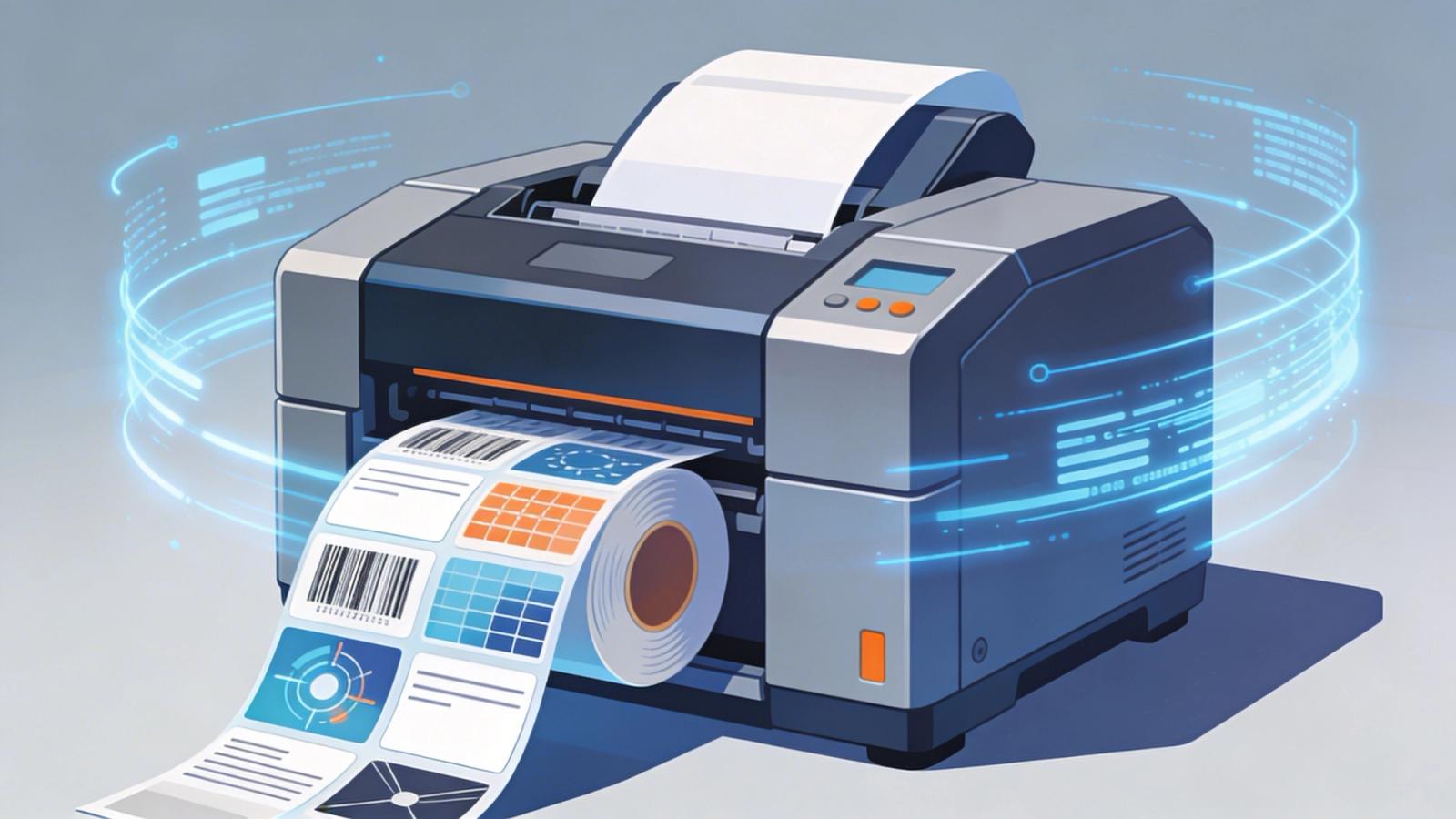
Variable data printing represents the convergence of digital press capabilities and database management. It allows for the continuous production of labels where text, graphics, or images change from one impression to the next without stopping or slowing down the press. This technology has shifted label production from mass manufacturing to mass customization.
The core mechanism relies on a digital raster image processor (RIP). Unlike traditional flexography that utilizes fixed plates, the RIP assembles every label frame individually in real-time. It pulls static assets and merges them with dynamic data streams instantly. This process eliminates the setup costs associated with plate changes for multiple SKUs.
Advanced digital presses, such as HP Indigo or UV inkjet integrated systems, handle these transitions seamlessly. The engine writes the unique image to the blanket or substrate for every rotation. This capability is essential for modern supply chains that require item-level traceability and just-in-time inventory practices.
Design software integrates directly with comma-separated value files or SQL databases. The software maps specific columns to predefined fields on the artwork. This automation ensures that thousands of unique labels can be generated in minutes, reducing human error inherent in manual typesetting.
Differentiating Static and Variable Elements
Analyzing Static Layout Components
The static layer of a label creates the visual foundation and brand consistency. This includes the corporate logo, brand colors, border designs, and fixed standard copy. These elements must remain identical across the entire print run to maintain shelf appeal and brand recognition.
Designers typically build this layer as a background PDF or vector file. It serves as the master canvas upon which variable data is superimposed. In hybrid printing environments, the static elements might be printed via flexography for cost efficiency, while the variable data is added via a digital station.
Color consistency in the static layer is critical. Because variable data printing often utilizes CMYK process simulation rather than spot colors, calibrating the static brand colors requires precise color management profiles. This ensures that the invariant parts of the label do not shift visually during the run.
Mapping Variable Data Fields
Variable elements constitute the specific information changing per unit. This includes alpha-numeric text, serialization numbers, barcodes, or even images that shift based on demographic targeting. These fields function as placeholders within the composition software, linked to specific headers in the data source.
Dynamic composition requires strict spatial constraints. Designers must define text boundaries that accommodate the longest possible string in the database. If a product name varies in length, the text box must either auto-condense the font width or wrap intelligently without breaking the design layout.
Layer alignment is a vital technical consideration in this phase. The registration between the static background and the dynamic overlay must be perfect. Any drift in the web movement can cause variable text to overlap with static borders, rendering the label unreadable or aesthetically unacceptable.
Where Is VDP Essential in Operations
Industrial applications drive the majority of volume in variable data printing. While marketing campaigns utilizing personalized names garner attention, the backbone of VDP lies in logistics and compliance. Manufacturers rely on this technology to manage complex inventory units without halting production lines.
Supply chain visibility relies on the ability to identify specific items rather than just product types. VDP enables granulized data tracking that extends from the manufacturing floor to the retail point of sale. This operational necessity forces label converters to maintain rigorous data integrity standards.
E-commerce fulfillment centers also utilize VDP for logistics labels. These labels often combine shipping information with internal routing barcodes. The speed of digital printing allows these facilities to print packing slips and shipping labels on demand, synchronized perfectly with the picking process.
Managing Batch Lots and Expiry Dates
Regulatory bodies like the FDA and USDA impose strict labeling requirements for lot traceability. In the food and beverage sectors, every production run must carry a unique batch code. This allows manufacturers to isolate specific groups of products in the event of a safety recall.
Variable printing acts as a safeguard for dynamic date coding. Instead of relying on manual stamping or generic "best by" labels, VDP integrates the expiration date directly into the high-resolution label art. This reduces the risk of post-application dating errors or illegible stamps.
Compliance extends to chemical labeling under GHS standards. Different chemical concentrations may require unique hazard pictograms on the same bottle size. VDP allows a single roll of labels to cover multiple chemical formulas, switching the hazard graphic dynamically based on the database input.
Implementing Serialization and Track and Trace
Serialization involves assigning a unique identification number (UID) to every single label printed. This is crucial for the pharmaceutical industry under the Drug Supply Chain Security Act (DSCSA). It ensures that every unit can be verified as authentic and traced back to its origin.
Brand protection strategies utilize serialization to combat counterfeiting and gray market diversion. By scanning a serialized label, brands can see if a product intended for sale in one region has been diverted to another. This data is invaluable for maintaining global pricing structures and distributor integrity.
Track-and-trace systems often require "parent-child" aggregation. This means the unique label on a bottle is linked in a database to the unique label on the case, which is linked to the pallet. VDP ensures that these sequential or associated numbers are printed in the exact order required for packing lines.
Optimizing QR Codes and Barcodes
Machine-readable codes form the functional core of most variable data labels. Whether using 1D linear barcodes (like UPC or Code 128) or 2D matrix codes (like QR or Data Matrix), precision is non-negotiable. These codes act as the bridge between physical inventory and digital ERP systems.
The choice of symbology depends on the amount of data and the available space. 2D codes are increasingly popular because they can store significant alphanumeric data in a small footprint. They also possess error correction capabilities, making them resilient to minor damage.
Integration with mobile marketing is another growing sector. QR codes printed via VDP can lead consumers to unique landing pages. This allows brands to track engagement down to the individual package level, gathering data on where and when products are scanned.
Ensuring Print Quality and Scannability
A barcode that fails to scan disrupts the entire supply chain. Print quality is measured against ISO/IEC standards, evaluating parameters like symbol contrast, modulation, and decodability. Commercial gradings range from A (excellent) to F (fail), and many retailers demand a minimum 'C' grade.
Ink spread, also known as dot gain, is a common issue in digital printing. If the ink spreads too much on the substrate, the bars become wider and the spaces narrower. This distortion makes the code unreadable to scanners. Printers must apply "bar width reduction" curves to compensate for this physical phenomenon.
Contrast is essential for optical scanners. Black bars on a white background provide the highest Print Contrast Signal (PCS). Printing barcodes in red or on dark metallic backgrounds often results in scan failures because standard laser scanners operate on red wavelengths and cannot "see" the contrast.
Defining Quiet Zones and Sizing
The quiet zone is the clear area surrounding a barcode or QR code. It must be free of text, graphics, or perforations. For a standard 1D barcode, this zone should be at least ten times the width of the narrowest bar. Violating this space prevents the scanner from identifying the start and stop characters.
Scaling variable codes requires caution. Designers should avoid arbitrarily resizing vector barcodes in layout software. Codes should be generated at 100% size relative to their module width. Non-proportional scaling often leads to aliasing artifacts that confuse decoding algorithms.
Minimum component size is dictated by the resolution of the printing press. For a QR code, the individual square modules must be large enough to be resolved clearly. A general rule is to keep module sizes above 0.010 inches to ensure readability across various scanning devices, including low-resolution smartphone cameras.
Data Setup Requirements
The success of a VDP project is determined long before the press starts running. Data hygiene and file structure are the primary drivers of efficiency. The database serves as the single source of truth, and any errors within it will be replicated expensively on physical materials.
Encrypted data transfer is often required for security printing. When handling lottery numbers or anti-counterfeit codes, the file transfer protocol must be secure. The printer's prepress department must have strict protocols for data handling to prevent duplication or leakage of serialized IDs.
File naming conventions should be established early. When managing multiple data files for different production lots, clear nomenclature prevents the operator from loading the wrong dataset. This is particularly important when re-running orders that require new sequential numbers.
Formatting CSV and Database Inputs
Comma Separated Value (CSV) or tab-delimited text files are the industry standard for VDP ingestion. They strip away formatting issues found in complex spreadsheet applications. However, encoding is critical; UTF-8 encoding is necessary to preserve special characters and accents correctly.
Excel often mishandles data by auto-formatting cells. A common failure point occurs with zip codes or ID numbers that begin with a zero. Excel frequently removes the leading zero, corrupting the data. All variable data columns should be formatted as "Text" strictly before saving to prevent this.
Header rows distinctively label the content of each column. These headers identify the fields for the variable software. Ambiguous headers like "Field 1" or "Data A" should be avoided. Use descriptive headers like "BatchNum," "QRURL," or "Expiry_Date" to ensure correct mapping.
Executing Data Validation Protocols
Preflight data validation is a mandatory step. Automated scripts should scan the input file to ensure that character counts fall within expected ranges. If a field typically contains 10 characters but the file contains a 50-character entry, the script should flag it before printing.
Duplicate detection is vital for serialization. The software must verify that no unique identifier appears twice within the file. In high-security applications, the system should also cross-reference new data against previously printed jobs to ensure global uniqueness.
Character validation ensures that the font used in the design supports all characters in the database. This is critical for multi-lingual labels. If the database contains Chinese or Cyrillic characters but the design font does not support them, the output will display error boxes or blank spaces.
Material and Finish Impact
The interaction between digital inks and label substrates significantly impacts legibility. Porous papers absorb ink, which lowers density and edge definition. Synthetic films like Polypropylene (BOPP) or Polyester (PET) hold the ink on the surface, offering sharper lines for high-density barcodes.
Reflective materials pose challenges for barcode scanners. Printing a code directly onto a silver foil or holographic material can cause specular reflection, blinding the scanner. It is often necessary to print an opaque white background block under the barcode to mute the metallic effect.
Adhesive selection also plays a role in VDP applications. For track-and-trace logistics, the label must remain adhered throughout the supply chain. If the label lifts or flags due to poor adhesive, the variable data becomes unreadable by automated sortation conveyors.
Protecting Against Smudging and Abrasion
Variable data printed via thermal transfer or inkjet can be susceptible to environmental damage. Without protection, simple friction during shipping can rub off a serial number. UV-cured inks offer higher durability but still benefit from protective coatings.
Varnishes and laminates serve as the armor for the label. However, the choice of finish affects scannability. A high-gloss laminate can create glare that hinders barcode reading. Matte varnishes or "scuff-proof" matte laminates are often preferred for logistics labels to improve contrast and reduce glare.
Chemical resistance is required for industrial labels. If a label on a chemical drum is exposed to solvents, the variable data must not dissolve. In these cases, top-coated synthetic stocks combined with resin-based ribbons or UV inkjet technology provide the necessary solvent resistance.
QA Checklist Strategy
Quality assurance for VDP differs fundamentally from static printing. You cannot simply check the first and last label. Every single label is unique, introducing millions of potential failure points. QA protocols must evolve to rely on automation and statistical validation.
Vision inspection systems are the gold standard. These cameras mount directly onto the press or rewinder. They capture an image of every single label produced, decoding the barcode and using OCR (Optical Character Recognition) to verify the text against the database in real-time.
Data integrity reconciliation is the final step. The system must confirm that the number of good labels produced matches the number of records in the database. Any missing or spoiled labels must be logged, and reprints generated and verified to complete the sequence.
Establishing Sampling Plan and Scan Testing
While automated camera systems provide 100% verification, physical spot checks remain necessary. A robust sampling plan might involve pulling a strip of labels every 1,000 feet. These samples undergo rigorous grading using an offline barcode verifier to ensure ISO compliance.
Scan testing should mimic the end-use environment. If the labels are destined for a warehouse using handheld scanners, the QA team should test samples with similar hardware. Testing should occur at multiple distances and angles to ensure the code performs under less-than-ideal conditions.
Visual inspection focuses on data placement drift. Operators must verify that long names or complex strings have not shifted out of the designated zone. Statistical process control charts can track the registration accuracy over the length of the run, alerting operators before the drift becomes a defect.