

Contact Sales Now
Thank you! Your submission has been received!
Oops! Something went wrong while submitting the form.

Contact Sales Now
Thank you! Your submission has been received!
Oops! Something went wrong while submitting the form.

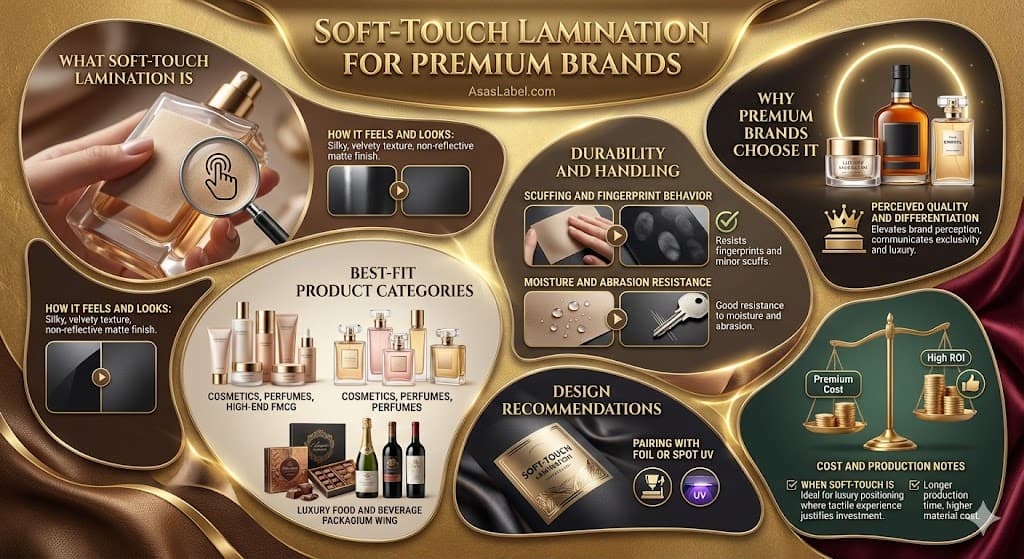
Tactile packaging elements have shifted from optional embellishments to essential components of branding strategy and luxury packaging. In an increasingly digital world, the physical interaction a consumer has with a product on the shelf serves as a critical moment of truth for brand perception. Lamination provides the final barrier between the brand narrative and the customer, often offering a luxurious touch that enhances the unboxing experience.
Soft-touch lamination, often referred to in the industry as velvet lamination, offers a unique value proposition and sensory appeal. It engages the haptic senses while providing robust protection for printed product labels. This soft touch finish moves beyond simple visual appeal to create a psychological connection through a velvety texture that helps captivate your audience.
Brands looking to elevate their position in the market must understand the technical specifications and sensory advantages of this material. It is not merely a soft touch coating but a structural decision that transforms ordinary printed materials into extraordinary assets that impact the entire packaging workflow. Understanding its application ensures the investment yields tangible returns in shelf velocity and can leave a lasting impression on consumers.
Soft-touch lamination is a specialty Biaxially Oriented Polypropylene (BOPP) laminate film. It is designed with a specific soft touch finish on one side and a bonding agent on the other. Unlike standard matte films, the surface treatment here typically involves specialized chemistry to create high surface energy properties for specialty printing.
The process of soft touch lamination differs significantly from standard UV coatings. Soft-touch coatings are liquids cured inline, whereas soft-touch lamination is a solid film applied with heat or pressure-sensitive adhesives. This physical layer adds substantial rigidity and thickness to the substrate, making soft touch lamination a fantastic choice for brands looking to create a luxurious feel.
Converters apply this film using a nip roller system to create custom soft touch results. The pressure and heat (in thermal applications) bond the film to the printed web. This creates a unified structure that is far more durable than a liquid topcoat which might crack upon flexing, significantly enhancing brand perception and the quality and attention to detail of the package.
The film is generally translucent but alters the color gamut slightly, providing a touch of sophistication. It tends to deepen dark colors, making blacks appear richer, while slightly muting vibrant neons. Pre-press adjustments are often required to compensate for this color shift to ensure brand consistency and a high-end look and feel.
The primary characteristic of this finish is its "dead matte" visual and tactile appeal. It reflects almost no light, providing a glare-free experience. This absorption of light creates a sophisticated, muted look that immediately signals luxury to the consumer eye, especially in the world of luxury packaging.
Upon handling, the surface delivers haptic feedback often described as a velvety feel resembling peach fuzz, velvet, or rose petals. This friction provides a secure grip while feeling gentle against the skin. It lacks the slick, plastic feel associated with standard gloss or standard matte BOPP, which makes soft touch lamination a premium nature choice for प्रोजेक्ट्स.
The lack of sheen and the fact the surface reduces glare effectively eliminates highlights. This ensures that typography remains legible from all angles, even under harsh retail lighting conditions. The visual softness complements the physical softness, creating a multi-sensory experience that helps a brand appear more established and convey sophistication.
This "soft touch labels" effect triggers an immediate luxury association in the hands of your customers. The material feels expensive because the velvety texture invites touch and suggests density and care in manufacturing. It breaks the barrier of traditional plastic perception and elevates the perceived quality of the brand image.
Packaging psychology indicates that touch is a gateway to ownership. When a consumer picks up a product and enjoys the velvety feel of the container, their psychological sense of ownership increases. This multi-sensory experience creates a stronger impulse to purchase and a deeper connection with the audience.
Premium brands utilize this finish to disrupt the visual noise on crowded shelves and command premium pricing. Most mass-market products utilize high-gloss finishes to attract attention through reflection. By utilizing a light-absorbing soft touch matte material, premium brands create a visual void that draws the eye in and provides a layer of sophistication.
The decision moves beyond aesthetics into brand storytelling. A soft exterior suggests a refined interior product for luxury products. It aligns the external packaging with the internal value proposition of high-end goods, offering a luxurious matte appearance that lamination makes possible.
This soft-touch laminate also serves as a subtle barrier to entry against counterfeiters. The specific tactile experience of high-quality soft-touch films is difficult to replicate with cheap spray coatings, offering a layer of brand protection while enhancing brand perception.
Differentiation in the luxury sector relies on nuance. A standard matte label feels like paper or plastic, whereas soft-touch finish feels like a distinct material altogether. This creates a moment of pause for the consumer and transforms ordinary printed materials into extraordinary items.
That pause is critical in retail environments and the unboxing experience. If a consumer holds a product for more than a few seconds to explore the luxurious soft touch texture, conversion rates rise significantly. The "velvet" feel encourages this prolonged handling branding strategy and provides a premium experience.
The perceived value of the product elevates instantly through visual and tactile feedback. Consumers associate distinct textures with boutique manufacturing and high-quality materials. It signals that the brand did not cut costs on the final stage of production, which elevates the perceived value significantly.
This effect is particularly powerful when dealing with blind-embossing or lamination with spot UV coatings. The contrast between the soft matte base and the raised elements amplifies the perception of quality engineering and makes soft touch lamination lamination stands out as a finish that enhances brand presence.
Not every product requires the expense of luxury soft touch labels. Soft-touch is best reserved for products where margin allows for higher packaging costs and where the tactile experience is part of the consumption ritual. It is particularly suitable for high-end look requirements.
High-margin luxury products typically have the budget to absorb the increased cost per thousand impressions. This includes industries where the packaging is kept for the duration of the product's life, rather than discarded immediately, making it suitable for long-term brand image maintenance.
The finish thrives in environments where lighting is controlled. High-end retail boutiques often use spot lighting, which makes gloss labels glare. Soft-touch matte absorbs this light, maintaining legibility and elegance while offering a luxurious glare-free presentation.
Cosmetics and skincare are the primary adopters of soft touch coating technology. Products like serums, facial creams, and luxury shampoos are handled daily. The velvety texture invites touch and mimics the desired effect of the product on the skin (soft, smooth, hydrated), enhancing the sensory experience.
In the spirits industry, particularly with whiskey, gin, and wine, the soft touch labels set the tone for the price point. A velvet label on a wine bottle allows for a non-slip grip when pouring, adding a functional benefit and a luxurious feel to the aesthetic one that can command premium status.
High-end Fast-Moving Consumer Goods (FMCG), such as artisanal chocolates or premium coffees, also benefit from soft touch lamination. These products rely on impulse purchasing flexibility and the tactile experience can be the deciding factor between a generic brand and a premium option.
Supplements and nutraceuticals have begun adopting this luxurious matte finish to signal potency and clinical purity. The clean, matte look suggests a pharmaceutical grade of quality that glossy labels often fail to convey, adding a necessary layer of sophistication.
A common misconception is that luxury finishes and lamination may be fragile. Conversely, BOPP-based soft-touch laminate is an industrial-grade protective layer. It offers significant structural integrity to the soft touch labels stock, even with frequent handling.
The film thickness adds rigidity to the laminate. This makes machine application easier, as the label is less prone to wrinkling or bubbling during high-speed dispensing, which helps create a luxurious unboxing experience every time.
It provides a barrier against chemical exposure. For luxury products containing essential oils or alcohol, the lamination provides protection that prevents chemicals from dissolving the ink or degrading the paper substrate beneath.
Standard matte finishes are notorious for showing scuff marks during shipping. When bottles rub against dividers, a standard matte label can develop glossy "burnish" marks. High-quality soft-touch labels and matte lamination possess scuff-resistant properties superior to standard matte.
The chemical composition of the surface is designed to resist polishing. This preserves the dead-matte effect even after transit vibration, which helps leave a lasting impression of quality. This reduces waste and returns due to damaged luxury packaging.
Fingerprints are a major detriment to dark luxury packaging. Glossy black labels show every smudge and oil deposit. Soft-touch lamination is inherently resistant to fingerprints because the texture invites touch without retaining sebum.
The oils from distinct handling disperse differently on the luxurious matte surface. This ensures the product looks pristine on the shelf even after being handled by multiple potential buyers, which is critical for maintaining a high-end look.
Moisture resistance is critical for bathroom and kitchen environments where soft touch labels are common. Soft-touch lamination creates a waterproof seal over the print surface. It does not peel or delaminate easily when exposed to high humidity and steam.
The abrasion resistance extends to the edges of the laminate. The film protects the die-cut edges from fraying or lifting. This is vital for squeezable tubes where constant flexing can cause label failure, making soft-touch laminate a superior choice for projects in this category.
For wine bottles placed in ice buckets, the lamination prevents the label from disintegrating. It maintains the premium look and luxurious feel throughout the consumer's usage experience, not just at the point of purchase.
Thermal variations during shipping do not typically affect the adhesion of the laminate film. It remains stable in both freezing and high-heat transport conditions, protecting the brand's visual and tactile integrity globally.
Designing for soft-touch requires a subtractive approach. Designers must resist the urge to overfill the canvas with visual noise. The velvety texture of the background is a design element in itself and needs negative space to breathe and convey a premium nature.
Deep, rich colors perform best under soft touch lamination. Black, navy, dark green, and burgundy benefit immensely from the light-absorbing qualities of the matte lamination. Pastels can look elegant, but the dramatic tactile appeal is often less pronounced.
Minimalist typography works exceptionally well for soft touch labels. Because the matte surface is non-reflective, small serif fonts remain sharp and legible without the halo effect seen on glossy surfaces, making it suitable for clear communication.
The true power of this finish is realized when paired with high-gloss embellishments. The difference in Dyne levels (surface tension) between the luxurious matte background and a glossy overlay creates visual vibration that can captivate shoppers.
Lamination with spot UV coating creates a "wet look" against the dry, velvet background. This contrast draws the eye to logos or key messaging instantly. It is arguably the most effective combination in modern label design for the world of luxury packaging.
Hot stamping and cold foil stamping require specific attention. Because soft-touch surfaces have unique surface energy, the foil adhesive must be compatible. Converters must use specific foils designed for over-printable matte surfaces to add a touch of luxury.
High-build varnish adds a third dimension to soft-touch laminate. By raising the glossy elements physically above the velvety feel of the surface, brands create a 3D effect that demands to be touched. This maximizes the haptic and sensory experience potential of your product.
Soft-touch lamination is a premium experience product. It commands a higher price per square inch than standard gloss or matte laminates. The film itself is more expensive to manufacture due to the specialized soft touch coating technology required.
Production speeds may be slightly impacted during the process of soft touch lamination. Some soft-touch films require slower running speeds on the rewinding or inspection equipment to ensure the surface is not marred by machine rollers before it reaches the customer, which requires high-quality materials and care.
However, the cost of soft touch labels must be viewed in context. The price of the label is a fraction of the total COGS. A 20% increase in label cost might translate to pennies per unit, while potentially supporting a dollars-per-unit price increase at retail by enhancing brand perception.
Determine the price point of the product. If the item sells for under five dollars, the margin compression of soft-touch lamination may not be viable. For products retailing over twenty dollars, the cost becomes negligible relative to the perceived value and ability to enhance sales.
Analyze the competitive landscape. If all competitors use gloss, soft-touch provides an immediate visual USP. If the category is already saturated with matte finishes, adding tactile elements like lamination with spot UV becomes necessary to compete and make your brand stand out.
Consider the lifecycle of the product and how it will be handled. Single-use wrappers may not justify the cost of soft-touch laminate. Durable goods or bottles that sit on a vanity for months benefit from the long-term brand reinforcement and luxurious feel the finish provides.
Conduct A/B testing in small batches if possible. Digital printing capabilities now allow for prototyping different finishes and getting a custom quote. Compare the sell-through rate of standard matte labels versus custom soft touch to validate the expenditure.
Ultimately, the ROI of soft touch lamination is measured in brand equity. A product that feels premium reinforces customer loyalty. The tactile memory of the "velvet label" creates a lasting impression that visual marketing alone cannot achieve, fostering a deeper connection with the audience.