
Contact Sales Now
Thank you! Your submission has been received!
Oops! Something went wrong while submitting the form.

Contact Sales Now
Thank you! Your submission has been received!
Oops! Something went wrong while submitting the form.

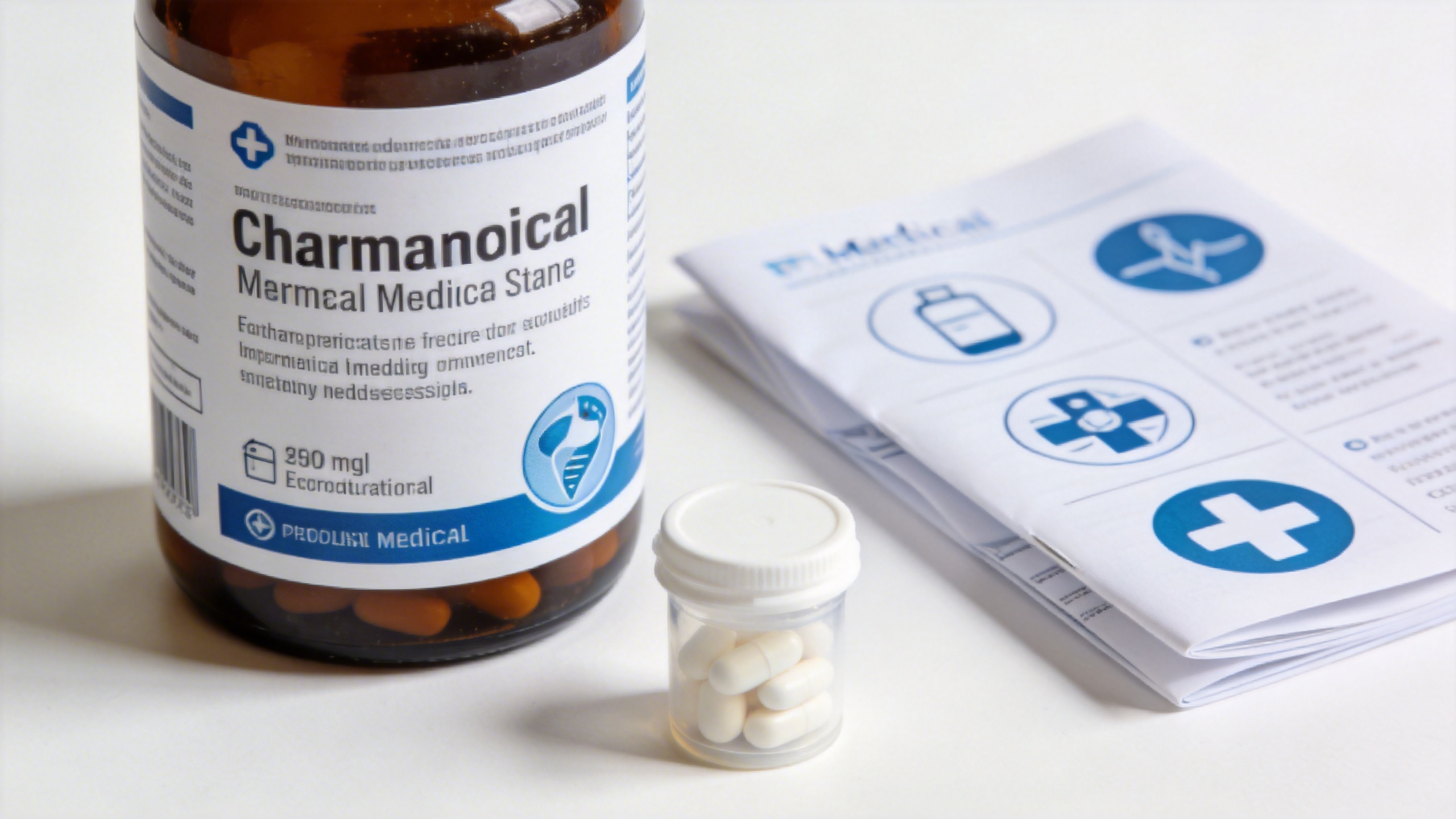
Pharmaceutical packaging has evolved well beyond simple product identification to meet current pharmaceutical labeling requirements. The pharmaceutical label is now a sophisticated data carrier that serves as the interface between the pharmaceutical manufacturers, the food and drug administration (FDA), and the patient. It acts as the primary defense to safeguard against counterfeiting while ensuring strict compliance with regulatory requirements and global safety and efficacy protocols for every medical device.
Professionals in this sector understand that labeling broadly remains a critical factor, as a label failure is often a product recall event. The stakes involve patient safety, fda regulations, and brand integrity. Labeling strategies must therefore integrate material science, labeling accuracy, and operational efficiency to meet fda mandates.
This complete guide discussion bypasses the basics of design to focus on the technical and strategic imperatives of modern pharmaceutical labeling. The focus remains on labeling compliance, durability, and the integration of automated labeling systems into standard packaging workflows to reduce the causes of fda warning letters.
The primary goal of any pharmaceutical label shifts from mere information display to functional utility that helps ensure labeling accuracy. You are not just printing text; you are engineering a device labeling solution that must perform under stress and meet fda requirements. This functional performance covers lifecycle management from the labeling process on the production line to the patient labeling at the bedside.
Efficiency in supply chain management relies on these distinct identifiers like the National Drug Code. The label must facilitate rapid authentication and labeling content verification at every node of distribution. This requires a seamless integration of physical durability and digital labeling readability to ensure consistency across the pharmaceutical industry.
Inventory management systems depend fully on the labeling information and the accuracy of these labels. A misread barcode or a faded lot number causes labeling and packaging issues that ripple through warehouse operations. Precision here prevents labeling errors and costly stock adjustments while ensuring First-In-First-Out (FIFO) compliance with quality system regulation.
Traceability is the cornerstone of the Drug Supply Chain Security Act (DSCSA) and fda 21 cfr part in the United States and the Falsified Medicines Directive (FMD) under the European Medicines Agency (EMA). Labels serve as the vehicle for serialization, where labeling includes an expiration date and lot number. Each unit requires a unique identifier and critical information that labeling must include to remain legible throughout the product's lifespan.
Anti-counterfeiting measures are now embedded directly into the labeling materials or design to meet fda labeling standards. Overt features like holograms combine with covert features such as UV-reactive inks and quality control markers. These layers of security assist pharmacists and regulators in verifying safety and efficacy instantly.
Patient safety relies on the absolute clarity and legibility of dosage instructions and warnings. There is zero tolerance for print smear or adhesive failure that could obscure critical labeling information or instructions for use. Risk mitigation implies that the physical label must possess the same integrity as the primary container to safeguard the user.
Track and trace systems require high-contrast printing to help ensure labeling accuracy and scanning efficiency. A failure rate in scanning creates aggregation errors, breaking the digital chain of custody. This labeling can lead to quarantined shipments, fda warning incidents, and significant financial losses for pharmaceutical manufacturers.
Tamper-evident labeling features provide the first line of defense for the consumer and fda compliance. Voiding labels or destructible substrates signal immediately if the packaging integrity has been compromised. This plays a critical role in product quality assurance and meeting legal requirements before the drug is even dispensed.
Diverse drug delivery systems necessitate a variety of labeling architectures and current labeling solutions. A "one size fits all" approach is impossible when dealing with labeling broadly for substrates ranging from glass vials to Tyvek blister lidding. Each format presents unique surface energy and specific labeling application challenges.
The trend is moving toward Extended Content Labels (ECL) and booklet labels to satisfy fda requires for multi-language text. Regulatory requirements for instructions for use and extensive storage requirements occupy significant space. Expanding the printable labeling materials surface area without increasing package size is a critical geometric challenge for the pharmaceutical industry.
Functional labels are also gaining traction in device labeling. These include labels with integrated hangers for infusion bottles or labels that include detachable operational segments for hospital charts. These designs require specialized die-cutting, automated labeling systems compatibility, and multi-layer construction to ensure that labels and other written materials remain intact.
Round containers, particularly small-diameter vials, present the challenge of "mandrel hold" to avoid labeling issues. The pharmaceutical label must resist the elastic memory of the material which attempts to return to a flat state. This requires face stocks with low stiffness and adhesives with high initial tack that meet quality control safety standards.
Blister packs require push-through or peel-push mechanisms for patient labeling. The lidding foil is often printed directly, but secondary labeling plays a role in multi-dose wallet packs. The alignment on blister cards is critical to ensure that foil rupture does not destroy variable labeling content or the national drug code.
Cartons serve as the secondary packaging but often carry the primary drug labeling data for aggregation. Corner-wrap labels act as tamper-evidence seals and must include an expiration date. The adhesive label must tear the fiber of the carton upon removal to prove interference explicitly, meeting fda expectations for security.
Small vials used for injectables often utilize flag labels. These designs allow a portion of the label to extend outward, providing ample space for legible text on a tiny container. This labeling solution balances readability with the constraints of the primary packaging surface area and fda 21 cfr part requirements.
Syringes and auto-injectors require wrap-around transparency to check safety or effectiveness. Medical professionals need to see the drug level and clarity, necessitating clear film substrates. The label must provide data without obscuring the visual fda review of the fluid inside.
Material science defines the success of a pharmaceutical label and labeling compliance. Standard paper stocks are insufficient for high-value biologicals or cold-chain products. The interaction between the label, the adhesive, and the container material is a subject of rigorous fda review and compatibility testing.
Leachables and extractables represent a significant chemical risk in pharmaceutical packaging. Migration of adhesive components through a plastic container into the drug formulation is unacceptable to the food and drug administration. Low-migration adhesives are mandatory for compliance with regulatory requirements for semi-permeable containers like LDPE bottles.
Synthetic face stocks, such as polypropylene (PP) and polyethylene (PE), offer superior durability and legibility compared to paper. They resist moisture, tearing, and chemical exposure. However, manufacturers must ensure labeling accuracy by using surface treatment like corona discharge to ensure ink anchorage on medical device labels.
Cold chain logistics introduce extreme thermal stress where labeling remains a challenge. Vaccines and biologics stored at cryogenic temperatures require specialized labeling to ensure safety. Standard adhesives crystallize and fail at -80°C, causing labels to fail and detach during storage.
Cryogenic labels utilize distinct acrylic or solvent-based adhesives engineered for thermal shock. The label is often applied at room temperature but must bond permanently as the temperature plummets. This bond must withstand the freeze-thaw cycle and meet fda regulations without lifting.
Autoclave sterilization presents the opposite extreme for medical device manufacturers. Labels applied prior to sterilization must withstand high heat and steam pressure. The ink must not change color or bleed, and the topcoat must prevent the substrate from darkening to maintain legibility.
Humidity and condensation are constant threats in refrigeration where labeling broadly must remain stable. Paper labels absorb moisture, leading to warping and microbial growth. Film-based labeling materials are impervious to water, ensuring the label remains hygienic and legible in damp environments.
Shipping conditions vary wildly in global distribution. A label must remain stable in the tropical heat of a tarmac and the freezing hold of an aircraft. Thermal stability assessments and labeling changes should be part of the initial Operational Qualification (OQ) protocols to meet fda 21 cfr part.
The printing process for a pharmaceutical label serves two masters: branding and variable data. While offset or flexography handles the static brand elements, thermal transfer or laser ablation handles the dynamic coding and expiration date. The synchronization of these processes is vital for labeling broadly throughout the production.
Drop-on-Demand (DoD) inkjet and thermal inkjet (TIJ) are industry standards for digital labeling and late-stage customization. They allow for high-speed application of lot numbers and national drug code information on the packaging line. Maintenance of print heads is critical to prevent streaks that render codes and instructions for use unreadable.
UV-curable inks provide instant drying and high resistance to chemical abrasion. In pharmaceutical packaging environments where potential solvent spills can occur, ink durability and legibility are non-negotiable. The print must survive cleaning protocols and labeling broadly used in clinical settings.
The GS1 DataMatrix is the standard for unit-level serialization and fda labeling. Unlike linear barcodes, 2D codes can hold significant labeling content—GTIN, serial number, lot, and expiry—in a compact footprint. This density is essential for small medical device labels.
Error correction capabilities in DataMatrix codes allow for high readability even if the code is partially damaged. Reed-Solomon error correction ensures that up to 20% of the code can be obscured without data loss. This resilience reduces labeling and packaging issues within the supply chain.
Print grade quality must adhere to ISO/IEC 15415 labeling standards. A grade of C or better is typically required for successful verification. Inline vision systems monitor degradation in print contrast or modulation in real-time to reject substandard drug labeling immediately.
Aggregation exercises imply a parent-child relationship between codes and labeling Broadly. The 2D code on the bottle must link digitally to the label on the bundle and the case. This hierarchy relies on absolute accuracy and patient safety during the printing and application phase to prevent data mismatch.
Variable Data Printing (VDP) and labeling initiatives demand robust software integration. The label printer must communicate seamlessly with the Level 3 site server and Level 4 enterprise systems. Latency in data transfer can lead to line stoppages, affecting fda compliance and Overall Equipment Effectiveness (OEE).
Durability testing goes beyond simple adhesion to satisfy fda requirements. Labels must undergo Sutherland Rub Tests to verify ink resistance against friction. Shipping vibration often causes cartons to rub against each other, potentially erasing critical information if the ink or varnish is inferior.
Light fastness works to prevent fading under UV exposure. Pharmaceuticals stored on shelves or in transit may encounter natural or artificial light. Fade-resistant pigment inks help ensure labeling accuracy so that expiration dates remain legible for the entire shelf life of the product.
Chemical resistance testing simulates exposure to the drug itself to meet fda 21 cfr part. If a bottle of syrup leaks or a hand sanitizer drips onto the label, the text must remain intact. This is particularly vital for labels used on solvent-heavy products or cytotoxic drugs to ensure safety or effectiveness.
Automated Optical Inspection (AOI) systems are mandatory on modern pharmaceutical industry packaging lines. Human inspection is insufficient for the speed and variable nature of serialized labels and other written materials. OCR (Optical Character Recognition) and OCV (Optical Character Verification) tools validate every single unit for labeling broadly.
Reconciliation of labels is a strict regulatory requirement and part of quality system regulation. You must account for every label printed, applied, and destroyed. Electronic reconciliation systems have largely replaced manual counts, reducing the risk of labeling Broadly and rogue labels entering the waste stream.
Defect detection protocols must be established for common labeling issues. These include skew, bubbling, flagging, and misplacement. Tolerances should be defined in millimeters, and vision systems calibrated to reject anything that does not meet fda regulations.
Successful implementation requires a methodical labeling broadly approach. Skipping steps in labeling materials selection or software integration leads to compliance gaps. Use this complete guide framework to audit current labeling operations or validate new labeling broadly product launches.
Regulatory Alignment Check: Verify specific regional requirements (FDA, EMA, PMDA). Ensure the font size meets labeling standards and minimum legibility. Confirm that the DataMatrix signals comply with GS1 formatting rules including Application Identifiers (AIs).
Substrate Compatibility Audit: Test the label material against the container surface energy. Confirm "mandrel hold" for small diameters. Verify migration studies regarding adhesive contact with the drug product to meet fda 21 cfr part. Ensure temperature rating matches storage requirements.
Adhesion Verification: Perform peel testing on the specific container material (glass, HDPE, PET). Check for edge lift after 24 hours. Validate tamper-evident features to ensure they break the substrate rather than peeling cleanly, as fda requires.
Print Quality Validation: Conduct ink rub verification. Test barcode grading against labeling standards. Ensure human-readable lines match the encoded data in the 2D matrix. Verify varnish levels do not interfere with fda review or scanner reflection.
Line Integration Assessment: Check applicator speed against line output requirements but also verify the rejection mechanism for failed scans. Confirm line clearance procedures are updated to account for unused serialized labels.
Data Integrity Review: Test the retrieval of serial numbers from the database to meet fda labeling mandates. Ensure duplicate codes are flagged immediately. Verify the secure transfer of UID data to downstream trading partners or regulatory repositories.
Supply Chain Stress Test: Simulate shipping conditions. Subject labeled products to vibration, humidity, and thermal cycling. Inspect for label flagging, wrinkling, or detachment post-test. This confirms the package arrives at the clinic in the same condition it left the factory to ensure safety or effectiveness.
Vendor Quality Agreement: Review the audit trail of the label converter to ensure they follow guidelines for labeling. Ensure they utilize vision inspection during the converting process. Confirm their adherence to ISO 9001 or ISO 15378 standards for primary labeling materials.