
Contact Sales Now
Thank you! Your submission has been received!
Oops! Something went wrong while submitting the form.

Contact Sales Now
Thank you! Your submission has been received!
Oops! Something went wrong while submitting the form.

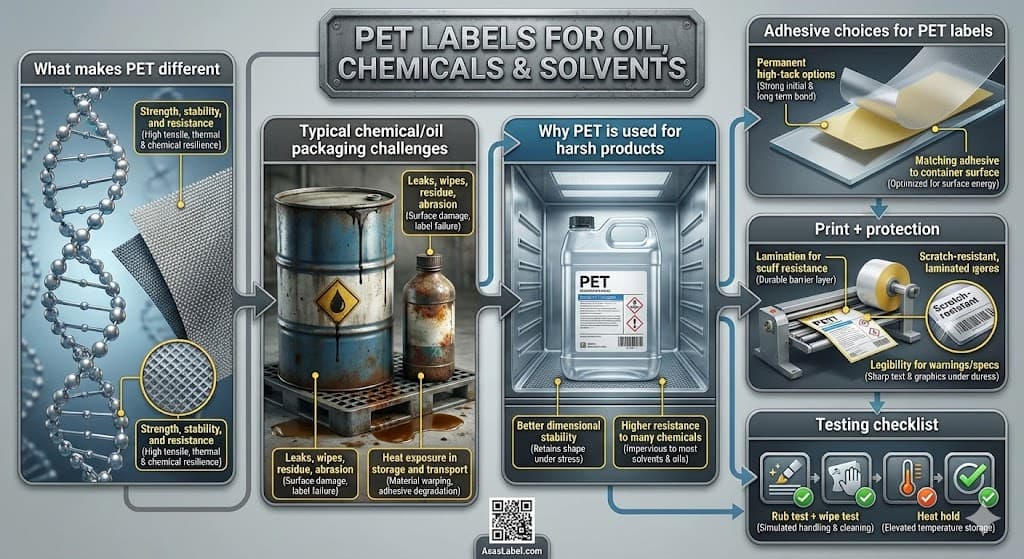
Polyethylene terephthalate serves as the gold standard for industrial labeling and high-performance pet foods packaging due to its inherent molecular stability. Unlike standard paper labels or lower-grade thermoplastics described in a comprehensive label substrate materials guide, pet film polyester films undergo a biaxial orientation process during manufacturing. This creates a substrate with high tensile strength and durability that withstands rigors other materials cannot, ensuring the product name remains visible to the pet owner throughout the product's life.
The rigidity of pet label film labels ensures they maintain their form even when applied to containers that experience physical stress, a critical component of product labeling in the pet food industry. This structural integrity prevents the pet label from distorting during automated application processes. Pet food manufacturers and converters rely on this stability to maintain high-speed throughput without fear of web breaks or liner issues, which is essential for professional labeling.
Excellent chemical resistance is engineered directly into the polymer chain of polyethylene terephthalate. This material is naturally hydrophobic and pet labels resist a wide spectrum of industrial agents and solvents. It provides a non-reactive barrier that prevents hazardous fluids or oils from dog food and cat food from breaking down the label stock. This is critical for regulatory compliance including pet safety and federal law requires specific disclosures in the chemical and pet sectors.
Polyester pet labels resist the absorption of oils and solvents that would otherwise saturate paper labels or degrade vinyl. When a label absorbs fluid, such as moisture in humid or wet environments, it often delaminates or becomes translucent, obscuring the product name and ingredient in the food list. Recycled pet creates an impermeable shield that keeps the visual data and labeling requirements intact regardless of surface contamination or harsh conditions.
Dimensional stability acts as another defining characteristic of this material class for pet food manufacturers. PET withstands higher temperature ranges and fluctuations compared to polypropylene or polyethylene. This heat tolerance and high tensile strength prevent the label from shrinking or warping near heat sources or during hot-fill processes common in lubricant and canned pet foods manufacturing.
The surface energy of specifically engineered top-coated PET is calibrated to anchor high-performance inks. Whether using flexographic UV inks for a specific product or thermal transfer resin ribbons for pet food and pet treat codes, the smooth surface of pet bonds tightly with the print media. This bond prevents the professional labeling information from easily scratching off under mechanical duress or abrasion in demanding environments.
Durability and UV resistance in outdoor settings often accompany industrial storage requirements for pet food companies. Many PET label solutions include UV stabilizers that extend the life of the label when exposed to direct sunlight, which prevents fading. This prevents the yellowing and brittleness often seen in cheaper plastic labels stored in drum yards or retail windows where food and pet treats are displayed.
Industrial packaging lines and pet food industry facilities are notoriously harsh conditions for pressure-sensitive labels. During the filling process of motor oils, disinfectants, or canned pet foods, spillage is a frequent occurrence. Even minor drips can compromise the adhesion bond if the label material is permeable and not a high-performance PET.
Operators on the line often utilize aggressive disinfectant agents to wipe down bottles and drums after filling, much like in the household cleaning industry. A standard label will smear or dissolve instantly under such mechanical and chemical friction. Pet labels maintain their legibility even when exposed to a harsh solvent or cleaning chemical, ensuring product safety and traceability.
Residue accumulation on the container surface prior to product labeling presents another significant hurdle. If the drum or canned pet foods container has an oily film, the label must cut through that contamination to ensure proper adhesion. Post-application residue from dog food can also sit on top of the label, but pet labels deliver a barrier that prevents oils from eating away at inks that lack proper protection.
Abrasion occurs constantly during the logistics chain of industrial applications and pet foods. Heavy steel drums rub against each other, and bags of dry dog food vibrate against cardboard. This constant friction acts like sandpaper, threatening to scour away QR codes, the food name, and mandatory safety warnings. PET labels provide the necessary resistance to moisture and friction to stay compliant.
Temperature fluctuations and vibration during transit create micro-movements between packaged units. This friction generates heat and physical wear that tests the scuff resistance of the pet label face. Without a durable pet film substrate, the printed surface would degrade before the product reaches the pet owner, compromising the brand and the name and address of the distributor.
Chemical migration from the inside of the container is a silent threat to product integrity. Some aggressive solvents or fats in cat food can permeate through plastic container walls over time. This outgassing attacks the label adhesion from the back, but PET label materials are engineered to be chemically inert, preventing failure in these demanding applications.
Start-stop abrasion on conveyor belts also poses a risk to the pet food label integrity. As bottles of pet shampoo accumulate on the line, guide rails and neighboring containers impact the label edges. PET labels resist tearing and edge-lift, and labels must maintain their bond during these production bottlenecks to avoid expensive re-labeling.
Temperature fluctuations and drastic environmental shifts characterize the supply chain for industrial lubricants and the pet industry. Products like raw food may be processed at low temperatures, while others are filled at high temperatures, causing the container to expand. The pet label lies at the center of this relentless dimensional change, requiring excellent resistance to moisture.
Shipping containers crossing different climatic zones expose pet labels to extreme heat cycles. A pet food and pet treat shipment might travel from a freezing warehouse to a sweltering shipping dock in a single day. The label materials must expand and contract in unison with the container to avoid bubbling, which is a critical component of product safety.
Warehousing conditions for industrial solvents and pet foods are rarely climate-controlled. In summer months, internal temperatures in storage facilities can exceed 100 degrees, meaning food may spoil if labels fail. High-quality pet labels utilize adhesion systems specifically engineered to maintain shear strength even at elevated temperatures, preventing massive inventory losses.
Heat exposure also affects the viscosity of the container contents and the pet label adhesive itself. If the adhesive oozes, it results in sticky edges that attract dirt and grime, making the pet food label look unprofessional. High-performance pet labels deliver reliable labeling because their adhesives are designed for these specific demanding environments.
The combination of heat and humidity creates a torture test for label longevity in the pet industry. Moisture vapor can penetrate paper labels, delaminating the adhesive from the facestock. Polyester pet labels maintain their dimensional stability and remain impervious to moisture, preventing this failure mode in humid or wet environments common for raw food storage.
Dimensional stability refers to a material's ability to retain its original shape and size. A pet label excels in this area because it does not stretch easily, providing a reliable surface for scanning QR codes and reading the food name. This is why pet labels are the standard for any product requiring high legibility and long-term shelf appeal.
When applied to flexible containers like a pet shampoo bottle, the label must withstand deformation. While the container flexes when squeezed, the pet labels resist tearing while maintaining strong adhesion. Its high tensile modulus prevents the label from snapping under strain, ensuring the name and address of the manufacturer stay intact.
In automated application, the stiffness of high-quality pet labels allows for precise placement. Softer films can stretch during the dispensing phase, resulting in crooked labels that fail labeling requirements. PET allows for high-speed dispensing with distinct accuracy, which is vital for pet food manufacturers to maintain production efficiency.
Long-term storage often leads to shrinkage in vinyl, leaving a ring of adhesive around the label. Polyester pet film exhibits negligible shrinkage, ensuring the product labeling looks pristine years after application. This makes PET the top choice for pet food companies that value a premium brand image and product safety.
This stability is crucial for labels functioning as tamper-evident seals on canned pet foods. If a label shrinks or warps naturally, it might falsely indicate tampering. PET ensures that any break in the label is the result of physical removal, protecting product integrity and meeting the requirements for pet food safety.
The chemical structure of polyethylene terephthalate offers broad-spectrum resistance. It is particularly effective against oils and greases, which is why pet labels provide the best performance for fatty dog food or cat food products. It is the default choice for motor oil and the pet food industry alike.
Acid and solvent resistance is another hallmark of industrial pet labels. In facilities where they produce pet shampoo or automotive chemicals, labels may encounter aggressive cleaners. PET maintains its integrity where paper labels would disintegrate, ensuring additional labeling like ingredient lists remain compliant with federal law requires.
Solvent resistance is a requirement for pet labels used on industrial cleaners. While no material is impervious to everything, PET withstands splash contact with isopropyl alcohol better than other label materials. This resistance buys time for the pet owner or industrial user to wipe the label clean without damaging the food name or instructions.
The inert nature of pet labels deliver protection against plasticizer migration. In vinyl labels, plasticizers can leach out, making the label brittle. Recycled PET does not require these chemicals, eliminating this mode of degradation. This is vital for food is intended for animals, as chemical leaching could compromise the quality and safety of the contents.
For pet food and pet treat products requiring immersion or heavy outdoor exposure, PET is unrivaled. It does not swell significantly when in contact with water. This maintains the bond between the ink and the facestock, which is why feed control officials and AAFCO standards often prefer synthetic materials for raw food labeling.
The facestock is only half the battle; the correct choice of label adhesives and glues dictates the pet food label's staying power. For oily dog food environments, high-tack acrylic adhesives are used to ensure the label is required to list the ingredients in order of weight without peeling.
Solvent-based acrylics are generally preferred over water-based options for high-performance pet labels. While human food labels may use simpler adhesives, pet food manufacturers need the "bite" of solvent-based systems to ensure the label stays attached to greasy canned pet foods throughout the supply chain.
Shear resistance is a critical property to ensure pet labels provide a long-lasting bond. Shear refers to the ability to resist sliding force. High shear strength prevents the pet label from oozing or sliding down a container when temperature fluctuations occur in a warehouse or delivery truck.
Rubber-based adhesives offer high initial tack for raw food containers but generally suffer from lower UV resistance. However, hybrid pet labels deliver the tack of rubber with the longevity of acrylics. These are useful for pet food industry products requiring immediate adhesion to slightly textured plastic surfaces.
Cold-weather adhesives are necessary for raw food or canned pet foods stored in sub-freezing conditions. Standard adhesives crystallize and fail, but specialized PET label solutions remain pliable and tacky even at extremely low temperatures, ensuring year-round labeling requirements are met.
The surface energy of the container determines how well pet labels maintain their bond. Metals like cans have high surface energy, making them easy to label. Plastics like HDPE, often used for dog food, have low surface energy, requiring the pet label lies on an adhesive specifically tuned to flow into the plastic's peaks and valleys.
Textured surfaces on bulk pet food bags reduce the contact area for the adhesive. A thicker adhesive coat weight is often required here for reliable labeling. PET labels are designed to fill these gaps, ensuring the product name, brand, and ingredient in the food list are always visible to the pet owner.
For any industrial and commercial specific product, theoretical specs do not always translate to real-world performance. Reliable labeling requires testing for rub, wipe, and heat. BS 5609 certification remains the benchmark for any product requiring saltwater immersion resistance, ensuring the pet label stays compliant for the long haul.