

Contact Sales Now
Thank you! Your submission has been received!
Oops! Something went wrong while submitting the form.

Contact Sales Now
Thank you! Your submission has been received!
Oops! Something went wrong while submitting the form.

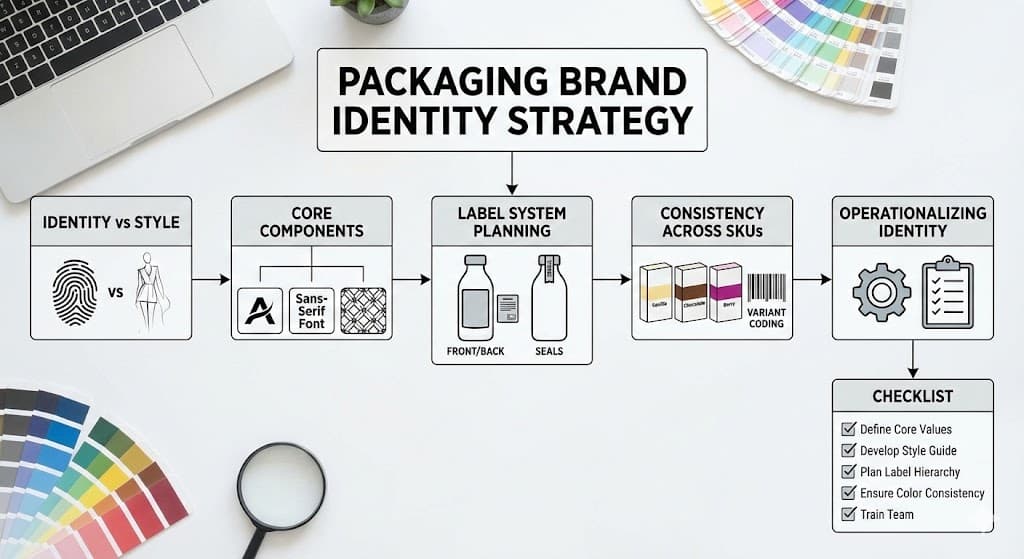
Many stakeholders confuse aesthetic styling with structural brand identity through packaging. This fundamental misunderstanding leads to fragmentation as product lines expand and your consistent brand identity through packaging begins to dilute. Styling refers to the superficial application of trends, colors, and graphics that appeal to current tastes but lack a foundational system for a consistent brand.
A robust packaging brand identity operates as a distinct visual identity. It goes beyond making a package look attractive on the shelf; it strengthens your brand by creating a rigid yet flexible framework where every design element serves a specific communicative purpose regarding brand equity. This ensures that every time consumers interact with your brand, they experience a unified design.
The danger of prioritizing style over identity becomes evident during scaling. A styled design might look excellent on a single SKU but fails when applied to a family of twelve product lines. The lack of underlying logic forces designers to make arbitrary compromises with each new release, undermining brand consistency and the ability for consumers to recognize your brand instantly.
True identity strategy solves for longevity and functional expansion to build a consistent brand identity. It establishes rules for how the brand navigates different packaging solutions, from boxes to flexible pouches. It anticipates future constraints rather than reacting to present preferences, ensuring that branding and packaging efforts reinforce brand identity over the long term.
Consider the shelf impact of a cohesive system versus a collection of styled items. A systemic approach creates a billboard effect where multiple product packaging designs reinforce the master brand and improve brand recall. Styled products often compete with one another visually, diminishing the overall brand block and failing to make your brand stand out.
Strategic identity design separates the core brand truth from transient design trends. It defines what must remain immutable to preserve brand recognition and trust. This distinction allows the brand to evolve its style over time without losing its essential brand personality and core brand elements.
Efficiency in production is another casualty of a style-first approach. Without a defined identity system and a brand style guide, every new package requires ground-up design work. A strategic identity provides a toolkit of packaging solutions to life that accelerates speed to market for future product lines and ensures that branding is like a promise kept to the consumer.
The brand toolkit serves as the operational manual for your visual architecture and branding elements. It is not merely a folder of assets but a set of governances regarding how those assets interact to communicate your brand story. This toolkit dictates the hierarchy of visual information on the physical substrate across all packaging.
Successful toolkits focus on the relationship between fixed and variable elements to ensure consistent branding. Fixed elements like the logo and color palette build the trust and recognition required for repeat purchase. Variable elements communicate flavor, scent, or specific utility to the consumer while maintaining a cohesive brand feel.
This definition process must account for the limitations of printing and manufacturing within your packaging systems. A toolkit that looks pristine on a backlit screen may fail on corrugated packaging materials. Domain-specific knowledge regarding substrate absorption and ink density must inform the selection of these core components to strengthen brand perception.
Your logo usage on packaging requires different rules than digital or print advertising. The primary constraint for a strong brand identity is often physical space and curvature. Strategic planning defines minimum clearance zones and specific variations for horizontal or vertical layouts to ensure that every logo design reinforces brand recognition.
Typography and font choice on packaging performs a dual function of brand expression and legal compliance. Your type hierarchy must seamlessly transition from the brand voice to the FDA or regional regulatory requirements. This requires selecting a font with high legibility at small point sizes that still aligns with the brand’s identity.
Weights and kerning must be adjusted for the reality of shelf viewing distances. A typeface that is elegant in a brochure may disappear behind the glare of a plastic wrapper, so consistent use of typography is key. The strategy dictates specific tracking adjustments for reverse-print text to prevent ink fill-in and maintain a lasting impression.
Brand patterns act as the connective tissue between the logo and the background, helping to elevate the brand’s personality. They provide a unique ownable texture that prevents counterfeiting and enhances premium perception. The strategy must define how these patterns wrap around corners and seams to ensure consistent messaging.
Repeating elements in packaging need to account for imperfect production registration. A complex geometric pattern that relies on perfect alignment will often look cheap if the print plate shifts slightly. Strategic pattern design builds in tolerance for these manufacturing realities while ensuring the packaging stands out and resonates with the audience.
Label architecture determines the sequence in which a consumer processes information. In a retail environment, this first impression happens in milliseconds. The strategy must enforce a strict visual language that guides the eye from the brand hook to the product promise, ensuring that branding and packaging effectively drive sales.
This architecture manages the tension between marketing claims and negative space. Overcrowding the label dilutes the premium nature of the brand. A strategic approach assigns value to empty space, using it to frame critical elements of brand identity effectively and enhance brand recognition.
The hierarchy also dictates navigation between different tiers of product lines. It establishes the visual cues that distinguish an entry-level item from a premium reserve variant. This structure helps consumers upsell themselves without requiring sales assistance, as the cohesive design builds trust automatically.
Every square millimeter of label real estate has a commercial value. The strategy creates a zoning plan that allocates this expensive real estate based on conversion priorities. Essential differentiator points get prime placement, while secondary information is relegated to peripheral zones to maintain brand consistency.
The Primary Display Panel or PDP is the single most critical surface of your branding and packaging efforts. It requires a ruthless prioritization of elements. The strategy limits the PDP to the logo, product name, and the single most compelling value proposition to ensure that every design element works toward a clear goal.
Secondary claims often fight for attention on the PDP, creating visual noise that can weaken your brand identity. A strong identity strategy relegates these to the secondary side panels or the back. This discipline ensures the PDP remains a quick read from a distance of three feet, which is vital for brand recall.
Regulatory seals and certification marks are necessary evils in product packaging design. They are often visually discordant with the brand aesthetic. The strategy must define a uniform treatment for these non-negotiable elements to minimize their disruption and maintain a flexible design across product lines.
Grouping seals into a dedicated "trust bar" or specific zone cleans up the visual field. This prevents the "sticker slap" effect where certifications look like afterthoughts. The packaging systems integrate them into the layout grid as structural elements rather than visual clutter, helping to reinforce brand values.
The back panel strategy is about information retention and storytelling. Once the consumer picks up the package, the PDP has done its job. The back panel shifts the strategy from attraction to conversion through detailed education and a brand narrative that aims to strengthen your brand identity further.
Scalability is the ultimate test of building brand identity. A system that works for three products often breaks when applied to thirty. Portfolio cohesion relies on a fixed architecture and a unified design system that allows for modular substitution of content across all product lines.
The master brand must remain the constant anchor across all distinct layouts. If the brand positioning shifts too much between categories, consumer trust erodes. The strategy defines what percentage of the design remains identical across all SKU variations to maintain a consistent packaging look.
Line extensions present specific challenges regarding visual weight. A new flavor or format should feel like a sibling, not a stranger, to the cohesive brand. The design logic must accommodate names of varying lengths without breaking the established grid structure or compromising the brand’s identity.
Consistency is key and also applies to the physical tactility of the range. Using different packaging materials or finishes for products in the same tier confuses the consumer. The strategy standardizes material choices to ensure a uniform brand experience in the hand and reinforces brand identity during the unboxing.
Visual equity is cumulative. Every consistent SKU on the shelf adds to the total visual weight of the brand. Inconsistent packaging across categories fractures this weight, making the brand appear smaller and less established than it actually is, whereas a consistent brand identity through packaging leverages every opportunity.
Color coding is the most immediate way to signal variation, but it requires strict management of the color palette and brand colors. The strategy must define a palette that is broad enough for future expansion but distinct enough to prevent confusion. Tonal proximity between variants can lead to costly purchasing errors and poor brand perception.
The strategy should assign specific Pantone values to product categories or flavor profiles. This avoids the "rainbow effect" where the brand block looks chaotic. A restrained palette with strategic pops of color maintains sophistication while aiding navigation and ensuring your brand identity resonates.
Iconography serves as a powerful secondary coding system. Custom icons can transcend language barriers and communicate product attributes instantly. The illustrative style of these icons must match the weight and angularity of the brand typography to maintain a unified visual language.
Positioning of variant indicators must be uniform across the entire line. If the flavor name is at the bottom for one product, it must be there for all. This predictability allows the consumer's eye to snap to the relevant information immediately, which enhances brand recognition and trust.
Photography style is another variable that requires strict coding within your brand style guide. If one variant uses hyper-realistic photography, a vector illustration on the next variant breaks the system. The strategy defines the lighting, angle, and saturation levels for all product imagery to maintain a consistent brand identity.
The best identity strategy fails if it cannot be operationalized in print. Transitioning from RGB monitor designs to CMYK or Pantone productions requires technical foresight. The strategy must define acceptable tolerances for color shifting across different packaging materials and substrates.
Vendor capabilities vary significantly and affect price and quality. The building brand identity documentation must provide clear standards for print vendors. This reduces the time spent on press checks and minimizes the rejection rate of packaging materials, ensuring that every design element is executed perfectly.
Pre-press coordination is where the theoretical design meets physical reality. Die-lines must be respected with adequate bleed and safe zones. The strategy accounts for the mechanical variances of folding and gluing machines to prevent design elements from being obscured and ensures consistent packaging quality.
Special finishes like foil stamping, embossing, or spot UV add cost but also value. The strategy dictates how and when to use these embellishments to strengthen your brand. They should be reserved for specific hierarchy levels to maximize their impact and justify the expense.
Sustainable packaging materials often behave differently than traditional plastics. If the brand strategy moves toward eco-friendly substrates, the visual identity must adapt. Ink absorption on recycled kraft paper, for example, dulls colors, requiring a specific asset adjustment strategy to maintain brand consistency.
File naming conventions and asset management are unsexy but vital parts of branding and packaging effectively. A disorganized server leads to outdated logos appearing on new prints. A strict data management protocol ensures that only approved, current assets reach the printer and helps maintain a consistent brand identity.
Versioning control is critical when managing regulatory changes. Ingredients and legal text change frequently. The operational strategy separates the graphic layer from the text layer to facilitate quick updates without redesigning the entire package or losing the brand’s identity in the process.
How does the proposed system handle a name that is twice as long as the current one? Test the layout with extreme content cases to ensure the grid does not break. This stress testing is part of building a consistent brand identity that survives growth and expansion.
Does the color palette retain distinction under poor lighting conditions? Retail environments often have suboptimal fluorescent lighting or shadows. Validate contrast ratios to ensure the product remains legible on the bottom shelf and continues to communicate the brand values.
Is the hierarchy clear to someone completely unfamiliar with the product category? Run a "squint test" or rapid visual assessment. The primary brand beacon and product descriptor should remain visible even when details are blurred, reinforcing brand recognition at a glance.
Can the design system accommodate a change in container shape? If the brand moves from a box to a jar, the identity elements must transplant effectively. The relationships between logo, typography, and pattern should hold true across all dimensions and packaging across different product lines.
Are the production costs sustainable at scale? A design requiring six custom spot colors is viable for small batches but may destroy margins at high volume. The strategy must align with the target Cost of Goods Sold to ensure you can build a consistent brand identity that is also profitable.
Does the design facilitate shelf blocking? Place the prototype next to itself three times. The connection points between packages should create a larger visual shape that amplifies shelf presence and makes your brand identity through packaging more dominant.
Is the regulatory information legally compliant for all target markets? Verify font sizes and placement against local laws early in the process. Design revisions at the compliance stage are costly and delay entry to market, hurting the brand launching phase.
Does the unboxing experience align with the external promise? The interior of the package is a continuation of the brand story and provides the first point of contact after purchase. The strategy should dictate the presentation of the product once the outer shell is breached to ensure a lasting impression.
Have you accounted for e-commerce thumbnail legibility? The physical package is now also a digital asset. The primary elements must be recognizable when the image is reduced to 200 pixels on a mobile grocery app, ensuring consistency across website design and physical retail.
Is the system documented thoroughly enough for a third party to execute? Hand the brand guidelines and brand style guide to a designer who has never seen them. If they cannot replicate the system accurately, the strategy documentation is insufficient to maintain a consistent brand identity through packaging.