
On this page
- Labels for Squeezable Containers
- Why squeezable packaging is hard on labels
- Flexing creasing and edge lift
- Best label materials for flexing
- PP vs other films
- Thickness and conformability
- Adhesives that survive daily handling
- High tack vs balanced tack
- Surface energy considerations
- Finish recommendations
- Scuff resistance and fingerprint control
- Application best practices
- Pressure speed and curing time
- Testing checklist
- Flex test rub test shower test
Labels for Squeezable Containers
Why squeezable packaging is hard on labels
Engineers specifying squeeze bottle label materials face unique mechanical stresses. Squeezable container labels must endure repeated deformation without failing. When users exert a squeeze action, the substrate expands and contracts rapidly. Rigid vs flexible labels dictate the failure rate of product packaging.
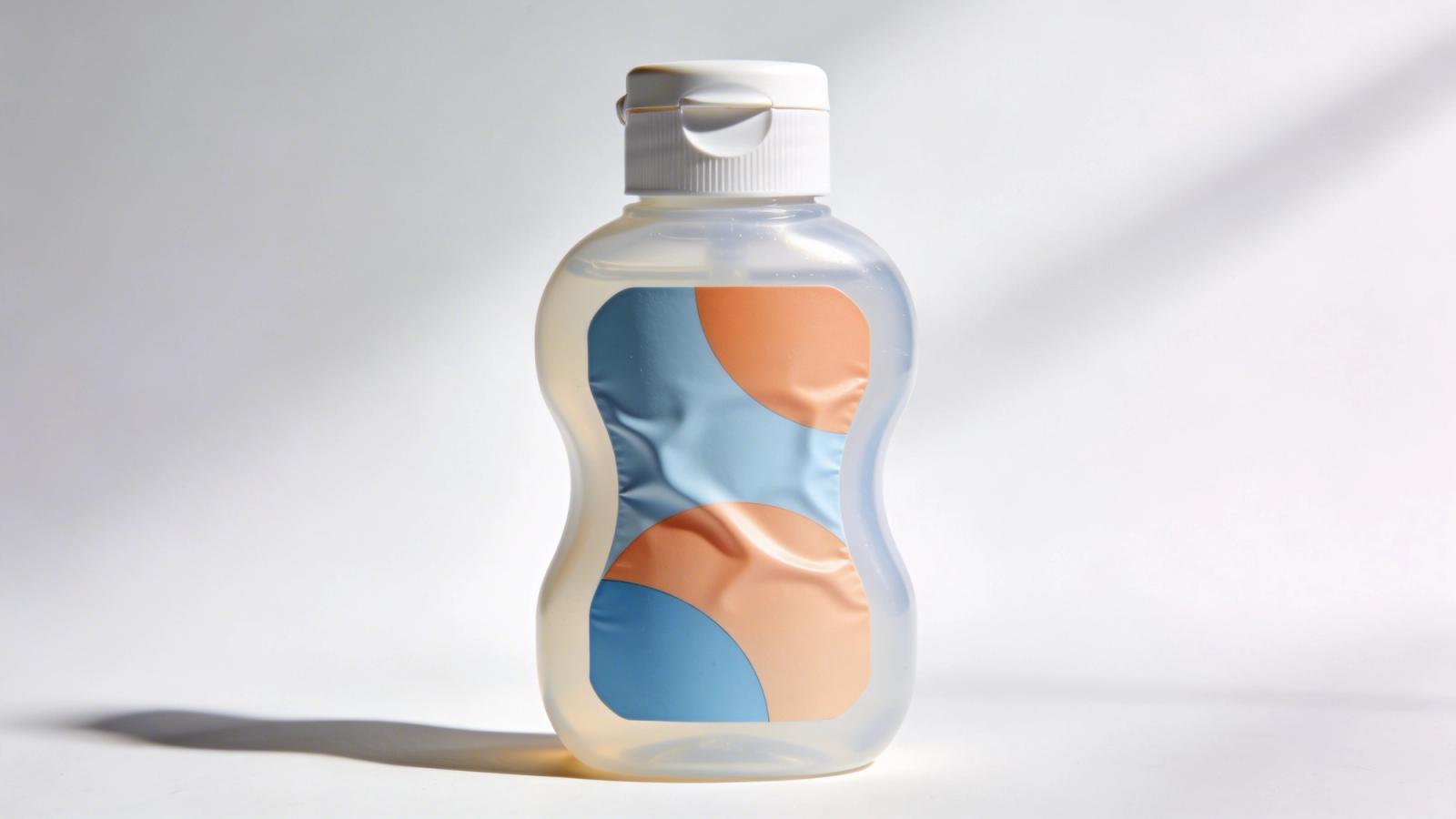
Designing custom labels for squeeze bottles requires understanding material memory. Standard plastic bottle labels lack the elasticity needed for tubes and squeeze bottles. Using rigid materials on flexible substrates causes labels wrinkling on plastic bottles and immediate structural failure during daily handling.
Flexing creasing and edge lift
The constant distortion inherent in flexible bottle labels inevitably causes material fatigue. As the container returns to its original shape, non-compliant facestocks experience stress fractures. This repeated motion triggers label peeling and flaking along the edges, compromising brand packaging integrity.
To stop squeeze bottle labels from peeling, you must select a highly conformable label film. If the facestock memory exceeds the adhesive bond strength, you will fail to prevent edge lift. Squeezable packaging labels demand an equilibrium between substrate elasticity and adhesive tack.
Best label materials for flexing
Selecting the right label material for cosmetic tubes or food packaging minimizes retail recalls. Squeezable plastic label requirements prioritize facestocks that stretch and recover. Flexible packaging labels must match the mechanical properties of the underlying container to maintain structural integrity over time.
PP vs other films
Evaluating bopp vs pe is standard practice when printing labels for flexible packaging. Polyethylene film (PE) is inherently highly flexible, making it ideal for squeeze tube labels. White PE label material stretches with the container, ensuring custom squeeze bottle labels remain intact.
Conversely, polypropylene bopp (BOPP) offers high tensile strength but less multi-directional elasticity. While conformable clear bopp works well on semi-rigid containers, PE outperforms PP in high-deformation scenarios. Understanding pe vs pp labels is critical for flexible squeeze tube labeling.
Squeezable packaging is hard on labels because polymer memory varies. While white PE label material stretches uniformly, rigid alternatives crack. Choosing the correct film directly impacts the failure rate of custom flexible packaging labels on the retail shelf.
Thickness and conformability
Caliper dictates performance. Thicker films resist bending and increase the risk of delamination. A thin, flexible label material conforms better to complex compound curves. Matching label flexibility to bottle dimensions requires specifying film thicknesses typically between 2.0 and 3.0 mils.
Whether you specify opaque flexible labels or flexible clear labels, lower caliper translates directly to higher conformability. Thinner materials reduce the internal stress placed on the adhesive layer, which is essential for labels for flexible bottles enduring heavy consumer use.
Adhesives that survive daily handling
Formulating the best adhesive for squeeze bottles involves balancing sheer and peel strength. Labels for flexible plastic rely on the adhesive layer to absorb kinetic energy during the squeeze cycle. A permanent adhesive for flexible plastics anchors the facestock against continuous mechanical strain.
High tack vs balanced tack
High tack adhesive labels offer immediate grab on low-energy substrates. However, high initial tack must not sacrifice long-term shear resistance. A balanced tack formulation ensures that custom labels remain secured under the continuous flex and recovery of the plastic container.
E-commerce merchants need adhesives that resist migration and ooze during high-speed applicator runs. Squeezable container label printing depends on balanced adhesives that cure cleanly. This prevents residue buildup while delivering the necessary bond strength for lotion packaging labels and sauce bottle labels.
Permanent adhesive for flexible plastics requires precise coat weights. Too much adhesive causes edge bleed, fouling the application equipment. Too little compromises the bond. Precision formulation ensures squeeze tube labels survive transit, warehousing, and intense consumer manipulation.
Surface energy considerations
Most squeezable containers utilize low surface energy plastics like HDPE or LDPE. These materials inherently resist adhesive bonding. Flexible plastic surface energy dictates that you specify LSE adhesives engineered specifically to wet out and anchor onto these challenging microscopic surfaces.
Failure to account for surface energy results in catastrophic label failure. How to label squeezable bottles effectively begins with matching the adhesive chemistry to the container polymer. This ensures proper adhesion for critical applications like ketchup bottle labeling or honey squeeze bottle labels.
Finish recommendations
The protective layer serves dual purposes: mechanical defense and visual branding. UV varnish vs laminate debates center on the required level of barrier protection. A protective laminate for squeeze bottles adds structural thickness, which can negatively impact overall label conformability if not calculated properly.
When choosing the right label finish, prioritize a finish best suited for the specific product environment. The finish you choose determines chemical resistance. Squeezable bottle labeling guide specifications often require laminates that withstand oils, water, and rapid temperature fluctuations without yellowing.
Scuff resistance and fingerprint control
Frequent handling requires a scuff resistant coating. Scuff resistant labels for daily use maintain readability throughout the product lifecycle. A label finish selection guide will highlight how friction during transit and consumer use destroys unprotected inks on custom flexible packaging labels.
Fingerprint control is equally critical for premium beauty packaging labels. Greasy residue degrades the high-end look and feel. Choosing matte or glossy finishes impacts this. A soft touch matte labels approach or standard matte coating significantly minimizes visible fingerprints on cosmetic packaging.
Evaluating matte vs glossy labels involves operational realities. Glossy surfaces provide a reflective finish that highlights vibrant colors. However, this shiny finish also magnifies scratches. High gloss vs matte appearance decisions must factor in the expected mechanical abrasion during the product's shelf life.
If you choose matte, the non-reflective surface diffuses light. This reduces glare under bright lighting in retail environments. Matte paper or matte film delivers understated elegance and sophistication. A matte vs gloss laminate test reveals matte's superiority in hiding surface imperfections.
Application best practices
A flexible label printing company will verify that application parameters dictate final performance. Proper application ensures the right label finish and material bond correctly. Custom skin care labels will fail if applied under incorrect environmental conditions, regardless of the material specifications.
Pressure speed and curing time
Application requires mechanical precision. Consistent pressure must be applied across the entire web width to expel trapped air. High applicator speed increases the risk of micro-bubbles, which compromise the adhesive bond and lead directly to failures in custom printed labels for squeeze tubes.
Calibrating the wipe-down rollers prevents label creasing. Applying labels for flexible bottles requires uniform mechanical pressure to seat the adhesive into the container's microscopic pores. Adjusting roller tension prevents the immediate wrinkling of custom labels for squeeze bottles.
Curing time is non-negotiable. LSE adhesives require a minimum of 24 to 48 hours to achieve ultimate bond strength. Testing lotion bottle labels or shampoo bottle labels immediately off the line yields false failure data. Allow full cross-linking before subjecting containers to stress.
Testing checklist
A rigorous label testing checklist prevents costly product recalls. Engineers must validate the entire packaging system under simulated real-world conditions. Durability for shower environments requires different baseline metrics than dry ambient storage. Testing verifies that shampoo bottle waterproof labels function as designed.
Flex test rub test shower test
The flex test simulates extreme container deformation. Compress the bottle to 50% capacity repeatedly and inspect the edges for microscopic lifting. Squeeze bottle labels waterproof properties mean nothing if the mechanical bond shears during this initial flex phase.
Execute a Sutherland rub test to verify scuff resistance. This mechanical process drags weighted abrasives across the printed surface. It confirms whether the chosen matte and gloss protective layers will survive automated sorting, transit vibration, and daily handling by the end-user.
Finally, implement a continuous shower test for cosmetic and personal care products. Submerge waterproof label material in warm, soapy water for extended cycles. This isolates moisture ingress points and confirms the structural integrity of labels for squeezable containers in wet environments.