On this page
- Jar Labels: Prevent Defects
- Why Do Jar Labels Fail
- Battling Condensation and Surface Tension
- Selecting Substrates for Resilience
- Wet Kitchen Environment Needs
- Adhesives Engineered for Glass Surfaces
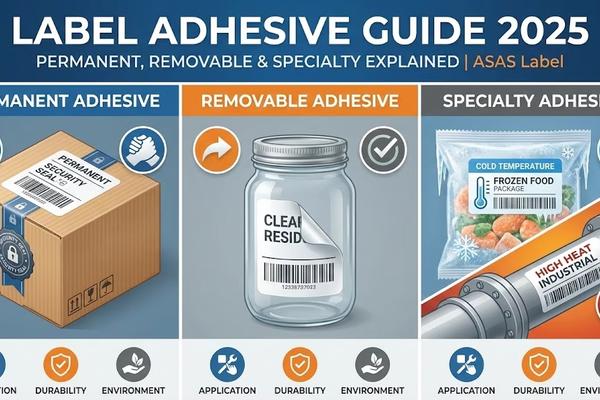
- Understanding Permanent Versus Removable Bonds
- Mastering Application Techniques
- Preparing the Surface
- Rectifying Common Label Defects
- Eliminating Bubbles and Wrinkles
- Quality Assurance Checklist
Jar Labels: Prevent Defects
Why Do Jar Labels Fail
Glass containers present unique challenges for adhesion due to their smooth, non-porous nature. When a label fails, the culprit is often a mismatch between the face stock rigidity and the container's curvature. Rigid materials struggle to conform to small diameter jars, leading to edge lift.
The memory of the label material plays a significant role in adhesion loss. Synthetic stocks like polyester possess a strong desire to return to a flat state. If the adhesive bond strength does not exceed this restoring force, the label will pull away from the curved surface.
Thermal expansion rates differ significantly between glass and plastic label materials. When a jam jar moves from a hot filling line to a cooling tunnel, the glass contracts. If the label material does not contract at the same rate, shear stress develops at the bond interface.
This stress often manifests as wrinkling or tunneling, particularly near the edges of the label. Understanding the coefficient of thermal expansion for your chosen substrate is crucial for preventing these defects. You must anticipate the entire lifecycle of the product, not just the application moment.
Contaminants on the glass surface act as barrier layers that prevent the adhesive from wetting out properly. Microscopic oils, dust, or mold release agents remaining from the glass manufacturing process reduce the surface energy. Low surface energy prevents the adhesive from establishing a secure anchor.
Battling Condensation and Surface Tension
Condensation creates an immediate barrier between the adhesive and the glass substrate. In filling environments where hot product meets cooler glass, moisture forms rapidly on the exterior. This moisture layer prevents pressure-sensitive adhesives (PSA) from contacting the glass surface effectively.
Water trapped behind the label degrades the bond over time. For emulsion-based acrylic adhesives, moisture can re-emulsify the glue, turning it milky and weak. This is a common point of failure for products stored in refrigerators or ice buckets.
Surface tension dictates how well an adhesive flows across the glass. Glass generally has high surface energy, which is favorable for bonding. However, condensation drastially lowers this energy. The adhesive beads up rather than spreading out, resulting in minimal contact area and weak adhesion.
Hydrophobic coatings are sometimes applied to glass to prevent scratching during shipping. These coatings intentionally lower surface tension. If you are unaware of this treatment, standard adhesives will fail to bond, sliding off the jar as if it were greased.
Mitigating moisture requires strict environmental controls or specific wet-friendly adhesives. Air knives or blowers on the production line remove surface moisture before labeling. Even a thin film of water is enough to compromise the initial tack of most standard label stocks.
Selecting Substrates for Resilience
Choosing the correct face stock is the first line of defense against label defects. Paper labels offer an organic aesthetic but lack dimensional stability when wet. As paper fibers absorb humidity, they swell and expand, causing bubbles and wrinkles on rigid glass surfaces.
Polypropylene (BOPP) serves as a superior alternative for jar labels due to its flexibility. BOPP conforms well to the curvature of standard jars and resists moisture absorption. This dimensional stability ensures the label remains flat and smooth even when subjected to high humidity.
Vinyl offers extreme durability and flexibility, making it ideal for irregular jar shapes. It lacks the internal "memory" of stiffer plastics, meaning it stays put once applied. However, vinyl comes with a higher environmental impact and cost profile compared to polyolefins.
Clear substrates ("no-label look") require absolute perfection in adhesive clarity and application. Any defect, bubble, or trapped dust particle becomes immediately visible. These materials generally require a synthetic liner to ensure the adhesive layer remains perfectly smooth before application.
Wet Kitchen Environment Needs
Kitchen environments subject jam jar labels to repetitive wet-dry cycles. A standard paper label without a barrier coating will disintegrate or peel after a few washes. The substrate must resist water penetration to protect the integrity of the design and the adhesive bond beneath.
Laminates provide the most robust protection against moisture and abrasion. A thin layer of clear polypropylene applied over the print seals the porous face stock. This creates an impermeable shield that allows the jar to be wiped clean without damaging the label.
UV varnishes offer a cost-effective alternative to lamination but provide less structural support. A heavy coat of varnish prevents ink run but adds little tensile strength to the label. For high-moisture environments, varnishes may crack if the bottle squeezes or flexes.
Wet strength paper acts as a hybrid solution for brands requiring a textured, natural look. These papers contain chemical agents that maintain fiber integrity even when saturated. They prevent the label from turning into pulp but do not stop moisture from reaching the adhesive.
Adhesives Engineered for Glass Surfaces
Not all pressure-sensitive adhesives perform well on glass. Rubber-based hot melts offer high initial tack, grabbing the glass instantly. However, they are susceptible to UV degradation and may yellow or lose adhesion if the jar is displayed in sunlight.
Acrylic adhesives are the industry standard for glass due to their clarity and durability. They withstand UV exposure and temperature fluctuations better than rubber-based alternatives. Acrylics require a longer dwell time to achieve ultimate adhesion but offer a permanent bond.
Solvent-based acrylics provide the highest resistance to moisture and chemicals. If your jar contains oily products that might drip, a solvent acrylic prevents the oil from undermining the edge of the label. These are essential for products with aggressive ingredients.
The phenomenon of "wet out" determines the final strength of the bond. The adhesive acts as a viscous liquid, flowing into the microscopic peaks and valleys of the glass surface. Harder adhesives take longer to wet out, posing a risk of lifting immediately after application.
Understanding Permanent Versus Removable Bonds
Permanent adhesives are designed to result in fiber tear or residue upon removal. For safety seals or primary branding, this security is non-negotiable. The goal is to ensure the label cannot be transferred to another container or removed without evidence.
Removable adhesives rely on a delicate balance of shear and peel strength. They must hold firmly during shipping and handling but release cleanly when the consumer acts. Achieving this on glass is difficult because adhesion tends to build over time.
"Repositional" adhesives offer a temporary window for adjustment. This allows for fixing skewed labels during the application process before the bond becomes permanent. This technology utilizes microspheres or patterned gum coverage to limit initial contact area.
Wash-off adhesives represent a specialized category for reusable glass containers. These formulas crystallize and release when exposed to hot caustic baths in recycling facilities. They enable brands to support circular economy models without manual scraping.
Selecting between these options requires analyzing the consumer lifecycle. If the jar is intended for reuse by the customer, a removable adhesive adds value. If the product conveys critical allergen information, a permanent bond is a regulatory necessity.
Mastering Application Techniques
The geometry of the jar dictates the application method and difficulty level. Cylindrical jars allow for straightforward roll-on application. Tapered jars (like classic jam jars) require labels shaped with a calculated curve, known as a camber, to prevent flagging.
Machine application ensures consistent pressure, which is vital for activating pressure-sensitive adhesives. Hand application often results in uneven pressure distribution. This inconsistency leads to weak spots where air pockets remain trapped between the adhesive and the glass.
The roller or wipe-down station on the label applicator contributes significantly to success. A soft foam roller conforms to slight irregularities in the glass surface. A hard rubber roller exerts higher pressure but may bridge over dips in the glass, leaving bubbles.
Speed synchronization between the dispensing edge and the rotating jar is critical. If the label dispenses slower than the jar rotates, the material stretches and snaps back later. If it dispenses faster, wrinkles form instantly as excess material accumulates.
Preparing the Surface
A pristine surface is the prerequisite for a defect-free label. Dust from cardboard packing materials is a common, invisible enemy in production environments. An air-blow station or vacuum system prior to labeling effectively removes loose particulates.
Chemical compatibility of cleaning agents matters. Isopropanol (IPA) is excellent for degreasing because it evaporates quickly without leaving residue. Avoid commercial glass cleaners containing surfactants or fragrances, as these leave a film that interferes with adhesion.
Temperature of the glass at the moment of application affects adhesive flow. Cold jars can cause the adhesive to stiffen, preventing proper wet out. Labeling freshly washed, hot jars can cause the adhesive to ooze or the label to slide.
Checking the "dyne level" or surface energy of the glass ensures readiness. While glass is naturally high-energy, surface treatments can alter this. A simple dyne pen test confirms whether the surface tension is sufficient for the adhesive to wet out.
Rectifying Common Label Defects
Understanding the mechanics of defects is the first step toward elimination. Most visual flaws stem from trapped air or material stress. Identifying the specific visual signature of the defect helps pinpoint the root cause in the machinery or material.
Darting refers to small creases usually found at the label edge. This often indicates that the label material is too stiff for the jar's curvature. It can also suggest that the release liner is not peeling away sharply enough at the dispense plate.
Skewing occurs when the label travels up or down the jar spirally. This signals a misalignment between the label roll and the container. It requires adjusting the dispense head angle to match the jar's vertical axis perfectly.
Flagging happens when the end of the label lifts off the surface. This is a classic symptom of material memory overcoming adhesive strength. It is prevalent on small diameter jars where the bending stress is highest.
Eliminating Bubbles and Wrinkles
Air entrapment is the primary cause of bubbling in the center of labels. This occurs when the label tack prevents air from escaping as the material lays down. Textured papers allow air to escape through the fibers, while film labels trap it.
To fix central bubbles, increase the tension on the wipe-down system. A squeegee or brush application method can push air out more effectively than a single contact roller. Ensuring the label contacts the center of the jar first and wipes outward is best practice.
Wrinkles usually result from poor feed control or tapered containers labeled with straight rectangular stocks. The material excess has nowhere to go. Utilizing a die-cut shape that matches the jar's taper eliminates the geometric cause of wrinkles.
Static electricity can cause the label to jump or wrinkle prior to jar contact. In dry environments, static build-up on plastic release liners is severe. Installing active static eliminator bars at the dispense point neutralizes this charge.
Outgassing from plastic containers creates bubbles, but on glass, "outgassing" comes from the adhesive itself. If the adhesive layer is too thick or chemically volatile at high temperatures, it generates gas pockets. Switching to a lower coat weight adhesive often resolves this.
Quality Assurance Checklist
Verify the ambient temperature and humidity of the production area. Adhesives have a minimum application temperature (usually around 40°F to 50°F). Applying labels in a freezing warehouse will lead to immediate failure.
Inspect the glass inventory for mold release agents or coatings. Run a quick water-break test; if water beads up excessively, the surface energy is too low. You may need a flame treatment or primer station.
Confirm the grain direction of paper labels. The grain should run perpendicular to the curve of the jar. If the grain runs parallel, the paper's stiffness increases, leading to edge lift and flagging.
Check the tension settings on the rewinder and unwinder. Excess tension stretches the label web, causing it to shrink back after application. Too little tension causes the web to float, leading to misaligned placement.
Examine the peel plate or dispense edge for adhesive buildup. Residue here causes the label to drag or release unevenly. Regular cleaning of the dispense tip prevents micro-stalls that cause wrinkles.
Monitor the initial tack versus ultimate adhesion timeline. Test a labeled jar immediately, then again after 24 hours. If the bond does not improve significantly after the dwell time, the adhesive formulation is incorrect for the glass type.