
Contact Sales Now
Thank you! Your submission has been received!
Oops! Something went wrong while submitting the form.

Contact Sales Now
Thank you! Your submission has been received!
Oops! Something went wrong while submitting the form.
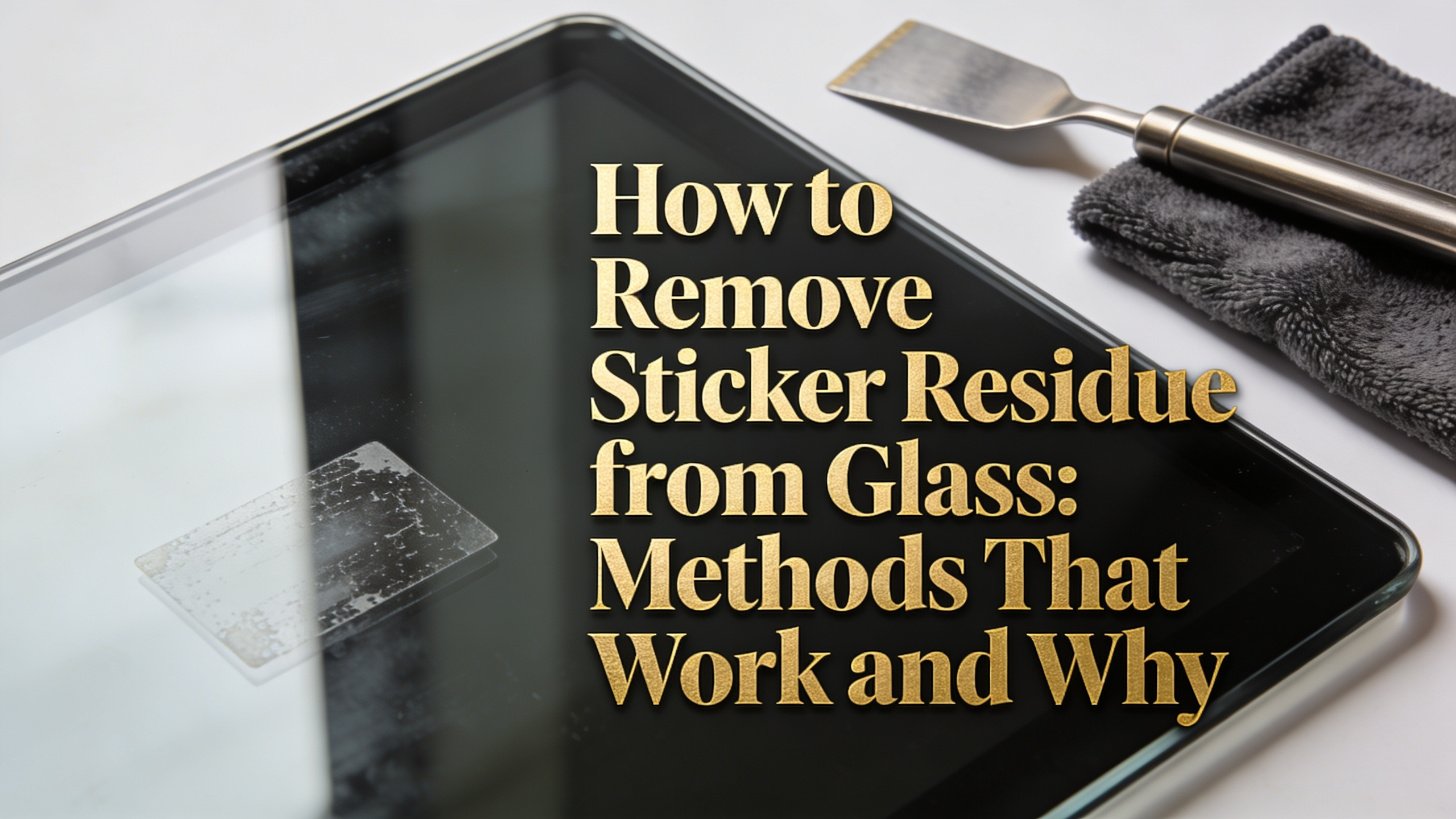
Sticker residue on glass is a chemistry problem, not a cleaning problem. The adhesive left behind depends on the label type, surface temperature history, and how long it sat. Match the method to the adhesive, and removal takes minutes instead of hours.
This guide covers five proven methods, ranked by effectiveness per adhesive type. We also cover what brands can specify at the label-design stage to prevent residue entirely.
Different adhesives respond to different solvents. Here's the shortcut based on what's stuck to your glass:
If you don't know the adhesive type, start with heat. It's the universal first step and often dissolves the bond enough to remove residue without any chemical solvent.
Glass is non-porous, so adhesive doesn't soak in. Instead, it forms a surface bond through van der Waals forces and chemical attraction. The stickier the adhesive, the stronger this bond becomes over time.
Label adhesives are engineered for specific tack, peel strength, and shear resistance. When a label is removed, cohesive failure (adhesive splitting) leaves residue. Adhesive failure (clean release) leaves none. The difference comes down to formulation.
Permanent adhesives are designed to stay. They use high-tack acrylic or rubber-based formulas that bond aggressively and resist solvents. These are standard on product labels, warning stickers, and security seals.
Removable adhesives use low-tack formulations with lower molecular weight polymers. They're engineered for clean release within a defined window, typically 6–24 months. Common on promotional labels, rental stickers, and consumer packaging.
Ultra-removable grades exist for glassware, electronics, and premium packaging where zero residue is required. These cost more but eliminate post-purchase cleanup for the end user.
Pressure-sensitive adhesives cure over 24–72 hours after application. During this window, the adhesive flows into microscopic surface imperfections, maximizing contact area. After full cure, bond strength can double.
Heat accelerates curing. A sticker left on a sun-warmed window cures faster and bonds harder than one in a cool pantry. UV exposure also breaks down the adhesive carrier, leaving behind brittle, chalky residue that resists solvents.
Bottom line: remove stickers early if you can. A label removed within 24 hours is dramatically easier to clean than one left for months.
Heat softens the adhesive polymer chains, weakening the bond. This is the safest first step and works on nearly every adhesive type. No chemicals, no scratching risk.
For a hair dryer approach, aim medium heat 3–4 inches from the sticker for 30–45 seconds. Peel from one corner at a slow, steady angle. If it resists, reapply heat.
For submergible items like jars and glassware, soak in hot soapy water for 10–15 minutes. Dish soap breaks surface tension and helps water penetrate under the label edges. This is the go-to method for how to remove stickers from glass bottles.
Oils dissolve rubber-based adhesives by breaking the non-polar bonds holding them together. This is often the best approach for how to get sticker residue off glass from price tags and packaging labels.
Apply oil directly to the residue, saturate a paper towel, and press it onto the spot. Let it sit for 10–20 minutes. The oil penetrates the adhesive matrix and releases the bond. Wipe away with a microfiber cloth.
Peanut butter works because of its high oil content plus mild abrasion from solids. It's messy but effective on stubborn patches. Coconut oil is cleaner and smells better for kitchen glassware.
Follow up with dish soap and warm water to remove the oil film. Skip this step and you'll have streaks.
When heat and oil don't work, switch to polar solvents. Isopropyl alcohol (90% or higher) dissolves acrylic adhesives by disrupting their polymer structure. It evaporates cleanly and leaves no film.
Apply alcohol to a cotton ball or microfiber cloth, press onto the residue for 30 seconds, then rub in small circles. For thick residue, let the alcohol sit for 2–3 minutes before wiping.
Acetone (nail polish remover) is stronger and works on cured permanent adhesives that alcohol can't touch. It's safe on glass but will damage painted, plastic, or coated surfaces. Test on a hidden area first if the glass is near any non-glass material.
This method is effective for how to remove adhesive from glass when the residue has hardened or cured for weeks or months.
Commercial removers combine citrus oils (d-limonene), petroleum distillates, and surfactants. They're formulated to break down a wide range of adhesives that household solvents can't handle.
Goo Gone is citrus-based and gentler. Best for fresh or moderate residue on household glass. Apply, wait 5–10 minutes, wipe clean with a cloth, then wash with soap and water to remove the oily residue.
Goof Off is solvent-based and stronger. Use it for industrial adhesives, tape residue, and stickers that have cured for years. Work in a ventilated area and wear gloves. Rinse thoroughly after use.
Both products are safe on glass but will strip tinting films, damage plastics, and remove paint. Keep them away from window frames and rubber gaskets.
For flat glass surfaces like windows, mirrors, and glass cooktops, a razor blade is the fastest mechanical solution. This is how professionals handle how to take stickers off glass in bulk.
Here's the correct technique:
Never use a razor on curved glass, tempered glass with etched surfaces, or coated glass (low-E windows, mirrored finishes). The blade will scratch coatings even if it can't scratch the glass itself.
Some common household "solutions" cause more damage than the sticker itself. Avoid these:
Also avoid dry scraping with plastic tools on textured glass. They can catch and gouge the surface finish.
If your customers are asking how to get rid of stickers on glass from your product, the solution is upstream. Spec the right adhesive at the label design stage and residue becomes a non-issue.
Brands selling glass bottles, jars, candles, glassware, and cosmetics benefit directly from clean-release labels. It reduces returns, improves unboxing experience, and supports reuse and recycling claims.
When sourcing labels, ask your supplier for these specifications:
Request sample rolls and run a 30-day aging test on your actual glass substrate. Apply, age at room temperature and elevated temperature, then peel. This confirms performance before committing to production volume.
Face stock matters too. Filmic labels (BOPP, PE) tend to peel cleaner than paper because they resist tearing and leave adhesive intact during removal. Paper labels often delaminate, leaving fiber residue that requires separate cleanup.
What's the fastest way to remove labels from glass bottles?
Soak in hot soapy water for 15 minutes. Most modern bottle labels release completely. For stubborn residue, follow with oil or alcohol depending on the adhesive.
Can I use acetone on my car or house windows?
Yes on the glass itself, but keep it away from tinting film, rubber seals, and painted frames. Apply to a cloth, not directly to the window, to control where it goes.
How do I remove stickers from glass cookware like Pyrex?
Soak in hot soapy water, then use oil-based solvent for any residue. Avoid razor blades on baking dishes — the curved edges make safe scraping difficult.
Is it safe to use a razor blade on a mirror?
Only on the front glass surface, never on the back. The silvered backing scratches easily and can't be repaired. When in doubt, use alcohol or a commercial remover instead.
Why does residue come back after cleaning?
Oil-based solvents leave a film that attracts dust, making it look like residue returned. Always finish with dish soap and water, then dry with a lint-free cloth.
Will these methods work on tempered or frosted glass?
Chemical methods yes. Avoid razor blades on frosted or etched surfaces — they'll damage the texture. Stick to heat, oil, alcohol, or commercial removers.
Clean glass is a function of matching method to adhesive. For one-off cleanup, start with heat and work up to stronger solvents. For brands shipping glass products, specify the right removable adhesive from the start and spare your customers the problem entirely.