

Contact Sales Now
Thank you! Your submission has been received!
Oops! Something went wrong while submitting the form.

Contact Sales Now
Thank you! Your submission has been received!
Oops! Something went wrong while submitting the form.

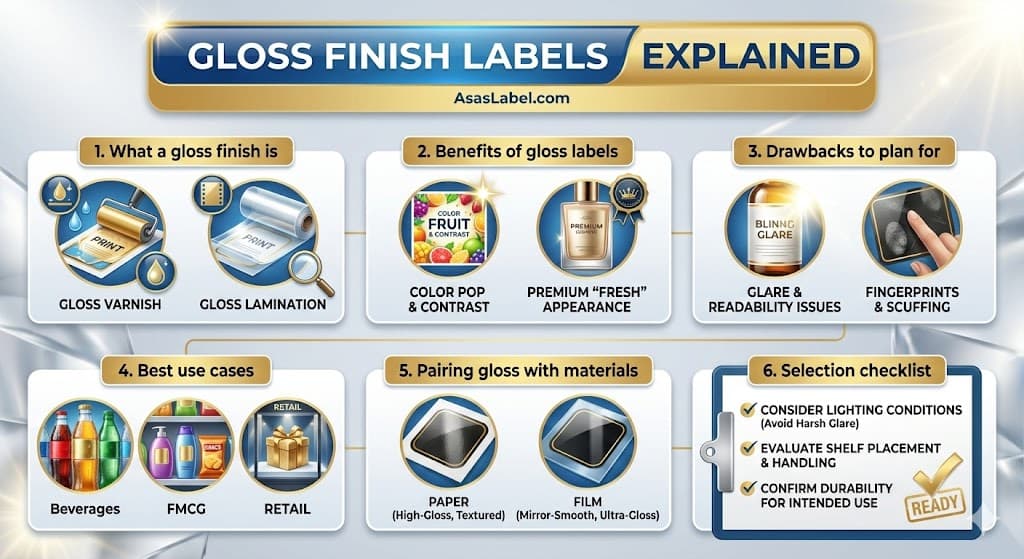
High-gloss finishes in label production serve as a strategic tool for brand differentiation. They function well beyond simple aesthetics by providing a protective barrier that influences consumer perception. This finish utilizes the physics of light reflection to alter how packaging is perceived in a retail environment.
When light strikes a glossy surface, it undergoes specular reflection. This means the light reflects at the same angle it hit the surface, creating a mirror-like shine. This optical phenomenon makes colours appear richer and creates a distinct separation from matte or texture-heavy competitors on the shelf.
Selecting a gloss finish requires understanding the interplay between the coating and the substrate. It is not merely about applying a shiny topcoat. The process involves chemical bonding and tension that affects how inks settle and how the label performs under stress.
Brands often default to gloss without analyzing the technical implications. A shiny label finish can enhance shelf appeal but may introduce functional challenges in scanning or durability. Understanding the mechanics of this finish is vital for production efficiency and end-user satisfaction.
A gloss finish is characterized by its smooth surface topography. Unlike matte finishes which scatter light through microscopic irregularities, a gloss coat fills in surface valleys. This leveling process allows light to bounce back directly to the viewer's eye, resulting in high reflectivity.
The intensity of this shine plays a crucial role in label visibility. Technically, this is measured using a gloss meter, which calculates the amount of light reflected at a specific angle. High-gloss labels typically score high on this scale, indicating a surface nearly free of microscopic imperfections.
This finish acts as an optical amplifier for the underlying print layers. By creating a smooth interface between the air and the print, the coating reduces light scattering that typically washes out colors. The result is a sharp, vibrant image that retains the integrity of the original digital or flexographic file.
Application methods vary based on the desired level of reflectivity and protection. The finish is applied either as a liquid coating that cures into a solid or as a pre-formed film layer. Both methods achieve the specular effect but offer different physical properties regarding resistance and flexibility.
Gloss varnish is a liquid coating applied inline during the printing process. It is typically UV-cured, meaning it turns from liquid to solid instantly under ultraviolet light. Varnishes are generally thinner and less expensive than laminates. They provide a moderate level of shine known as a "flood coat."
This method is cost-effective for high-volume runs where extreme durability is not the primary concern. UV gloss varnishes offer good resistance to minor abrasion and moisture. However, because they are a liquid sitting on top of the ink, they may crack if the label stock is extremely flexible or bent sharply.
Gloss lamination involves applying a clear plastic film, usually polypropylene (BOPP) or polyester, over the printed surface. This physically adds a layer of material to the label construction. The laminate provides superior protection against chemicals, heavy abrasion, and moisture compared to varnish.
Laminates create the highest possible gloss levels due to the inherent smoothness of the film. They add rigidity to the label, which can facilitate high-speed dispensing. However, this added thickness impacts the overall caliper of the roll, which must be accounted for in the application machinery settings.
The primary driver for selecting a gloss laminate label helps elevate the visual hierarchy of a product. In a crowded retail environment, the human eye is naturally drawn to contrast and light. Gloss finishes capture ambient store lighting to create dynamic highlights that move as the consumer walks by.
Beyond the "magpie effect" of attracting attention, gloss finishes signal manufacturing quality. A flawless, reflective surface implies a sealed, hygienic, and pristine product. This psychological association is particularly powerful in sectors where product purity is paramount, such as health and beauty.
Functionally, the smooth surface of a gloss finish repels dust and debris better than textured matte surfaces. In dusty warehouse environments or open retail shelving, gloss labels remain cleaner visually. The lack of surface friction also aids in preventing packaging logs from snagging against each other during transit.
One of the most technical advantages of gloss is its ability to deepen black densities. A black ink covered with a gloss laminate appears darker and richer than the same ink on a matte surface. This is because the coating reduces surface scattering, allowing the pigment to absorb more light.
Cyan, magenta, and yellow inks appear more vibrant under a gloss finish. The "wet look" mimics the saturation seen in photography, making it ideal for food packaging where appetite appeal is driven by color intensity. The finish essentially increases the dynamic range of the printed image.
Contrast is significantly improved between design elements. Fine text or subtle gradients are preserved with greater clarity because the smooth top layer acts like a lens. This clarity is essential for brands relying on intricate graphic patterns or photographic imagery to convey their value proposition.
Gloss finishes are synonymous with freshness in the consumer mindset. The reflective quality mimics water or moisture, which subconsciously signals hydration in beverages or efficacy in cosmetics. This "fresh" aesthetic is difficult to replicate with satin or matte varnishes, which tend to look dry or muted.
In the personal care sector, a shiny label finish suggests a new, untouched product. It creates a barrier that looks impermeable, reinforcing the idea that the contents are sealed and safe. This premium cue allows brands to command higher price points based purely on packaging perception.
This finish also helps standard paper stocks mimic the look of more expensive synthetic materials. A high-gloss varnish on a standard semi-gloss paper can elevate the material to look like a premium film. This allows for cost savings on the substrate without sacrificing the high-end look on the shelf.
While visually striking, gloss finishes introduce specific optical and mechanical challenges. The very reflectivity that draws attention can also obscure information under certain lighting conditions. Brands must balance the desire for shelf pop with the functional requirement of communication.
The smooth surface tension of gloss laminates can also complicate secondary printing. If a brand needs to thermal transfer print lot codes or expiration dates over the gloss layer, specific ribbon formulations are required. Standard wax ribbons may smear, necessitating resin or wax-resin hybrids.
High-gloss surfaces are unforgiving regarding imperfections in the application surface. If the container has bumps, ridges, or texture, the glossy label will highlight these flaws through light reflection. A matte label might hide container defects, but a gloss label will magnify them.
Specular reflection can render barcodes unreadable to scanners. If a scanner's beam hits the gloss surface at a direct angle, the reflection can blind the sensor. This is known as "specular blind" in barcode verification standards. It leads to checkout failures and supply chain inefficiencies.
To mitigate this, the placement of the barcode and the curvature of the packaging must be considered. On curved surfaces like bottles, the continuous highlight line created by overhead lighting can obliterate text visibility. This glare forces the consumer to rotate the product to read ingredients or instructions.
QR codes are particularly susceptible to this issue. As brands increasingly rely on QR codes for digital engagement, a high-gloss finish can prevent successful consumer scanning. A spot matte varnish over the code area or a specific "quiet zone" design may be necessary to ensure functionality.
A pristine gloss surface acts similarly to a mirror regarding contaminants. Oils from human fingers are instantly visible on dark, glossy backgrounds. This can make products appear handled or shopworn before they even leave the store shelf, detracting from the premium experience.
Micro-scratches are also more apparent on high-gloss finishes. During shipping, vibration causes bottles to rub against one another or the master carton. On a gloss surface, these microscopic abrasions create a haze that dulls the shine. This phenomenon is known as "scuff formatting."
Laminates generally resist deep scratches better than varnishes, but the surface marks remain visible. Brands packaging heavy items or those subject to rough supply chain handling must evaluate the abrasion resistance of specific gloss films. Testing scuff resistance using a rub tester is a standard quality control procedure.
Certain industries utilize gloss finishes as a standard due to established consumer expectations. The decision is often driven by the environment in which the product is sold and the nature of the product itself. Understanding these vertical-specific norms prevents brands from looking out of place.
The durability requirements of the product lifecycle also dictate the use of gloss. Products stored in humid environments, usually bathrooms or kitchens, benefit from the water-repellent nature of gloss laminates. The coating protects the paper fibers from swelling and the ink from running.
In highly competitive sectors, the reflectivity of the label is a weapon in visual shelf disruption. Brands look for the highest distinctions of "gloss units" to outshine neighbors. This arms race for vibrancy drives the continuous improvement of UV coating technologies.
In the beverage industry, condensation is a constant threat. Gloss laminates, particularly on BOPP film, provide the necessary water resistance for ice buckets and refrigerated displays. The gloss finish mimics the look of the glass or plastic bottle, creating a seamless "no-label" look when applied to clear substrates.
Fast-Moving Consumer Goods (FMCG) rely on gloss to facilitate rapid visual scanning. Shoppers spend seconds scanning a shelf. The high contrast provided by gloss labels helps brand logos and color blocking stand out effectively. It supports the quick identification of flavor variations through vibrant color coding.
Retail environments with bright fluorescent lighting capitalize on gloss labels. The overhead lights create sparkling highlights on the packaging. For items like squeeze pouches or shampoo bottles, this interaction with light emphasizes the contours of the packaging design, giving it a 3D presence on a 2D shelf.
The interaction between the gloss finish and the base material defines the final appearance. A gloss coating applied to a porous material yields different results than one applied to a non-porous film. The "hold-out" of the varnish—how much stays on top versus soaking in—is the critical factor.
Surface smoothness of the substrate determines the peak gloss level achievable. Even a thick layer of gloss varnish cannot completely mask the texture of a rough vintage wine paper. The underlying topography will telegraph through slightly, disrupting the perfect mirror reflection.
Understanding dyne levels and surface energy is also essential when pairing coatings with synthetic stocks. If the surface energy is mismatched, the varnish may bead up or peel off (delaminate). Corona treatment is often used inline to ensure the gloss layer bonds permanently to the film substrate.
When applying gloss to paper substrates, absorption is the main variable. Standard paper absorbs liquid varnish, reducing the shine. To achieve a high-gloss finish on paper, a primer is often required, or a laminate film is used to bridge the fibers and create a smooth top layer.
Film substrates, such as polypropylene or polyethylene, offer superior gloss results because they are non-absorbent. The coating sits entirely on the surface, maximizing the refractive index. White BOPP with a gloss lamination creates the standard "supermarket gloss" look familiar on food packaging.
Clear film with gloss lamination achieves high transparency. This combination is crucial for the "no-label look" where the graphic appears printed directly on the container. The gloss level of the laminate must match the gloss level of the container (usually PET or glass) to make the label edges disappear visually.
Selecting the right gloss finish involves analyzing the entire lifecycle of the label. Brands must document the journey from the applicator machine to the recycling bin. Every step introduces variables that the surface finish must withstand or accommodate to maintain brand integrity.
Cost constraints often dictate the choice between varnish and lamination. However, the cost of failure—labeled products sticking together or barcodes failing—is higher. A technical audit of the application line and the retail environment should precede any aesthetic decisions regarding the finish.
Sustainability goals also influence this checklist. Gloss laminates add plastic to the waste stream. Brands conscious of eco-impact might opt for specific biodegradable cellulose-based gloss films or UV varnishes that do not interfere with the recycling process of the main container.
Analyze the lighting at the point of sale. Boutique stores often use warm, directional spot lighting which creates intense glare spots on gloss labels. Conversely, warehouse stores use diffuse, high-bay lighting which maximizes the overall brightness of gloss packaging without as much direct glare.
Consider the friction in the supply chain. If products are vibration-fed or slide down chutes, gloss finishes provide low friction, which is beneficial. However, high-gloss UV coatings can sometimes be too slippery, causing stacks of products to slide and collapse. Anti-skid additives may be needed in the gloss varnish.
Finally, assess the automated application sensors. Many labeling machines use optical sensors to detect the gap between labels. Extremely shiny labels can reflect the sensor beam, causing false triggers or "double dispensing." Ultrasonic sensors are the preferred hardware solution for high-gloss clear labels.
The choice of a gloss finish label is a technical commitment. It requires balancing optical physics, material science, and supply chain logistics. When executed correctly, it delivers a powerful visual asset that protects the product and elevates the brand.