On this page
- Comprehensive Guide to Self-Adhesive Label Manufacturing and Application
- Complete Guide to Self-Adhesive Label Adhesives: A Comprehensive Guide to Understanding Self-Adhesive Packaging, Label Material, and Self-Adhesive Stickers for Various Industries
- Understanding Self-Adhesive: The Mechanics of the Self-Adhesive Label
- The Three-Layer Structure
- Viscoelastic Bonding
- Operational Advantages Over Wet Glue
- Choosing the Right Type of Label and Self-Adhesive Sticker Configurations
- Liner Options
- Adhesion Permanence Levels
- Application Formats
- Understanding Label Materials: PP and Other Label Material Options
- Paper Substrates
- Film Substrates
- Specialty Materials
- Specialty Adhesives and Adhesive Labels: Chemistry and Performance
- Permanent Formulations
- Removable Technologies
- Environmental Resistance
- Custom Label Solutions for Various Industry Applications
- FMCG and Food
- Pharma and Healthcare
- Industrial Logistics
- Printing Technologies for Adhesive Labels
- Flexographic Printing
- Digital Production
- Offset Lithography
- Finishing and Embellishments for Your Label Adhesive and Facestock
- Surface Protection
- Tactile Effects
- Sustainability in Label Material and Adhesive Manufacturing
- Eco-Friendly Materials
- Liner Reduction
- Recycling Compatible Adhesives
- Choosing the Right Adhesive: The Strategic Selection Process
- Substrate Analysis
- Environmental Lifecycle
- Total Applied Cost
- Manufacturing Capabilities at ASAS
- Common Questions About Label Adhesives
Comprehensive Guide to Self-Adhesive Label Manufacturing and Application
Complete Guide to Self-Adhesive Label Adhesives: A Comprehensive Guide to Understanding Self-Adhesive Packaging, Label Material, and Self-Adhesive Stickers for Various Industries
Comprehensive Guide to Self-Adhesive Label Adhesives. Explore label and self-adhesive sticker adhesives for product labeling in various industries. Find removable and permanent solutions.
Understanding Self-Adhesive: The Mechanics of the Self-Adhesive Label
The Three-Layer Structure
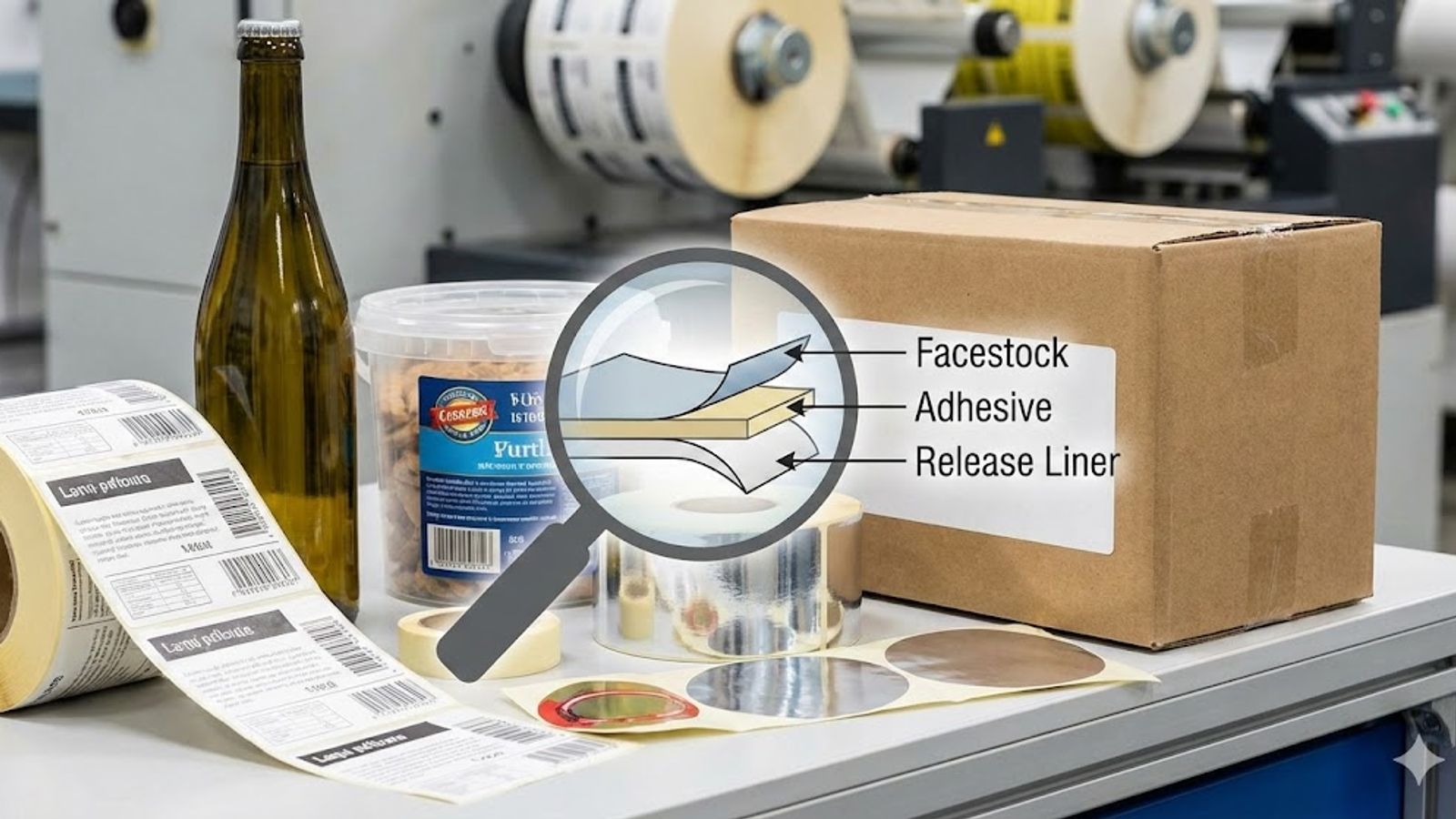
A self-adhesive label is a laminate construction comprising three distinct layers. The top layer is the facestock, which serves as the printable surface. This carries the brand graphics, variable data, and protective finishes. The middle layer consists of the adhesive. This chemical coating is applied to the back of the facestock. It dictates the label's performance, including its tack, shear, and peel strength relative to the target surface. The bottom layer is the release liner. This silicone-coated carrier protects the adhesive until application. It provides the mechanical stability required for high-speed dispensing machines to transport the label through the print and application web.
Viscoelastic Bonding
Pressure-sensitive adhesives operate on the principle of viscoelasticity. The material exhibits both viscous and elastic characteristics when deformed. This allows the adhesive to flow into the microscopic texture of the substrate upon contact. This bonding occurs instantly without a curing phase. The chemical formulation "wets out" over the surface area, creating a secure hold. This immediate adhesion makes PSLs superior for high-speed automated labeling lines.
Operational Advantages Over Wet Glue
PSLs offer distinct operational efficiencies compared to wet glue or shrink sleeves. They require no extensive cleanup of glue pots and eliminate the downtime associated with adhesive preparation. Changeovers between different label shapes are faster with PSLs. Die-cutting happens during conversion, not application. This pre-cut precision ensures consistent placement accuracy and reduces waste on the packaging line.
Choosing the Right Type of Label and Self-Adhesive Sticker Configurations
Liner Options
Standard release liner labels utilize glassine or PET backing. Glassine offers a balance of cost and performance for standard rotary die-cutting. PET liners provide higher strength, preventing web breaks during high-speed dispensing. Linerless labels represent a growing segment of the market. These labels act like adhesive tape, wound on a roll without a backing paper. They reduce waste and allow for more labels per roll, though they require specific application machinery.
Adhesion Permanence Levels
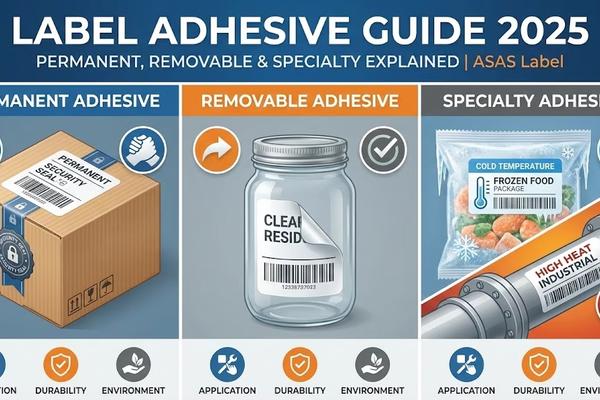
Permanent labels use formulations designed to bond irreversibly. Attempting to remove them usually results in facestock destruction or adhesive residue. These are essential for primary product branding and safety warnings. Removable labels utilize adhesives with lower ultimate adhesion. They hold firmly during the product's life but peel away cleanly when required. This technology serves logistics tracking and promotional stickers well.
Application Formats
Roll labels are the industry standard for automated application. The continuous web allows labeling heads to dispense units rapidly. The core size and winding direction must match the applicator specifications. Sheet labels suit manual application processes. These are often used for smaller batches or office-based printing. Fan-folded labels offer a hybrid solution, feeding continuously into thermal printers without the curvature memory of a roll.
Understanding Label Materials: PP and Other Label Material Options
Paper Substrates
Uncoated paper provides a natural, textured look. It absorbs ink readily, making it ideal for vintage wine labels or artisanal food products. However, it lacks moisture resistance without a protective varnish. Semi-gloss and high-gloss papers feature clay coatings that smoothen the surface. These coatings enhance ink holdout, resulting in sharper images and vibrant colors. They are the standard for prime labels in retail environments. Thermal papers contain heat-sensitive coatings. Direct thermal paper darkens when heated, eliminating the need for ribbons. Thermal transfer paper requires a ribbon but offers greater durability for long-term barcoding.
Film Substrates
BOPP (Biaxially Oriented Polypropylene) offers excellent clarity and moisture resistance. It is rigid enough for high-speed dispensing and resists tearing. White, metallized, and clear variants make it the workhorse of the beverage and personal care industries. PE (Polyethylene) is a softer, more flexible film. It conforms well to squeezable containers like shampoo bottles. Its elasticity prevents the label from wrinkling or lifting when the container deforms.
Specialty Materials
Metallic films use a thin layer of aluminum to create a reflective surface. This substrate provides a premium, foil-like appearance without the cost of hot stamping. It suggests high value and shelf impact. Holographic materials incorporate diffractive patterns for visual appeal and security. They prevent counterfeiting by making the label difficult to replicate. Security materials, such as void stocks, leave a pattern behind if tampered with.
Specialty Adhesives and Adhesive Labels: Chemistry and Performance
Permanent Formulations
Acrylic adhesives utilize synthetic polymers. They offer excellent UV stability and clarity. Acrylics withstand oxidation and yellowing, making them suitable for outdoor applications and clear-on-clear labels. Rubber-based adhesives provide aggressive initial tack. They bite into substrates quickly, which is beneficial for rough or textured surfaces like corrugated boxes. However, they are less resistant to UV light and solvents than acrylics.
Removable Technologies
Removable adhesives rely on microsphere technology or specific cross-linking. This limits the bond strength over time. The goal is to prevent the adhesive from flowing too deeply into the substrate pores. Clean removal properties are critical. The adhesive must remain anchored to the facestock, not the product surface. This prevents consumer frustration and damage to the underlying item, such as book covers or glassware.
Environmental Resistance
Freezer-grade adhesives utilize specialized rubber or acrylic blends. Standard adhesives crystallize and fail below freezing. Cryogenic adhesives maintain flexibility and tack even in deep-freeze environments or liquid nitrogen exposure. High-temperature adhesives use silicone or modified acrylics to resist degradation. These are vital for electronics labeling or automotive components under the hood. They withstand heat cycles without oozing or sliding.
Custom Label Solutions for Various Industry Applications
FMCG and Food
Food labels require materials that resist moisture and fats. Condensation on refrigerated goods can destroy standard paper labels. Films like BOPP combined with freeze-resistant adhesives ensure the brand remains intact throughout the cold chain. Nutritional labeling requires high-resolution printing for legibility. Small text must remain sharp. Low-migration inks and adhesives are mandatory for direct food contact safety compliance.
Pharma and Healthcare
Pharmaceutical labels demand zero-defect quality. Traceability is paramount. Facestocks must accept variable data printing for lot numbers and expiration dates without smudging. Medical device labels often require sterilization resistance. The label must withstand autoclaving or gamma irradiation without detaching or becoming unreadable. Tamper-evident features are standard to ensure patient safety.
Industrial Logistics
Logistics labels focus on function over form. High-contrast facestocks ensure barcode readability. The adhesive must bond to recycled cardboard, shrink wrap, and plastic pallets. Chemical drum labeling requires extreme durability. The label must survive exposure to harsh solvents, UV light, and seawater during international shipping. BS5609 certification is often a requirement for marine shipment labeling.
Printing Technologies for Adhesive Labels
Flexographic Printing
Flexography is the dominant method for long-run label production. It uses flexible relief plates and rapid-drying inks. Modern flexo presses at ASAS Label achieve photographic quality with high consistency and speed.
Digital Production
Digital printing eliminates plates entirely. It is ideal for short runs, seasonal variations, and multiple SKUs. This method allows for variable data printing, where every label in the sequence can be unique.
Offset Lithography
Offset printing delivers superior quality on textured papers. It excels at reproducing intricate details and soft gradients. This method is frequently chosen for premium wine and spirits labeling where aesthetic nuance is critical.
Finishing and Embellishments for Your Label Adhesive and Facestock
Surface Protection
Varnishes protect the ink from abrasion. UV varnishes cure instantly to a high gloss or matte finish. They add a layer of chemical resistance against oils and solvents found in household products. Lamination involves applying a clear plastic film over the label. This provides the ultimate protection against moisture and tearing. Soft-touch laminates add a tactile, velvety feel that suggests luxury.
Tactile Effects
Embossing raises specific design elements, creating a 3D effect. Debossing presses elements inward. These techniques add texture that encourages consumers to handle the product, increasing engagement. Foiling applies metallic foil to the surface using heat or cold transfer. Hot stamping delivers the most brilliance and opacity. Cold foil serves as a faster, more cost-effective alternative for fine gradients.
Sustainability in Label Material and Adhesive Manufacturing
Eco-Friendly Materials
Recycled content papers and films reduce virgin resource consumption. Brands can choose facestocks made from post-consumer waste (PCR). Bio-based films derived from wood pulp or sugarcane offer renewable alternatives to fossil-fuel plastics.
Liner Reduction
Reducing the thickness of the release liner impacts the carbon footprint significantly. Thinner liners mean more labels per roll, reducing shipping weight and storage space.
Recycling Compatible Adhesives
Wash-off adhesives are crucial for the circular economy. They allow the label to separate cleanly from PET bottles during the recycling wash process. This ensures the plastic stream remains uncontaminated for high-quality recycling.
Choosing the Right Adhesive: The Strategic Selection Process
Substrate Analysis
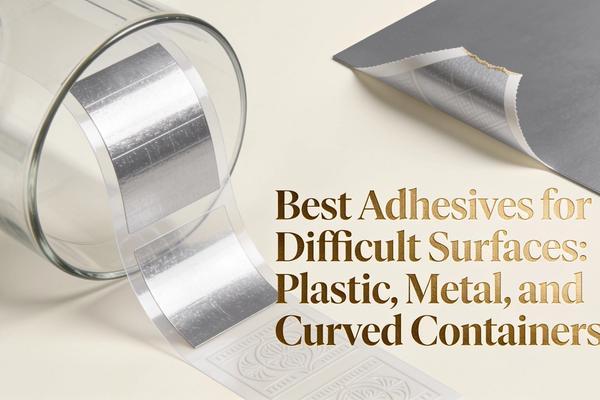
Identify the surface energy of the product. High-energy surfaces like glass and metal are easy to bond. Low-energy surfaces like HDPE or powder-coated metals require aggressive adhesives designed to wet out difficult materials.
Environmental Lifecycle
Map the product's journey. Will it face outdoor UV exposure, freezer conditions, or high humidity? The label construction must survive the most extreme environment it will encounter, not just the application conditions.
Total Applied Cost
Evaluate the total cost, not just the unit price. A cheaper label that causes line stoppages or fails in the field costs more in the long run. High-quality materials improve line speeds and reduce waste.
Manufacturing Capabilities at ASAS
ASAS Label operates with state-of-the-art infrastructure. Our facility houses 10-color flexographic presses and 6-color offset machinery. This diversity allows us to match the right technology to your specific volume and quality requirements. We stock a vast array of materials from certified global suppliers. Our portfolio includes standard papers, advanced films, and specialty textures. We maintain rigorous quality control to ensure every roll meets precise specifications. Our service extends beyond printing. We provide technical consultation to UAE and export clients. We help you navigate complex compliance requirements and material selection for any market.
Common Questions About Label Adhesives
What defines the difference between self-adhesive and pressure-sensitive? There is no difference; the terms are interchangeable. Both refer to labels that bond to a surface through light contact pressure without heat or solvent activation.
How long do self-adhesive labels last? Longevity depends on the material and environment. Vinyl and polyester labels with acrylic adhesives can last years outdoors. Paper labels are generally intended for shorter indoor lifecycles.
Can self-adhesive labels be removed without residue? Yes, but only if specified. You must request removable or ultra-removable adhesive. Standard permanent adhesives will leave residue or tear the paper upon removal.
What is the best adhesive for cold storage? Hot-melt rubber adhesives often perform well in chilled conditions, but true freezer-grade or cryogenic adhesives are necessary for deep freeze environments to prevent stiffening and fall-off.
Are self-adhesive labels recyclable? The label itself is usually not recyclable in standard streams due to the adhesive. However, we offer "recycling-friendly" adhesives that wash off during the recycling process of the container.
What is the minimum order quantity? MOQs vary by production method. Digital printing allows for very low quantities, suitable for prototypes. Flexographic runs generally require higher volumes to be cost-effective.
How do I get a quote? Contact our sales team with your label dimensions, material preference, quantity, and artwork. We can provide a detailed estimate based on your specific application needs.
In the complex landscape of packaging, the label is the final touch that defines the brand. The correct combination of facestock, adhesive, and liner ensures operational efficiency and market impact. ASAS Label delivers the expertise and technology to execute your vision with precision.