On this page
- Coated vs Uncoated Paper Labels: Visual & Functional Differences
- Coated vs Uncoated Paper: Difference Between Coated and Uncoated Uncoated Paper Stock
- Coated and Uncoated Paper: Key Differences in Coating and Durability
- Clay Coating and Top of the Paper: Why You Should Use Coated Paper
- Uncoated Paper Stock: Porous Texture and Tactile, Softer Finish
- Ink and Printing Properties: How Ink is Absorbed into the Paper
- Gloss and Matte Finish: Choosing the Right Type for High-Quality Results
- Absorption Rates and Ink Holdout on Coated vs Uncoated Paper
- Coated and Uncoated Paper Stock: Choosing the Right Type of Paper for Durability
- Porous Uncoated Paper: Moisture and Tactile Surface Challenges
- Use Coated Paper for Durability: Ink Resistance and Friction
- Uncoated Paper Stock vs Coated Varieties: Right Type of Paper for Your Application
- High-Quality Coated Paper: Retail and Food and Beverage Labels
- Tactile Premium Uncoated Paper: Logistics Labels and Natural Branding
- Analyzing Budget and Manufacturing Variables in Coated and Uncoated Paper
- Set Up Costs and Material Availability for Coated and Uncoated Paper Stocks
- Lamination and Varnish Implications for Choosing the Right Type of Paper
- Critical Factors Before Final Selection: Choosing Between Coated and Uncoated
- Temperature and Humidity Exposure for Uncoated and Coated Varieties
- Legibility and Brand Narrative: Right Type of Paper for High-Quality Print
Coated vs Uncoated Paper Labels: Visual & Functional Differences
Coated vs Uncoated Paper: Difference Between Coated and Uncoated Uncoated Paper Stock
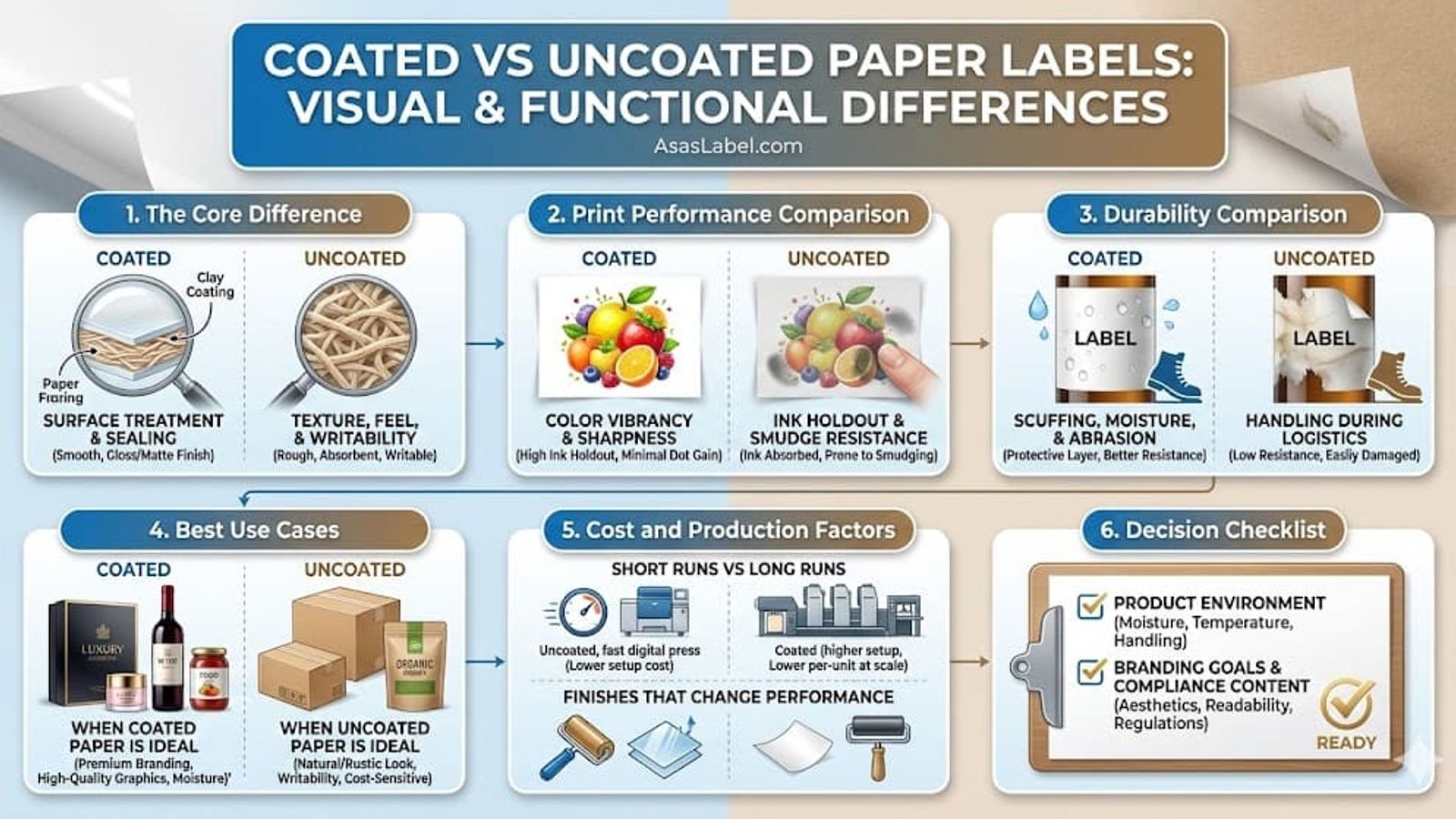
Selecting the correct paper stock determines the final perception of a product and the efficiency of the supply chain. The distinction between coated vs uncoated paper labels extends beyond simple aesthetics. It involves specific variations in porosity, ink interactions, and chemical treatments that dictate performance in varied environments as you compare coated vs uncoated paper.
Professional label converters and brand managers must understand the material science behind these papers. The choice between coated and uncoated paper influences printability during production and durability during distribution. This analysis breaks down the key differences to facilitate informed material selection for coated and uncoated paper stocks.
Coated and Uncoated Paper: Key Differences in Coating and Durability
The manufacturing process for paper label stock creates the fundamental characteristics that separate these two categories. Raw paper fibers form the base of both, but post-processing alters the physical topography of the sheet. This topography dictates how the material interacts with light, ink, and adhesives, whether you are using coated or uncoated stock.
Understanding this structural difference helps in predicting how the label will behave on a flexographic or digital press. It also determines the necessary machine settings for tension and ink density. What’s the difference? The core difference lies in the presence or absence of a mineral layer applied to the paper to create coated papers.
Clay Coating and Top of the Paper: Why You Should Use Coated Paper
Coated paper labels undergo a treatment process where the manufacturer applies a layer of agent, typically kaolin clay, calcium carbonate, or latex, to the surface of the paper. This coating fills the microscopic valleys between paper fibers. It creates a smooth, uniform surface that significantly reduces porosity, which makes coated paper ideal for detail.
Manufacturers may apply this coating on one side (C1S) or both sides (C2S), though coated labels primarily utilize single-side coating. The application is followed by calendering, a process where the paper passes through rollers under high pressure. This gives the paper a smoother finish and determines whether the coated paper comes in gloss or matte finish varieties.
The sealant layer on top of the paper acts as a barrier. It prevents ink and varnishes from penetrating deep into the fiber network. By keeping fluids on the surface, the coated stock ensures that printing chemistry reacts predictably. This creates a stable foundation for high-quality, high-speed printing operations.
Different distinct grades of coating exist, designated by brightness and smoothness levels. Premium coated options receive multiple layers of coating to ensure zero fiber visibility. This multi-layered approach provides the pristine white background necessary for color-critical commercial applications when you print and paper needs to be written with precision.
Uncoated Paper Stock: Porous Texture and Tactile, Softer Finish
Uncoated paper labels lack the clay sealant layer. The surface of the paper remains raw paper, exposing the natural weave of the wood pulp fiber. This results in a relatively rougher topography with high porosity. The uncoated sheet behaves like a sponge on a microscopic level, as uncoated paper absorbs ink through high capillary action capabilities.
The tactile experience of uncoated stock is organic and textured, often described as a softer feel. Fingers can detect the fiber structure, conveying a sense of authenticity or artisanal quality. This paper texture varies significantly based on the paper grade, ranging from smooth high-quality uncoated papers to rougher vellum or premium uncoated linen finishes.
Writability is a primary functional advantage of this porosity, which makes uncoated paper the way to go for many applications. Because the paper fibers are exposed, pens, pencils, and absorbent stamps can deposit ink that is absorbed into the paper and dries almost instantly. The ink penetrates the stock rather than sitting on a glossy surface where it might smear.
This absorbency defines the material’s utility in logistics labels. Variable data added post-production often relies on the receptive nature of uncoated paper stock. However, this same porous paper presents challenges for liquid contaminants, which can easily stain and degrade the visual integrity of the uncoated labels.
Ink and Printing Properties: How Ink is Absorbed into the Paper
The interaction between ink and substrate determines the achievable resolution and colors and images fidelity. When ink hits paper, it either sits on top of the paper or is absorbed into the paper. This behavior, known in the industry as ink holdout, is the primary variable affecting print quality on either coated or uncoated paper.
Designers must adjust their expectations and file preparations based on choosing the right type of finish. The same CMYK value will render differently on coated versus uncoated stock due to the physics of light reflection and absorption. Accurate color management requires distinct profiles for each type of paper.
Gloss and Matte Finish: Choosing the Right Type for High-Quality Results
Coated paper labels excel at minimizing dot gain. Because the ink remains on the top of the paper coating, the dots of ink laid down by the press plates or print heads retain their shape. They do not spread into the surrounding paper fibers. This allows for high-quality, sharp images and crisp typography when printing on coated stock.
Sharpness enables the reproduction of high-resolution photorealistic imagery. Complex gloss and matte gradients and fine details hold their integrity. Consequently, the color gamut appears wider and more dynamic. Light reflects off the ink and the smooth surface of the paper uniformly, reaching the eye with maximum intensity.
Uncoated paper stock dictates a different color outcome. As the uncoated paper absorbs more ink into the fibers, it spreads, resulting in higher dot gain. Fine lines may blur slightly, and photographic images soften. The colors appear more muted or desaturated because the ink is physically absorbed into the paper matte fibers.
This desaturation is not a defect but a characteristic that gives the paper a unique look. It creates higher opacity in dark colors but lowers the brightness of light hues. Designers often need to compensate by increasing saturation or selecting premium uncoated specialized uncoated swatches to predict the final appearance accurately.
Absorption Rates and Ink Holdout on Coated vs Uncoated Paper
Ink holdout refers to the paper's ability to keep ink on its surface. Coated papers are papers that have high holdout. This property maximizes the density of the ink film. It facilitates the use of metallic inks and foils, which require a smooth surface to maintain their look of coated paper reflective properties.
However, high holdout on a coated sheet introduces drying challenges. Because the ink does not soak in, it relies entirely on evaporation or UV curing to set on top of the paper. Without proper drying systems or protective varnishes, wet ink on coated paper can smudge during rewinding or finishing processes.
Uncoated paper stock possesses low ink holdout. The immediate absorb ink action aids in rapid drying for water-based inks, reducing the risk of set-off. This characteristic suits high-speed standard flexographic printing where complex curing systems might not be utilized, often making uncoated paper generally the pragmatic choice.
The trade-off for rapid drying is that uncoated paper absorbs more ink. Uncoated stock often requires higher volumes of ink to achieve the same visual density as coated varieties. The fiber network drinks the pigment, necessitating a heavier laydown to build rich solid colors and ensure the paper will help the design pop.
Coated and Uncoated Paper Stock: Choosing the Right Type of Paper for Durability
Paper labels, regardless of finish, are inherently less durable than film-based synthetic labels like polypropylene or polyester. However, within the paper category, the surface treatment radically alters durability against environmental stressors found in warehousing and shipping. Choosing the right type of paper depends on your specific logistics needs.
Supply chains expose labels to friction, humidity, and chemical contact. The choice between coated and uncoated paper labels dictates whether the label remains legible and attractive from the production line to the final consumer, making the right type of paper essential for brand integrity.
Porous Uncoated Paper: Moisture and Tactile Surface Challenges
Uncoated paper offers minimal resistance to moisture. The porous nature of the uncoated stock acts as a wick. High humidity or direct contact with water causes the fibers to swell, reducing durability. This leads to wrinkles, bubbling, or graying of the paper as it saturates and uncoated paper absorbs liquid.
Mold and mildew can also affect uncoated paper stock in damp storage conditions easier than coated paper. Conversely, the clay and latex sealants used on coated paper offers a modest shield against ambient moisture. While not waterproof, coated varieties can withstand condensation and minor splashes without immediate degradation.
Abrasion resistance creates a complicated dynamic. Coated paper is susceptible to surface scratching. The gloss coated or matte finish highlights scuffs and mars, which break the smooth reflection of light. Hard objects scraping across the label can remove the ink sitting on top of the coating layer.
Uncoated paper tends to hide scuffs better due to its tactile, matte finish. The lack of a glossy reflection means minor abrasions are less visually apparent on an uncoated sheet. However, heavy friction will tear the fibers of uncoated paper more easily than the reinforced surface of a coated variety.
Use Coated Paper for Durability: Ink Resistance and Friction
Logistics involve vibration and rubbing as products move on conveyors and inside shipping cartons. This repetitive friction tests the durability of the printed information. On coated labels, scuffing can degrade the barcode quality if the ink is not protected by an over-laminate or varnish applied to the paper.
Thermal transfer printing on coated stock usually requires a wax-resin or resin ribbon to bond effectively with the smooth surface. If the bond is weak, friction during shipping can flake the print off the slick coating. We must opt for coated ribbons that match the specific coated paper has an agent chemistry.
Uncoated labels typically perform reliably with direct thermal technologies or wax ribbons. The ink sinks into the paper, offering some protection against rubbing off because the paper absorbs ink. The print becomes part of the paper fibers rather than a layer sitting heavily on top of the paper.
However, uncoated paper is usually more prone to producing dust. The friction of the raw paper moving through printers and logistics equipment releases paper fibers. This accumulation can clog print heads and sensors over time, requiring more frequent maintenance compared to the cleaner lines of high-quality coated stock.
Uncoated Paper Stock vs Coated Varieties: Right Type of Paper for Your Application
Context determines the right type of paper choice. A visually stunning label that fails in the freezer is a failure, just as a durable industrial label that looks cheap on a luxury item fails the brand. We must map the physical properties of the paper stock to the specific lifecycle of the product to choose the right paper.
The application method also weighs heavily. Automatic applicators require consistent caliper and tension strength. Hand application allows for more tactile variability. The stiffness gives the paper by coated layers often aids high-speed automatic dispensing versus uncoated options.
High-Quality Coated Paper: Retail and Food and Beverage Labels
Coated paper labels are the standard for primary retail packaging. In the food and beverage sector, the ability to reproduce vibrant, appetizing photography is non-negotiable. The glossy or matte coated finish catches the consumer’s eye on crowded shelves and provides high-quality results.
Categories such as nutraceuticals and cosmetics rely on sharp text for ingredient lists and regulatory compliance. Coated varieties ensure that 4-point or 5-point text remains legible and does not bleed into illegibility. This high-quality precision is critical for avoiding liability and ensuring consumer safety.
Marketing campaigns that utilize metallic foils, spot UV varnishes, or embossing effects require the stability of coated paper. The smooth surface anchors these embellishments securely. A coated variety serves as a canvas for premium finishing techniques that elevate the brand's perceived value.
Furthermore, household chemical products often use coated paper with a UV varnish. While not as durable as film, this combination offers enough splash resistance to survive the typical lifespan of a cleaner or detergent bottle where paper used needs to be more resistant.
Tactile Premium Uncoated Paper: Logistics Labels and Natural Branding
Uncoated paper is widely used in the wine and spirits industry. The goal here is tactile luxury. Premium uncoated stocks like textured linen, eggshell, or laid paper communicate heritage, craft, and organic origins. The muted colors of an uncoated sheet reinforce a vintage or sophisticated aesthetic.
Artisanal food products, such as small-batch jams or organic toiletries, favor uncoated paper provides a signal of their "all-natural" positioning. The roughness of the paper texture subliminally aligns with the lack of preservatives or artificial ingredients in the product itself, making uncoated labels the preferred choice.
Beyond branding, the functional necessity of writing drives the use of uncoated labels. Inventory tags, date-coding stickers, and quality control labels that require manual signing work best with uncoated paper. Pens and markers smear instantly on coated paper stock.
Logistics labels used for shipping cartons almost exclusively utilize uncoated stock. The high contrast of black thermal print on matte finish white paper provides the best readability for scanners. The cost-effectiveness and printer compatibility make it the pragmatic choice for secondary packaging when choosing between coated and uncoated.
Analyzing Budget and Manufacturing Variables in Coated and Uncoated Paper
Procurement teams must balance aesthetic requirements with unit economics. The price of the paper stock is only one component of the total cost. Production efficiency, waste rates, and required coating steps also contribute to the final price per thousand labels.
Availability creates another layer of complexity. Standard coated paper is widely available as a commodity item globally. Specialized uncoated paper stock with unique textures can be niche products with longer lead times and higher minimum order quantities.
Set Up Costs and Material Availability for Coated and Uncoated Paper Stocks
Coated paper used in semi-gloss applications is widely regarded as the industry workhorse. Because of its massive volume usage, it is generally the most cost-effective paper comes available. Converters stock master rolls of this material heavily, allowing for rapid turnaround times and lower setup costs for coated varieties.
Standard uncoated paper stock is also economical and paper is widely available. However, premium uncoated paper—those with specific tactile textures like felt or cotton content—command a significant price premium. These specialized uncoated papers are often viewed as luxury materials.
Running specialized uncoated stock can increase waste. The rough paper texture can cause "picking" on the press, where fibers lift off and contaminate the ink plates. Press operators must run slower or clean plates more frequently, increasing machine time and manufacturing costs versus uncoated standard runs.
Coated papers generally run faster and cleaner through presses. The sealed surface of the paper produces less dust and holds registration tighter. For long runs involving millions of labels, the efficiency gains of coated paper used often outweigh minor material cost differences compared to an uncoated sheet.
Lamination and Varnish Implications for Choosing the Right Type of Paper
Coated paper labels almost always require a protective finish. Because the ink sits on top of the paper, it is vulnerable. Printers must apply a flood varnish or a laminate layer to seal the ink on the coated sheet. This adds a step to the production process and a material cost.
Uncoated paper offers the option to skip the varnish. For applications like logistics labels or temporary ID stickers, the raw uncoated paper is sufficient. Eliminating the varnish station acts as a cost-saving measure for purely functional labels that don't require the look of coated paper.
However, if a designer insists on a varnish over uncoated labels to protect the ink, aesthetics may suffer. Varnish soaks into the porous uncoated fiber, often creating a blotchy, mottled appearance. To prevent this, a primer is needed, adding yet another cost for printing on uncoated stock.
Lamination on textured premium uncoated paper is generally counterproductive. The plastic film bridges over the peaks of the paper texture, failing to adhere to the valleys. This creates air pockets that manifest as "silvering," ruining the visual appeal and negating the softer tactile feel of the texture.
Critical Factors Before Final Selection: Choosing Between Coated and Uncoated
Making the final decision requires a systematic review of the label's intended life and choice between coated options. We must look past the design proof and visualize the physical object in its worst-case scenario. This checklist will help you choose the right paper and prevent costly re-runs.
Consider the application machinery. If using high-speed applicators, the weight and stiffness of the paper (coated variety is often stiffer) impact dispensing accuracy. If applying by hand, the tactile softer feel becomes a primary brand interaction point, and uncoated paper is usually preferred.
Temperature and Humidity Exposure for Uncoated and Coated Varieties
Does the product require refrigeration? Uncoated paper absorbs moisture rapidly, leading to a soggy, unprofessional appearance. Even with strong adhesives, the face stock itself may fail. Coated paper with a specified "wet strength" treatment is superior for chilled goods compared to uncoated stock.
Heat affects performance differently. Direct thermal uncoated labels turn black if exposed to high heat. For heat-prone environments, a thermal transfer coated paper is necessary to ensure the image remains stable over time, as paper is more resistant to heat-induced color shifting when coated.
Outdoor exposure generally disqualifies most paper used in labeling. However, for short-term outdoor use, a coated variety with UV varnish provides a temporary window of survival. Uncoated paper will yellow and degrade rapidly under UV light and rain because uncoated paper absorbs more light energy.
Chemical environments mandate coated variety. If the product is an oil, a lotion, or an industrial cleaner, drips are inevitable. Porous uncoated paper will stain immediately, often rendering text unreadable. A coated barrier is essential for maintaining legibility in chemically active zones where paper provides the label base.
Legibility and Brand Narrative: Right Type of Paper for High-Quality Print
Regulatory requirements often dictate minimum font sizes. If the label includes extensive instructions, warnings, or nutritional facts, high-quality clarity is paramount. Coated paper holds fine serif fonts and small reverse-print text with much greater definition compared to uncoated sheet spread.
Uncoated labels carry a risk for small text. The ink spread can close up the loops in letters like 'e' and 'a', reducing readability because uncoated paper absorbs ink heavily. Brands in highly regulated industries almost universally opt for coated lightweight papers to ensure compliance and high-quality print.
The brand narrative drives the final subjective right type of paper choice. If the brand story is about precision, science, technology, or hygiene, the clean, gloss coated look of coated paper supports that message. It feels high-quality, engineered, and sterile in a positive way.
If the narrative focuses on earthiness, nostalgia, handmade care, or sustainability, uncoated paper is the way to support the psychology of the customer. The imperfection of the tactile texture validates the human element behind the product. Aligning the tactile finish with the brand story is as important as the logo when you choose the right paper.