
On this page
- Printing Method Guide
- Choose the Right Printing Method for Packaging: Flexo, Offset, and Digital Printing Technique and Costs
- Flexographic and Offset Printing Costs: Analyzing Unit Cost, Setup Costs, and Printing Technique
- Analyzing Fixed Setup Costs Against Variable Data Printing Expenses
- Impact of Material Waste in Packaging Printing
- Digital Printing vs Flexo: Choose Digital Printing for Short Runs, Variable Data, and Hybrid Printing
- Handling Short-Run Production and SKU Proliferation
- Utilizing Digital Inks and Variable Data Printing Capabilities
- Ensuring Color Consistency with Modern Digital Presses
- Flexographic Printing Works: Why Flexo or Offset remains the Standard for Flexible Packaging and Label Printing
- Capitalizing on High-Volume Production Runs with HD Flexo
- Integrating Inline Finishing in Flexo Printing
- Expanding Substrate Compatibility: How Flexo Printing can handle various materials
- Premium Print Quality with Offset Printing: The Role of Offset Lithography and Screen Printing in the World of Packaging
- Implementing Exact Color Matching in the World of Packaging
- Managing Surface Texture: Why Offset Printing is Ideal for Fine Detail
- Digital vs Flexo: Learn How to Choose the Right Label Printing Method and Right Printing Method for Your Packaging Needs
- Evaluating the Print Quality and Packaging Needs
- Factoring in Lead Times for Hybrid Printing and Screen Printing
- Considering Supply Chain Logistics for Packaging Printing
- Right Printing Method Checklist: Finalizing your Packaging Printing Process and Printing Costs
Printing Method Guide
Choose the Right Printing Method for Packaging: Flexo, Offset, and Digital Printing Technique and Costs
Selecting the optimal production route and printing technique is the single most critical factor in packaging and print procurement. Efficiency is not merely about press speed. It relies on aligning the specific constraints of a job with the mechanical advantages of the manufacturing process for food packaging and various packaging needs.
Procurement teams and production managers often lose margin by defaulting to habit rather than calculating the crossover point. The choice between digital vs flexo or digital, flexographic, and offset technologies dictates unit cost, time-to-market, and visual fidelity in the world of packaging. Understanding the key differences between flexographic and digital systems is vital for label printing.
This cost guide analyzes the technical and economic trade-offs inherent in these methodologies. We will strip away the basics and focus on the strategic application of each print engine to maximize ROI and maintain brand integrity while you learn how to choose the best label printing method.
Flexographic and Offset Printing Costs: Analyzing Unit Cost, Setup Costs, and Printing Technique
The economic divergence between two popular printing methods relies heavily on the ratio of fixed setup costs to variable unit cost. Understanding this ratio is necessary for accurate budget forecasting. You cannot evaluate a quote effectively without analyzing the amortization of the make-ready process and the initial setup.
Analog methods like flexo and offset require physical investments before a single impression is made. You pay for plate cost, mounting, and substantive setup time. These are front-loaded costs that must be absorbed by the total volume of the run, especially in high-volume production runs.
If the run volume is low, the cost per unit skyrockets because the setup fee dominates the equation. As the quantity increases, that fixed cost dilutes rapidly across thousands of units. Eventually, the unit cost drops significantly below digital alternatives for high-volume runs, making flexo printing the most cost-effective route.
Digital printing usually eliminates these front-loaded costs entirely. There are no plates to manufacture and minimal press setup is required. The first unit costs roughly the same as the ten-thousandth unit. The pricing curve implies a flat rate rather than a diminishing one assuming steady consumables cost for packaging printing.
The "crossover point" is the specific quantity where the high cost per unit of digital meets the amortized unit cost of analog. Identifying this exact number for your specific packaging needs is the key to optimizing your procurement strategy and printing process.
Analyzing Fixed Setup Costs Against Variable Data Printing Expenses
In flexo and offset environments, the variable cost of water-based ink and substrate is relatively low. The primary financial burden is the initial setup. Once the press is up to color and registration, the machine creates value through sheer velocity and low material consumption costs for flexible packaging.
Conversely, modern digital engines carry high variable costs. Click charges from manufacturers and expensive tailored digital inks mean that every linear foot of material costs significantly more to run than on an analog press. You pay for agility, not raw material efficiency, even when using digital printers.
Therefore, long runs on digital equipment or digital printers erode margins. The lack of setup fees becomes irrelevant because the cumulative cost of expensive ink and slower run speeds overtakes the initial savings. Procurement must monitor run lengths to ensure they do not exceed this efficiency threshold for short runs.
Impact of Material Waste in Packaging Printing
Waste reduction is a hidden economic factor in the packaging industry. Analog presses generate significant waste during the make-ready phase. Operators must run hundreds of feet of substrate through the press to align printing plate positions and densitometer readings. This material is a sunk cost for packaging printing.
Digital presses engage instantly. The first frame printed is often sellable. For production involving expensive premium substrates, such as metallic foils or textured wines stocks, the cost of setup waste on an analog press can be prohibitive. Digital printing offers superior yield on high-value materials.
Digital Printing vs Flexo: Choose Digital Printing for Short Runs, Variable Data, and Hybrid Printing
Digital label printing has moved beyond a prototyping solution to become a robust manufacturing standard. It caters to market demands for speed and customization. The absence of physical tooling transforms the supply chain from a forecast-based model to a demand-response model, making it ideal for various product labels.
The technology generally splits into toner-based systems and UV inkjet systems. Both offer distinct advantages regarding substrate compatibility and durability. Digital printers use these technologies depending on the specific chemical resistance and aesthetic requirements of the final applications and label printing needs.
Turnaround time and speed to market is the primary value proposition here. Without the lag time of plate manufacturing, digital files can move from the prepress department to the production floor in minutes. This agility is essential for brands operating in volatile markets requiring rapid responding design changes or frequent design changes.
Handling Short-Run Production and SKU Proliferation
Modern branding strategies rely heavily on product diversification. A single juice brand may have twelve different flavor variants. In an analog environment, each distinct SKU requires a full set of unique printing plates and a separate press setup, which increases setup costs.
This traditional approach multiplies the fixed costs exponentially. If you have ten SKUs running 1,000 labels each, an analog printer charges for ten separate make-readies. The cost becomes difficult to justify. Digital printing is ideal for these scenarios because it treats variations as a continuous data stream, making digital the cost-effective choice for short-run work.
The press does not stop between different artwork files. It prints the "Strawberry" file immediately followed by the "Blueberry" file without mechanical intervention. This capability aggregates multiple short runs into a single efficient production lot using digital presses.
This consolidation allows brands to order exact quantities. You avoid warehousing thousands of labels that might become obsolete due to frequent design changes or regulatory shifts. Inventory carrying costs decrease, and the risk of obsolescence is virtually eliminated when you use digital printing.
Utilizing Digital Inks and Variable Data Printing Capabilities
Variable Data Printing or variable data is exclusive to digital workflows. This technology allows unique text, barcodes, or images on every single printed unit onto the substrate. It is the engine behind serialized track-and-trace coding and hyper-personalized marketing campaigns in modern digital environments.
Analog presses cannot achieve this as the image carrier is static. If your project requires sequential numbering for security or individualized consumer engagement elements, digital printing is the only viable production path. It integrates data management directly with print execution, often making it ideal for digital label printing and hybrid printing.
Ensuring Color Consistency with Modern Digital Presses
Digital presses use 4-color process simulation (CMYK) plus expansive gamut inks to match Pantone colors. While not using mixed spot inks, modern digital engines can hit a vast percentage of the PMS spectrum with high-quality results and high-quality digital inks.
The advantage here is repeatability. A digital file printed today will look identical to one printed six months from now, assuming proper machine calibration. There are no ink density variables caused by operator mixing errors or doctor blade adjustments found in analog setups, which is why many brands choose digital printing.
Flexographic Printing Works: Why Flexo or Offset remains the Standard for Flexible Packaging and Label Printing
Flexographic printing remains the dominant force for mid-to-high volume flexible packaging and label printing. It uses flexible relief plates and fluid inks. While digital has captured the short-run market, flexo remains the master of the volume sector due to its mechanical manufacturing speed and flexographic printing works best for large scale.
Modern HD Flexo has narrowed the quality gap with offset. Advances in digital plate-making and screening technologies allow for softer vignettes and sharper text than was possible a decade ago. It is no longer just for corrugated delivery boxes; flexo printing is perfect for packaging of all types.
Flexographic printing is the way for continuous manufacturing workflows. The ability to integrate inline converting options makes it a powerhouse for efficiency. Printing, varnishing, laminating, and rotary die cutting often happen in a single pass because flexo is built for speed and high-volume packaging printing.
Capitalizing on High-Volume Production Runs with HD Flexo
Once a flexo press reaches a steady state, it produces at incredible velocity. Running speeds often exceed 500 to 750 feet per minute. For production runs requiring tens of thousands of linear feet, this speed advantage is insurmountable by current digital technologies. Flexo often outperforms all other methods in raw output.
The reduced cost of consumables plays a major role here. Flexographic printing inks are significantly cheaper per pound than digital toner or digital inks. When spreading this cost over a million labels, the savings are substantial, and the unit cost per label drops to its minimum for packaging printing.
Amortization works in your favor. The initial plate cost of photopolymer plates is absorbed quickly in high-volume scenarios. The tiny fraction of a cent per unit for plates is negligible compared to the savings gained from print speed and ink costs when you choose flexographic printing.
Integrating Inline Finishing in Flexo Printing
Flexography excels at complex converting. Because the web travels horizontally through various stations, you can add cold foil, tactile varnishes, screen printing units, and lamination inline. The product comes off the printing press finished and ready for the applicator.
Digital often requires offline finishing. Printed rolls must be moved to a separate finishing line for cutting and embellishment. This adds a labor step and increases handling time. Flexographic printing works best as a "done-in-one" workflow, reducing total turnaround time for large orders in the world of packaging.
Expanding Substrate Compatibility: How Flexo Printing can handle various materials
Flexo presses handle a wider array of substrates than most digital engines. From thin unsupported films to heavy tag stocks and textured boards, the printing process is mechanically forgiving. Water-based, solvent, and UV inks offer different adhesion properties onto the substrate.
This versatility allows for specific functional applications. If a product requires high chemical resistance or must withstand outdoor environments, flexo printing inks can be formulated to meet these rigorous durability standards more easily than standard digital inks, as printing can handle almost any surface and printing on various materials is easy.
Premium Print Quality with Offset Printing: The Role of Offset Lithography and Screen Printing in the World of Packaging
Offset lithography is the benchmark for print fidelity. It works on the principle that oil and water do not mix. It is primarily a sheet-fed process, though web offset exists for high-volume publication and packaging printing. It serves the top tier of the quality pyramid in the world of packaging.
The print quality is characterized by extremely sharp type and smooth tonal gradations. For luxury markets such as cosmetics and spirits, the perceived quality of the packaging is paramount. Offset printing delivers the cleanest rosette patterns and fine detail for your label printing.
However, the setup is intensive. Creating aluminum plates and balancing ink and water levels takes time and skilled labor. It is rarely cost-effective for short runs, but offset printing is ideal for the folding carton industry where precision and high-volume production runs are required.
Implementing Exact Color Matching in the World of Packaging
Offset printing allows for the use of true spot colors. Unlike digital, which simulates Pantones using CMYK, offset stations run pre-mixed ink. This guarantees that a specific brand color, like Coca-Cola red, is hit with 100% accuracy every time, making it ideal for brand consistency.
This is critical for global brands. Variations in color on a retail shelf are unacceptable. Offset printing is commonly used because it provides the stability and density required to maintain brand guidelines across millions of units produced at different times in packaging printing.
Managing Surface Texture: Why Offset Printing is Ideal for Fine Detail
The offset printing works gently on paper fibers. It excels on textured stocks used in premium wine and spirits label printing. The rubber blanket transfers the image to the paper, conforming to the peaks and valleys of the substrate without crushing the texture.
This tactile advantage is difficult to replicate with other methods. Digital printers use toner that can fill in the texture of a paper, flattening the look. Flexo printing pressure can sometimes distort the grain. Offset retains the physical character and fine detail of the chosen material onto the substrate.
Digital vs Flexo: Learn How to Choose the Right Label Printing Method and Right Printing Method for Your Packaging Needs
Selecting a printing method requires a multidimensional analysis of your project constraints. You must triangulate between volume, required turnaround time, and specific quality parameters. There is rarely a "best" method, only the right printing method for the current context.
If the project involves a new product launch with uncertain sales forecasts, choose digital printing. The higher unit cost is an insurance premium against inventory obsolescence. You gain the ability to pivot design quickly without sinking capital into plates or plate cost.
For established products with consistent monthly throughput, transition to flexo or offset. The goal shifts from agility to margin protection. The stability of the design justifies the investment in tooling to secure a lower per unit price for your packaging needs.
Evaluating the Print Quality and Packaging Needs
Determine the visual standard of the category. A generic shipping label does not require the 200-line screen ruling of offset printing. A direct thermal flexo print is sufficient. Over-specifying print quality destroys margin just as much as inefficient production in packaging printing.
Conversely, placing a luxury cosmetic carton on a low-end flexo press risks brand equity. If the gradients band or the registration drifts, the product looks cheap. Match the resolution and registration capabilities of the printer to the intricacy of the artwork.
Factoring in Lead Times for Hybrid Printing and Screen Printing
Time is a currency. Digital printers usually offers the fastest turnaround, often measuring in days. Flexo and offset require lead times for plate making and press scheduling. If the supply chain is lean, digital facilitates Just-In-Time delivery using digital presses.
However, expediting large volumes on digital presses creates bottlenecks. While the setup is fast, the run speed is slow. Verify that the digital press capacity can actually clear your volume within the required window before committing to that path, especially when considering hybrid printing or screen printing.
Considering Supply Chain Logistics for Packaging Printing
Analyze the total landed cost. A flexo printer might offer a lower unit cost, but if they are located across the country, shipping costs might negate the savings. Digital printers are more ubiquitous and can often be sourced locally to reduce freight in packaging printing.
Consider the storage requirements. High-volume offset runs require warehousing. Do you have the climate-controlled space to store six months of inventory? If not, the storage fees must be added to the unit cost, potentially making on-demand digital runs more attractive.
Right Printing Method Checklist: Finalizing your Packaging Printing Process and Printing Costs
Before submitting a purchase order, verify these key technical specifications. This final review prevents costly revisions and ensures the chosen printer is capable of executing the vision for your packaging and managing printing costs.
Confirm the exact Pantone (PMS) requirements. Specify if these are to be printed as spot inks or built as CMYK process builds. This decision drastically affects printing costs and color accuracy depending on the printing method selected.
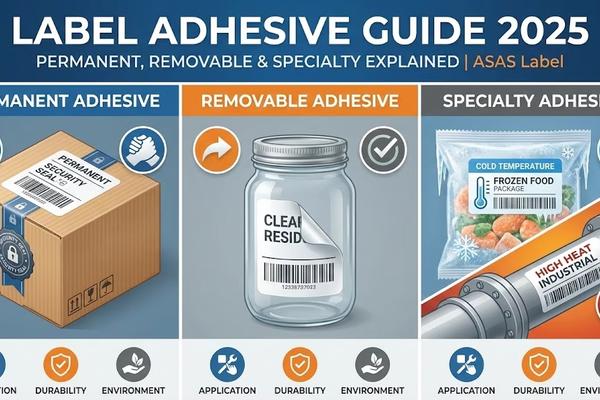
Define the exact substrate specifications. Includes face stock weight, adhesive type (permanent, removable, freezer-grade), and liner thickness. Ensure the selected press technology is compatible with this material combination.
Validate the winding direction and core size for roll labels. Machine applicators have strict requirements. An incorrect unwind direction renders the entire packaging printing run unusable for automated lines.
Check the minimum font sizes and line weights. Flexographic and offset printing have different tolerances for maintaining fine detail and positive versus reverse type. Adjust the artwork to meet the specific print capabilities of the selected vendor.
Clarify the finishing requirements. Specify varnish types (spot vs. flood, matte vs. gloss) and ensure the die lines are clean and correctly spaced. Confirm that tooling exists or budget for valid custom die creation, including screen printing if necessary.